
EV Charging Infrastructure Powers Urban Mobility Growth
Cities across the US are racing to expand electric vehicle charging networks, with over 150,000 public chargers now operational nationwide. This infrastructure surge is enabling cleaner, more efficient urban transportation.

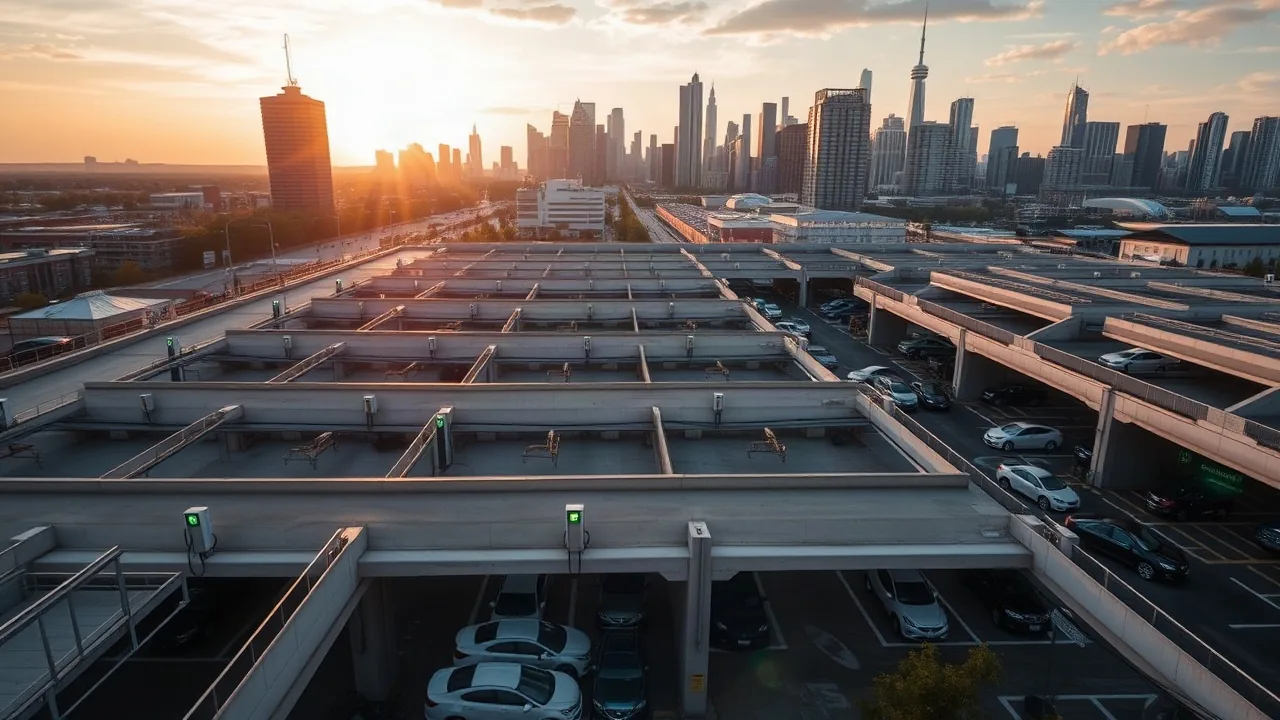
Denver installed its 500th public charging station in September 2026, marking a milestone that reflects a nationwide acceleration in EV infrastructure deployment. The station, located at a downtown transit hub, can charge four vehicles simultaneously and represents the kind of dense, accessible charging network that cities now prioritize to support urban mobility transformation.
The expansion of EV charging infrastructure has become inseparable from the future of city transportation. As vehicle electrification accelerates, municipal planners recognize that adequate charging availability directly determines whether residents and commuters will adopt electric vehicles at scale. Without reliable access to charging, even the most fuel-efficient EV remains impractical for daily urban use.
"We are seeing a fundamental shift in how cities prioritize transportation infrastructure," said Maria Chen, director of transportation policy at the Urban Mobility Institute in Washington, DC. "Three years ago, charging was treated as a nice-to-have amenity. Today, it is baseline infrastructure, equivalent to water or electricity systems."
Infrastructure Growth Reaches Critical Mass
The Department of Energy reported in October 2026 that the United States now operates 152,000 public charging stations, nearly double the count from 2023. This growth reflects both federal investment through the Bipartisan Infrastructure Law and private sector commitment from energy companies, automotive manufacturers, and technology firms.
California leads deployment with 31,500 chargers, but growth rates tell a more interesting story. Texas added 8,200 chargers in the past 18 months, while Florida, Illinois, and Pennsylvania each exceeded 5,000 new installations. Secondary markets like Austin, Charlotte, and Nashville are building charging networks ahead of peak EV adoption, a strategy that planners say prevents supply bottlenecks.
Fast charging corridors now connect 45 major metropolitan areas, enabling cross-state EV travel without range anxiety. These networks, operated by companies like Electrify America and EVgo, maintain an average uptime of 96.3 percent as of mid-2026, a reliability threshold that meets consumer expectations set by traditional gas infrastructure.
Urban charging hubs differ from highway infrastructure in critical ways. Workplace chargers, apartment building installations, and street-level pedestrian access points create the distributed network that supports daily driving patterns. San Francisco's program, which mandates charging readiness in all new commercial buildings, has influenced similar codes in 23 other cities since 2024.
Smart Networks Enable Efficiency and Grid Stability
Smart cities infrastructure increasingly integrates charging into broader energy management systems. Real-time load balancing software coordinates when vehicles charge, preventing grid strain during peak demand hours and reducing the need for costly infrastructure upgrades. Los Angeles's new Integrated Charging Management platform uses AI algorithms to stagger charging demand across the city's 18,500 public chargers.
This intelligence serves multiple stakeholders. Energy utilities gain visibility into demand patterns and can optimize renewable energy use. Drivers receive app notifications about station availability and pricing. Cities collect data on charging behavior that informs future infrastructure planning.
Battery storage technology complements charging networks by creating resilience. Several cities, including Portland and Seattle, have paired charging hubs with behind-the-meter battery systems that store energy during off-peak hours. This reduces strain on aging grid infrastructure and improves charging availability during emergencies.
"The convergence of transport infrastructure and energy infrastructure is creating something fundamentally new," explained James Rodriguez, grid technology specialist at the National Association of Utility Regulatory Commissioners. "Charging networks are no longer just serving vehicles; they are becoming active assets in grid management."
Equity and Access Challenges Remain
Despite rapid expansion, charging access remains unevenly distributed by income and geography. Low-income neighborhoods in major cities have access to only 12 percent of chargers, despite representing 25 percent of urban populations. Apartment dwellers, who comprise 35 percent of urban households, face particular barriers since dedicated home charging is unavailable.
The Biden administration's Justice40 initiative directed 40 percent of EV and charging benefits to disadvantaged communities, but implementation has been uneven. Denver, Portland, and Minneapolis have achieved near-parity in charger distribution relative to population density. Other cities have failed to meet targets, citing land acquisition costs and infrastructure limitations.
Mobile charging solutions, such as modular units that operate from parking spaces, address some accessibility challenges. Companies deploying these units reported 34 percent faster adoption in underserved areas compared to fixed infrastructure, though durability and regulatory hurdles have limited deployment.
Federal grant programs for 2026 and 2027 increasingly emphasize underserved community access. The $7.5 billion Community EV Charging Program aims to install 20,000 chargers in priority neighborhoods, with installation beginning in Q1 2027.
Private Sector and Government Partnership
Corporate investment in electric vehicles charging has accelerated dramatically. Amazon's commitment to install charging at its distribution centers—now numbering 2,100 chargers across 140 facilities—exemplifies private-sector participation. Retailers including Walmart, Target, and Whole Foods treat charging access as both customer convenience and brand positioning.
Vehicle manufacturers are funding charging networks directly. Tesla operates 9,800 Superchargers globally, with 3,200 in North America. General Motors and Ford have committed $2.1 billion combined to charging infrastructure, partly through joint ventures with energy companies.
This public-private collaboration works best when incentives align. Sustainable transport adoption benefits municipalities through reduced emissions, less traffic congestion, and improved air quality, creating shared value that justifies collaborative investment.
Looking forward, charging infrastructure will remain central to urban mobility's electrification. As battery technology improves and charging times decline toward 10 minutes for 80 percent capacity, the infrastructure that supports it becomes the defining constraint. Cities that invest deliberately now will capture economic advantages and cement their role as sustainable, forward-thinking communities.