
EV Charging Infrastructure Powers Urban Mobility Networks
Cities across America are racing to deploy EV charging networks as essential backbone infrastructure for smart transportation. Without adequate charging, the promise of electric vehicles in urban mobility cannot be realized.

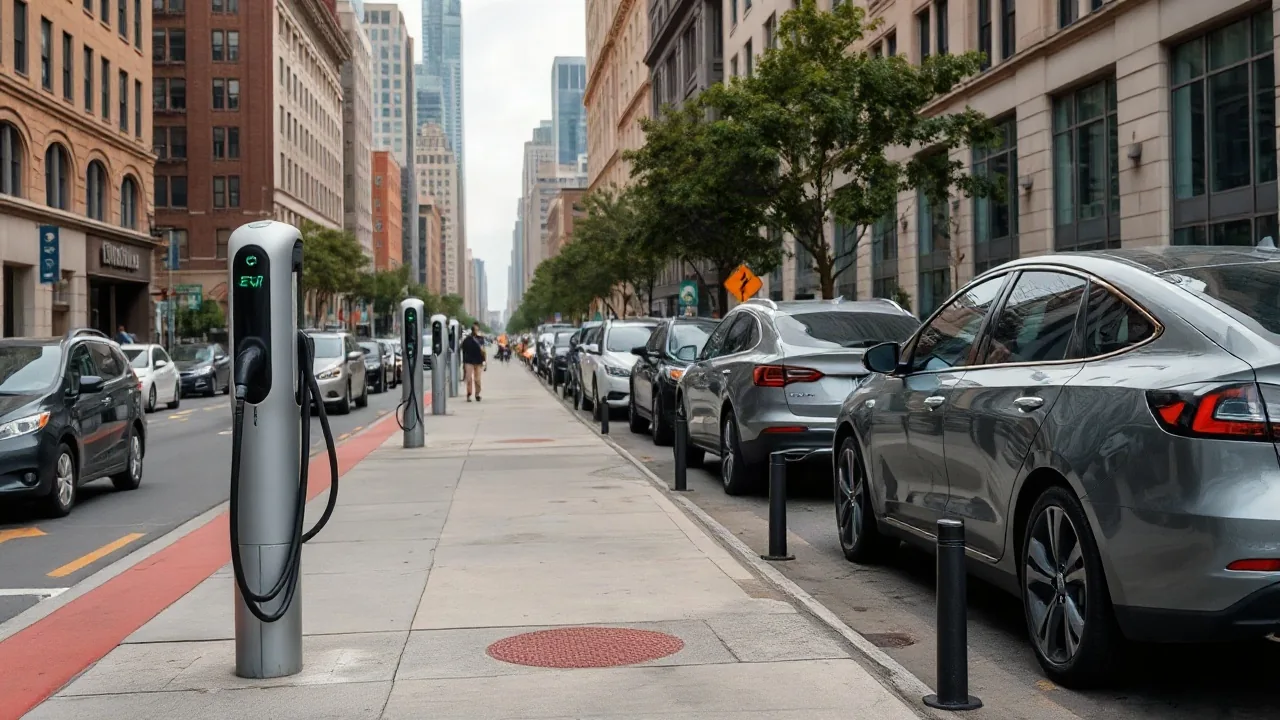
Portland, Oregon opened its 500th public charging station in September 2026, marking a critical milestone in the city's commitment to electric vehicle adoption. The station, part of a broader push to densify charging across downtown neighborhoods, signals how seriously major U.S. cities now view EV charging infrastructure as core urban planning.
This expansion is no longer optional. As electric vehicle registrations surpass 18 million units nationwide in 2026, the charging network has become the circulatory system of modern urban mobility. Without it, the transition from gas-powered transportation collapses.
"Charging infrastructure is the single biggest constraint we face," said Dr. Maria Chen, senior mobility analyst at the American Transportation Research Institute, in a recent briefing. "Cities that invest now will see adoption rates climb 40 to 60 percent faster than those waiting for the private market alone."
Smart Cities Are Redesigning Around Charging
The integration of charging networks into smart cities infrastructure has accelerated significantly since 2025. Denver, Austin, and Seattle now operate charging stations as nodes in real-time grid management systems, adjusting power draw based on renewable energy availability and peak demand windows.
Denver's smart charging pilot, launched in March 2026, reduced peak electricity stress by 12 percent while cutting average charging costs for residents by 18 percent. The system uses predictive algorithms to recommend off-peak charging windows via mobile app, steering drivers toward hours when wind and solar output is highest.
- Real-time pricing adjusts rates based on grid conditions and renewable generation
- Predictive routing integrates charging stops into navigation apps
- Vehicle-to-grid technology allows parked EVs to feed power back during emergencies
- Load balancing prevents transformer overload in dense residential areas
These systems depend on transport technology that bridges vehicles, chargers, and energy systems. Companies like Volta and ChargePoint now embed IoT sensors into every unit, feeding real-time occupancy and performance data into city dashboards.
Why Charging Density Matters More Than Total Numbers
Many cities report sufficient total charging capacity but suffer from poor distribution. Los Angeles, despite having over 8,000 public chargers, saw customer complaints rise 22 percent in 2025 because 60 percent of that capacity was concentrated in affluent coastal neighborhoods.
Equitable charging access is now recognized as a sustainable transport equity issue. Federal guidance issued in June 2026 requires any city receiving infrastructure grants to map charging gaps in low-income areas and commit to closing them within three years.
San Francisco responded by mandating new commercial buildings include 20 percent charging-ready parking spots and retrofitting 40 percent of existing public lots with Level 2 chargers by 2028. The cost: approximately $180 million. The payoff: predictable adoption of electric buses and ride-share vehicles that serve working families.
Apartment dwellers and renters remain underserved. Only 34 percent of multifamily buildings offer workplace or dedicated resident charging, creating a structural barrier to EV ownership in urban cores where transit-dependent populations live.
Infrastructure Investment and the Private-Public Balance
State and federal funding has catalyzed private sector deployment. The 2021 Infrastructure Investment and Jobs Act committed $7.5 billion to national charging buildout; as of October 2026, that money has leveraged an additional $22 billion in private investment.
Tesla, despite closing most of its Supercharger network to non-Tesla vehicles in 2025, redirected capital into partnerships with Electrify America and EVgo. The competitive landscape now favors open-standard networks that welcome all vehicle brands.
Grid capacity remains the binding constraint. Many municipalities cannot support rapid charging density without upgrading transmission infrastructure, a 5-to-10-year process. Medium-speed Level 2 chargers (24-48 kilowatts) have become the strategic focus for urban cores where real estate is expensive and grid upgrades are complex.
Industry projections estimate the U.S. needs 2.6 million public chargers by 2030 to support 35 million electric vehicles in circulation. Current deployment pace, at 120,000 new chargers per year, falls roughly 200,000 units short of that target annually. The gap is widening, not closing.
Cities investing in integrated charging strategy now will avoid the fragmented, underutilized networks that plagued broadband rollout a decade ago. The difference: charging infrastructure is not just convenience. It is the condition without which electric vehicles remain niche luxuries rather than mass transit tools.