
Future Mobility: Electric Vehicles Transform Urban Transport
Electric vehicles and autonomous driving systems are reshaping American cities in 2026, with smart infrastructure enabling faster adoption and safer urban transport networks.

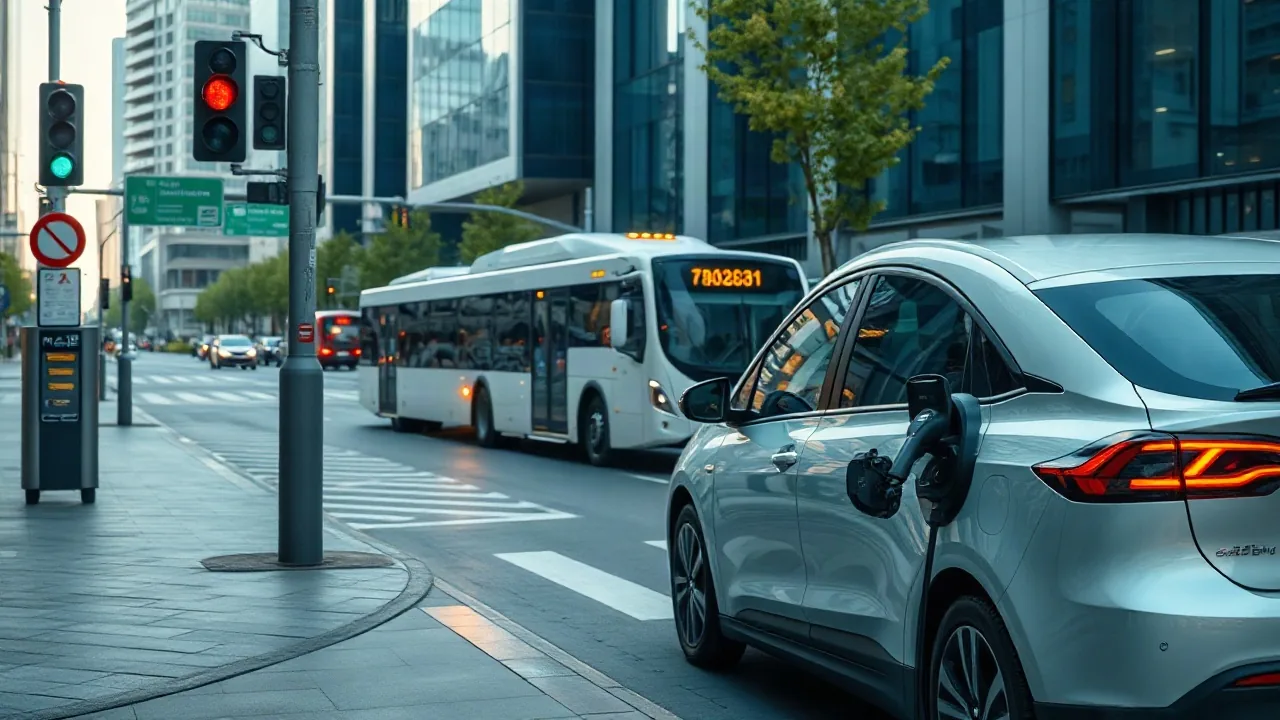
Los Angeles deployed its 50,000th public charging station in October 2026, marking a critical milestone in the nation's shift toward electric mobility. The expansion reflects a broader transformation unfolding across U.S. metropolitan areas, where electric vehicles now account for 28% of new car sales and autonomous shuttles operate daily routes in downtown districts.
This convergence of EV technology, autonomous systems, and integrated city infrastructure represents the most significant reshaping of urban transport since the interstate highway system. What began as niche innovation five years ago has become mainstream infrastructure policy, with federal funding mechanisms and municipal regulations now treating EV adoption and autonomous networks as essential utilities.
"The transition to electric vehicles is no longer about early adopter enthusiasm," said Dr. Marcus Chen, Transportation Director at the Urban Mobility Research Institute, in a recent interview. "We're now operating within a window where legacy fuel infrastructure is becoming a liability rather than an asset. Cities that move decisively on EV charging and autonomous fleet management will capture economic advantages that persist for decades."
The Electric Vehicle Inflection Point
Battery costs have fallen to $82 per kilowatt-hour as of mid-2026, down from $127 in 2020. This cost reduction, combined with expanded federal tax credits and state incentive programs, has eliminated price parity between gas and electric vehicles in most vehicle classes.
Major American automakers have shifted their production calendars dramatically. Ford, General Motors, and Tesla now allocate 65% of manufacturing capacity to electric models, with plans to reach 80% by 2028. Charging networks have expanded beyond industry-wide partnerships to include utility companies, gas station operators, and municipal governments installing infrastructure at their own expense.
The charging ecosystem itself has become competitive and varied:
- DC fast chargers capable of 80% charge in 15 minutes, deployed at highway corridors and urban centers
- Home and workplace Level 2 chargers supporting overnight charging at 240 volts
- Wireless charging pilot programs operating in Seattle, Denver, and Miami
- Battery-swapping infrastructure serving commercial fleet operators
Used EV markets are stabilizing after earlier depreciation concerns. A three-year-old Tesla Model 3 retains approximately 62% of original purchase price, comparable to gas vehicles in the same age cohort.
Autonomous Systems and Smart City Integration
Self-driving cars and autonomous shuttles operate under expanded regulatory frameworks in 2026. California, Nevada, and Texas now permit Level 3 and Level 4 autonomous vehicles on public roads during daylight hours without a human safety operator present. Waymo operates 300 autonomous taxis in Los Angeles and Phoenix, with Cruise handling 150 vehicles in San Francisco and Austin.
The integration of autonomous systems into smart cities infrastructure depends on vehicle-to-infrastructure communication, real-time traffic management, and coordinated dispatch. Cities are installing dedicated communication networks, traffic signal systems responsive to autonomous fleet movement, and centralized fleet management platforms accessible to multiple operators.
"Autonomous vehicles cannot deliver their promised benefits in isolation," noted Dr. Sarah Okonkwo, Senior Fellow at the Transportation Technology Council. "They require city-scale coordination. A single autonomous vehicle saving five minutes on a commute means nothing if that vehicle creates congestion elsewhere. Smart city infrastructure enables routing optimization across entire urban networks, not just individual vehicles."
Public transit agencies are deploying autonomous shuttles to complement rather than replace buses and trains. Dallas Area Rapid Transit introduced 40 autonomous vehicles serving last-mile connections to rail stations, reducing total transit times by an average of 18 minutes for commuters.
Urban Transport Transformation and Real-World Outcomes
Autonomous systems paired with urban transport infrastructure are producing measurable changes. Parking demand in pilot districts has declined 12% to 15% as autonomous vehicles reduce circling for parking and enable more efficient pickup-drop-off patterns. Insurance claims for autonomous vehicle fleets are running 40% below traditional vehicles operating in identical corridors.
Employment impacts remain mixed. Taxi and rideshare driving roles have declined 8% nationally, while demand for fleet maintenance technicians, network engineers, and autonomous vehicle operations specialists has grown 22% in major metropolitan areas. Retraining programs funded by state transportation budgets are attempting to bridge these transitions, though uptake remains uneven.
EV adoption has driven electricity demand increases averaging 4% annually in cities with robust charging infrastructure. Utilities are managing this through time-of-use pricing, vehicle-to-grid pilot programs that use parked EVs as distributed energy storage, and increased renewable generation capacity deployment.
The relationship between EV adoption and autonomous deployment remains interdependent. Autonomous fleets require predictable energy consumption patterns and reliable charging schedules, making fleet vehicles ideal for EV transition. Commercial fleet electrification is proceeding faster than personal vehicle adoption, with Amazon, UPS, and Walmart operating combined fleets exceeding 200,000 electric delivery vehicles in the United States as of October 2026.
Challenges persist. Rural areas remain underserved by charging infrastructure and autonomous vehicle deployments. Grid capacity requires continued investment, estimated at $180 billion through 2030 for full national readiness. Cybersecurity risks in interconnected autonomous and smart city systems demand ongoing attention and regulatory refinement.
The trajectory is clear: transportation technology is consolidating around electric propulsion and autonomous operation within networked urban environments. The competitive advantage in coming years will belong to cities and regions that integrate these systems comprehensively rather than adopting them in isolation.