
EV Charging Infrastructure Surges as Electric Vehicle Adoption Accelerates
The US EV charging network expanded significantly in 2026, with thousands of new stations deployed nationwide. Experts say robust infrastructure is now the key driver enabling wider electric vehicle adoption.

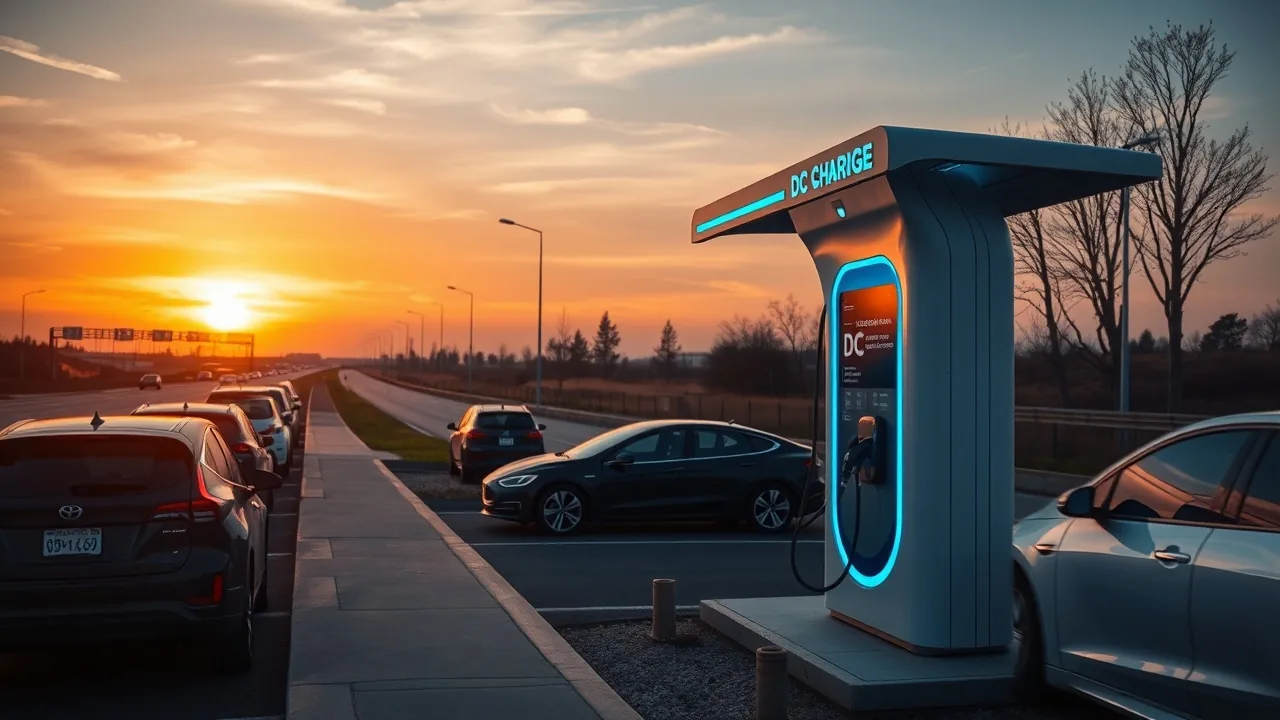
The United States added over 18,000 new electric vehicle charging stations in the first half of 2026 alone, marking a watershed moment for EV charging infrastructure expansion. This acceleration follows sustained federal investment and private sector competition, fundamentally reshaping the conditions for mass EV adoption across American roads.
The growth reflects a deliberate nationwide push to eliminate range anxiety as the primary barrier to electric vehicle purchase decisions. Tesla, ChargePoint, Electrify America, and Evgo collectively operate more than 95,000 public charging ports across the country as of July 2026, with deployment rates climbing week over week.
"Infrastructure has become the gating factor," said Sarah Chen, senior analyst at the Transportation Energy Institute, in a July 2026 interview. "Every new charging site in an underserved area removes friction from the EV purchase equation. We're seeing adoption curves flatten in markets with poor charging density and spike dramatically where networks are dense."
Federal Policy and Private Investment Converge
The Bipartisan Infrastructure Law, signed in 2021, allocated $7.5 billion specifically for charging infrastructure development. By mid-2026, more than $4.2 billion of that funding had been deployed to state transportation agencies and private operators, accelerating deployment timelines by 18 to 24 months compared to historical rates.
California leads the nation with 28,400 public chargers installed as of July 2026, followed by Texas (14,200), New York (11,800), and Florida (9,600). Rural areas, historically neglected by charging networks, now benefit from targeted federal grants designed to close equity gaps.
Private companies have responded to this policy environment with aggressive capital commitments. Electrify America announced in June 2026 that it would expand from 1,100 to 2,500 DC fast-charging locations by end of 2028, focusing on corridors connecting major metropolitan areas. ChargePoint similarly committed $500 million to deploying 100,000 Level 2 chargers at multifamily residential properties and workplaces over three years.
Home charging remains the backbone of daily EV use, with 72 percent of electric vehicle owners charging overnight on residential equipment. Public infrastructure, however, enables long-distance travel and serves urban apartment dwellers without garage access—segments that unlock broader adoption.
Why Charging Density Drives Future Mobility
Future mobility trajectories depend directly on charging availability and reliability. A 2026 survey by the American Automotive Association found that 68 percent of non-EV owners cite insufficient public charging as their top concern when considering electric vehicles. That perception gap narrows measurably as local charging networks mature.
Urban planning departments across major US cities now mandate charging infrastructure in new commercial and residential projects. New York City requires minimum 20 percent charger-ready parking spaces in buildings with 25 or more parking spots. Los Angeles updated zoning codes in 2025 to require new office parks to install dual-purpose outlets in 15 percent of parking areas.
Fast-charging technology has also improved dramatically. The latest generation of DC fast chargers, deployed widely by mid-2026, deliver 300 to 350 kilowatts of power, reducing charge times from 30 minutes to under 20 minutes for most vehicles. This parity with traditional gas station refueling times removes a psychological barrier for prospective buyers.
Interoperability challenges that plagued early networks have largely dissolved. The NACS (North American Charging Standard), adopted by Tesla and virtually all other manufacturers by 2026, enables drivers to use any public charger with minimal friction. Payment systems now integrate seamlessly across networks, allowing a single app or account to work across Electrify America, ChargePoint, Evgo, and smaller regional operators.
Grid reliability and capacity emerged as a critical consideration in 2026. Electric utilities nationwide have upgraded distribution infrastructure to handle concentrated charging loads, particularly in residential neighborhoods and commercial parking zones. Demand-response programs and time-of-use pricing incentivize off-peak charging, easing stress on aging grid infrastructure.
The Momentum Ahead
EV adoption rates reflect infrastructure confidence directly. In counties with charger density above 30 public chargers per 100,000 residents, electric vehicle sales in 2026 represent 18 to 22 percent of new vehicle purchases. Counties below 5 chargers per 100,000 residents see EV sales below 4 percent of the market.
Industry analysts project that sustainable energy integration into charging networks will accelerate in 2027. Solar-powered charging stations are being piloted in Arizona, California, and Florida, reducing grid strain and operating costs. Battery storage systems co-located with fast-charging hubs stabilize power delivery and maximize renewable utilization.
The infrastructure expansion also drives ancillary job growth. Installation, maintenance, and network operations roles have created an estimated 47,000 new positions nationwide since 2024, with wages averaging $68,000 annually for technicians and $92,000 for network engineers.
As charging networks mature in density and reliability, electric vehicle adoption follows predictably. The symbiosis between infrastructure investment and consumer confidence is no longer theoretical; it is the defining economic and logistical story of 2026 transport transformation across the United States.