
AI Transport Systems Accelerate Autonomous Mobility in 2026
Advanced AI is reshaping how vehicles navigate cities and highways. As deployment accelerates in 2026, self-driving technology moves from testing to real-world operations across major U.S. markets.

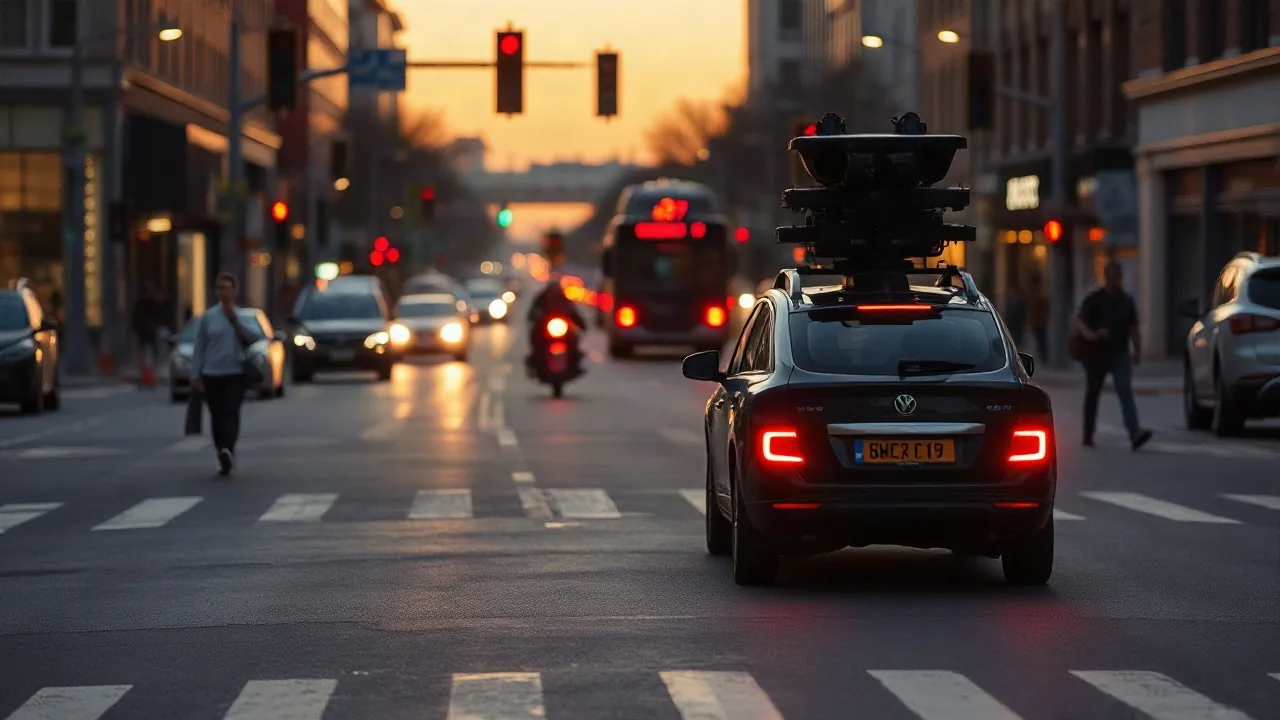
Waymo's fleet of autonomous robotaxis completed over 2 million driverless miles in the first half of 2026, marking a decisive shift from pilot programs to commercial scale. This milestone reflects how AI transport systems have become central to reshaping urban mobility, with competing platforms now operating in Phoenix, San Francisco, Los Angeles, and Pittsburgh simultaneously.
The acceleration stems from breakthroughs in machine learning architectures designed specifically for real-time decision-making in unpredictable traffic. Modern AI systems now process data from lidar, radar, and camera feeds at millisecond intervals, enabling vehicles to respond to sudden obstacles, pedestrian movements, and edge-case scenarios that once required human intervention.
"We're seeing AI models that can generalize across different weather conditions and urban layouts without extensive retraining," said Dr. Sarah Chen, principal researcher at the Transportation Technology Lab at UC Berkeley, in a September 2026 interview. "That capability wasn't reliable even 18 months ago."
The Path from Testing to Deployment
Throughout 2025 and early 2026, autonomous mobility companies shifted from geofenced routes to broader urban networks. Cruise, Waymo, and newer entrants like Aurora Innovation expanded operating domains, integrating with traffic management systems in host cities and collaborating with municipal governments on infrastructure needs.
Key developments in the sector include:
- Expanded service areas in California, Arizona, and Pennsylvania following regulatory approval
- Integration with public transit agencies to handle first-mile and last-mile connections
- Real-time communication with traffic signals and emergency dispatch systems
- Third-party AI models for motion prediction and risk assessment now being licensed to vehicle manufacturers
This transition required solving not just technical problems but regulatory and insurance questions. The National Highway Traffic Safety Administration (NHTSA) issued updated performance standards in March 2026 that formally recognized AI-based safety validation, replacing older protocols that relied on simulation-only testing.
Insurance carriers including Progressive and State Farm have introduced self-driving cars coverage tiers that reflect actual accident data from operational robotaxi fleets. Early statistics show lower claim frequencies than human-driven vehicles in comparable urban environments.
AI Technology Reshaping the Industry
AI technology advancement is now the primary bottleneck, not mechanical engineering or hardware. Today's cutting-edge systems use transformer-based neural networks trained on billions of miles of driving data, both real and simulated, to predict multi-agent interactions 5-10 seconds ahead.
Companies are investing heavily in synthetic data generation. Tesla, Waymo, and Cruise collectively deploy over 100,000 vehicles collecting real-world data daily. This information feeds retraining pipelines that improve models every 2-4 weeks rather than quarterly, as was common in 2024.
The competitive advantage now lies in edge cases: how systems handle construction zones, heavy rain, or unusual pedestrian behavior. Waymo's September 2026 announcement that it had achieved 95th percentile safety performance on uncommon scenarios underscores this shift.
A related trend is modular AI architecture. Rather than a monolithic decision system, companies are decomposing autonomous driving into specialized models for perception, prediction, planning, and control. This design enables faster iteration and allows the future of transport to benefit from advances in computer vision or reinforcement learning without rebuilding entire systems.
Smart Cities and Infrastructure Integration
The emergence of smart cities initiatives nationwide is accelerating autonomous adoption. Municipalities including Austin, Denver, and Miami are installing Vehicle-to-Infrastructure (V2I) systems that let autonomous vehicles communicate directly with traffic management centers and street infrastructure.
This cooperative layer amplifies AI capabilities. Instead of each vehicle independently interpreting a traffic signal, the signal transmits its state and planned timing to all connected vehicles, enabling coordinated movement that reduces congestion and emissions.
Ride-hailing services Uber and Lyft have signaled they will replace 30 percent of their driver pool with autonomous vehicles by 2028. Pilot programs already operate in select markets, handling scheduled routes and predictable demand patterns where AI can perform most reliably.
Public transit agencies are also adopting smaller autonomous shuttles for fixed routes. The Metropolitan Transit Authority in Portland, Oregon launched a fleet of six autonomous buses in July 2026 serving a 2-mile corridor, with plans to expand to three additional lines by year-end.
The economic implications are significant. Autonomous vehicle operating costs have fallen 40 percent since 2023, reaching price parity with human-driven transportation in urban markets. This cost curve, combined with insurance savings and reduced accident liability, is reshaping investment decisions across the mobility sector.
As AI transport systems mature through 2026 and into 2027, the question is no longer whether autonomous mobility will arrive, but how quickly and comprehensively cities will integrate it into transportation networks. The evidence suggests the transition is accelerating faster than most stakeholders anticipated two years ago.