
EV Charging Infrastructure Powers Urban Mobility in 2026
Major U.S. cities are accelerating EV charging networks this fall, fundamentally reshaping how electric vehicles integrate into urban transportation. New infrastructure is cutting charging times and expanding sustainable transit options.

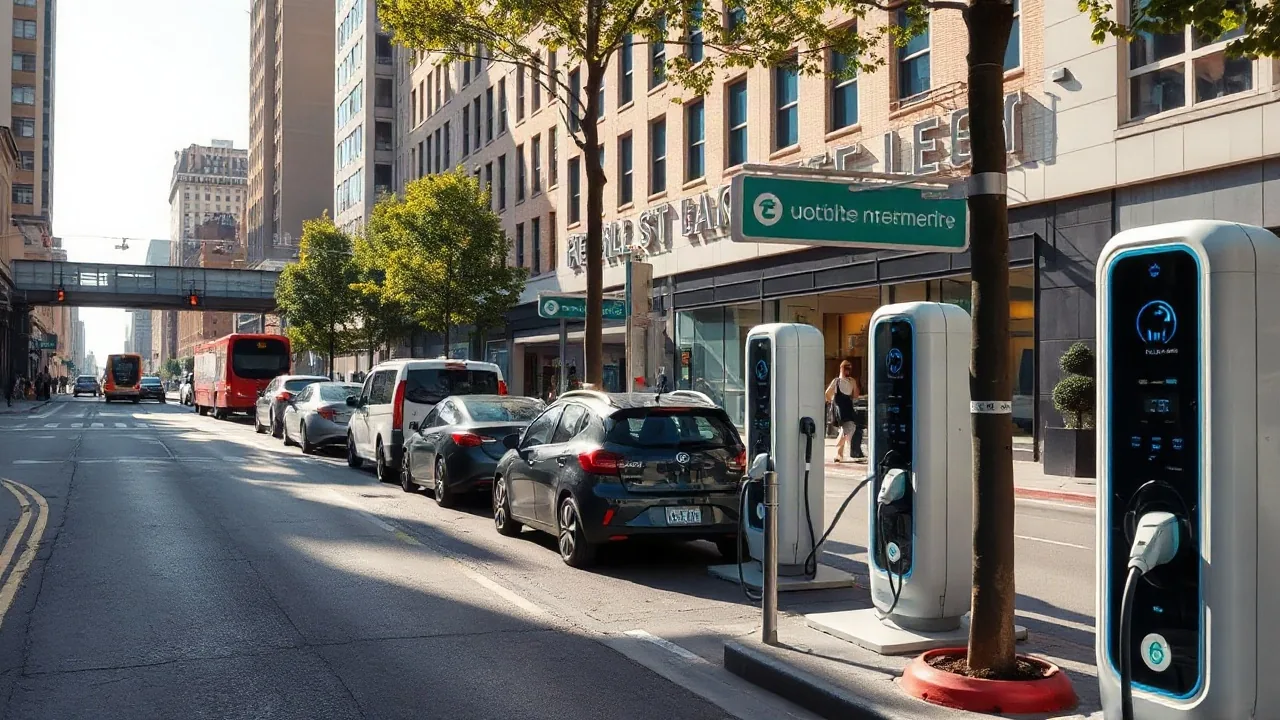
Major cities across the United States are installing EV charging stations at record pace this year, transforming urban mobility infrastructure and reshaping how commuters power their vehicles. In September 2026, cities like Los Angeles, New York, and Chicago have deployed thousands of new chargers in public spaces, workplace parking, and residential neighborhoods, addressing long-standing barriers to widespread EV adoption.
The expansion reflects a critical shift in how municipalities approach urban mobility. According to Sarah Chen, transportation director at the Urban Land Institute, "Cities that build charging before demand peaks gain a competitive advantage in attracting EV owners and reducing traffic congestion." This infrastructure-first strategy differs sharply from earlier adoption patterns, where charging availability often lagged behind vehicle sales.
Public charging networks have grown to over 180,000 ports nationwide as of September 2026, up from 140,000 in January 2024. Utilities and private operators are deploying fast chargers along major corridors, while Level 2 chargers now appear in apartment complexes and commercial districts that were previously underserved.
Smart Cities and Real-Time Charging Networks
Smart cities technology is now central to managing these expanding networks. Real-time apps help drivers locate available chargers, reserve stations, and pay seamlessly. Artificial intelligence algorithms optimize charging schedules to reduce peak demand on electrical grids, preventing strain on aging infrastructure.
Denver and Portland have deployed smart charging platforms that encourage drivers to charge during off-peak hours through dynamic pricing. If a driver charges at 10 p.m., they pay 30 percent less than the midday rate. This demand-management approach has reduced grid stress while lowering costs for users.
Vehicle-to-grid technology is also gaining traction. Electric vehicles equipped with bidirectional chargers can now return stored energy to the grid during peak demand, effectively turning every car into a mobile battery. Austin Energy launched a pilot program in August 2026 enrolling 2,000 EV owners in this service.
Funding and Workforce Implications
Federal grants and private investment are fueling rapid deployment. The Infrastructure Investment and Jobs Act allocated $7.5 billion for nationwide charging networks, with $2.1 billion already committed to projects in 45 states through mid-2026. Major automakers including Tesla, Ford, and General Motors are also funding proprietary networks and opening them to competitors.
The buildout has created immediate labor demand. Electrical contractors, installation technicians, and grid engineers are in short supply across major markets. Wages for certified EV charger installers have risen 22 percent since 2024, and community colleges now offer accelerated certification programs to address the shortage.
Long-haul corridor charging represents the next frontier. Future transport planning includes ultra-fast 350-kilowatt chargers spaced every 50 miles along Interstate 95, I-5, and I-10. These stations can deliver 200 miles of range in 20 minutes, enabling cross-country EV travel without lengthy delays.
Equity and Accessibility Challenges
Equitable access remains unresolved in many regions. Wealthier neighborhoods have dense charging networks, while low-income and rural areas lag significantly. San Francisco's charging index shows affluent zip codes have eight times more public chargers per capita than working-class districts.
Apartment dwellers face particular obstacles. Roughly 35 percent of U.S. households rent, yet few multifamily buildings have on-site charging. Cities are now mandating charging infrastructure in new construction and offering grants to retrofit existing buildings. New York State committed $500 million in September 2026 to equip apartment complexes with chargers.
Sustainable transport goals depend on closing these gaps. If charging remains concentrated in affluent areas, EV adoption will mirror existing economic divides rather than advancing broad decarbonization.
Fleet operators are also reshaping charging patterns. UPS, Amazon, and municipal transit agencies are building proprietary charging hubs optimized for their vehicles. This creates operational efficiency but fragments the public network into competing ecosystems, complicating standardization efforts.
Battery swap technology, long dismissed as impractical, is gaining limited adoption for fleet vehicles. NIO, the Chinese EV manufacturer, and startup Ample are testing swap stations in California that exchange depleted batteries for charged units in under five minutes. This approach sidesteps charging time entirely but requires standardized battery designs across manufacturers.
The 2026 expansion demonstrates that infrastructure development is now outpacing vehicle production in major metropolitan areas. This reversal should accelerate EV adoption and normalize electric vehicle ownership beyond early adopters.
By 2028, industry analysts project 300,000 public charging ports will be operational nationwide, with average charging access improving dramatically for urban and suburban drivers. Rural charging infrastructure, however, will likely remain sparse without targeted federal investment and private sector expansion into less densely populated markets.