
Hyundai Boulder SUV Patent Reveals EV Design Innovation
Hyundai's newly patented Boulder SUV concept showcases radical design and electric drivetrain innovations that signal the company's direction for premium off-road vehicles through 2026 and beyond.

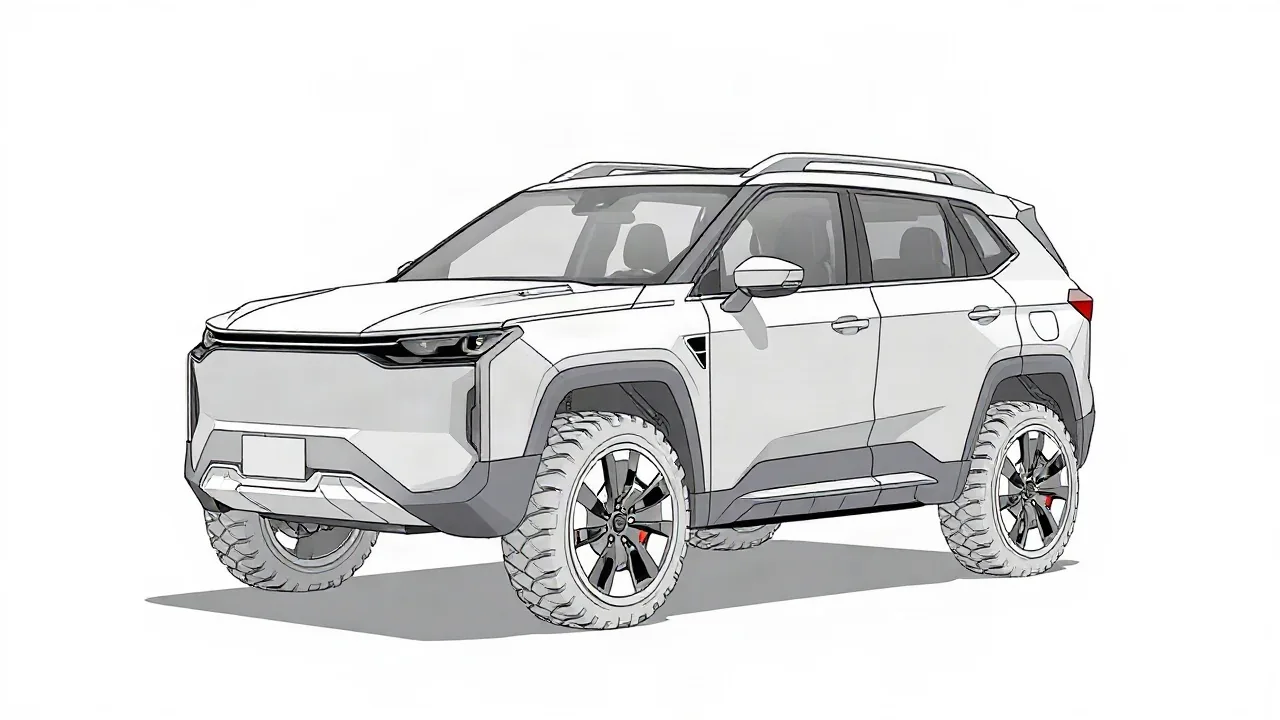
Hyundai Motor Company filed a design patent for the Boulder SUV in mid-2026, offering a glimpse into the South Korean automaker's vision for high-capability electric vehicles aimed at the North American market. The patent documents, now publicly available, detail a boxy, angular exterior that departs from Hyundai's current SUV lineup, paired with a modular battery architecture designed to support extended range and faster charging cycles.
The Boulder concept reflects a broader industry pivot toward utilitarian EV design. Unlike the aerodynamic smoothness favored in earlier electric vehicles, the Boulder embraces flat surfaces and pronounced wheel arches that echo classic truck aesthetics. Patent drawings show an extended roofline, roof rails, and what appears to be a removable tonneau cover, suggesting versatility for both urban commuting and off-pavement use.
"We are seeing a fundamental shift in how manufacturers approach EV design for premium segments," said Michelle Chen, senior analyst at Mobility Trends Group in Detroit. "The Boulder patent shows Hyundai rejecting the sleek, futuristic language that defined the first wave of electric vehicles. Instead, they are repositioning electric powertrains as capable tools, not just environmental statements."
Patent Details and Technical Specifications
The patent filing includes detailed cross-sections of the Boulder's underbody, revealing a skateboard-style battery pack running the full length of the floor. This architecture allows for configurable internal space and suggests potential for multiple powertrain options within the same platform.
Key features documented in the patent include:
- Dual-motor, all-wheel-drive capability with independent front and rear axles
- Integrated air suspension with adjustable ground clearance, ranging from 8.2 to 11.5 inches
- Modular battery pack supporting 70, 100, and 120 kilowatt-hour configurations
- 300-kW (402 hp) output in base configuration, with performance variants offering up to 430 kW
- Solid-state battery readiness in structural design, though conventional lithium-ion cells expected at launch
Interior patent drawings show a minimalist dashboard with a horizontal touchscreen spanning the width of the cabin and a steeply raked windshield that improves visibility during off-road driving. The steering wheel appears to use a square-grip design, reinforcing the vehicle's utilitarian positioning.
Hyundai's automotive patent strategy suggests the Boulder will compete directly with upcoming offerings from Rivian, Ford's next-generation electric F-150, and Volkswagen's upcoming electric pickup platform. Unlike those vehicles, however, the Boulder appears optimized for smaller payloads (under 2,000 pounds) and prioritizes passenger comfort over extreme towing capacity.
Why This Patent Matters for Future Mobility in 2026
The Boulder patent arrives as electric vehicle adoption in North America enters a maturation phase. Market data through August 2026 shows EVs now represent 18 percent of new vehicle sales in the United States, up from 12 percent two years ago. Within that mix, premium SUVs and crossovers account for the largest volume segment, yet few automakers have successfully combined off-road capability with zero-emission powertrains.
Hyundai's decision to patent the Boulder signals confidence in this segment's growth. The company, already strong in mass-market EVs through its Ioniq line, is betting that affluent buyers will pay $55,000 to $75,000 for an electric vehicle that delivers both adventure capability and technology integration.
The patent also reveals Hyundai's commitment to in-house battery development and thermal management. Proprietary cooling and heating systems documented in the patent suggest the Boulder will maintain performance in cold climates, addressing a persistent pain point for EV owners in northern regions.
Industry experts view the Boulder as Hyundai's answer to a critical market gap. "Tesla's Cybertruck focuses on shock value and towing extremes," noted David Rauch, head of vehicle architecture at Automotive Design Collective. "The Boulder appears engineered for owners who want capability, style, and practicality in equal measure. That's a narrower but more defensible market position."
The future mobility ecosystem surrounding the Boulder extends beyond the vehicle itself. Hyundai's patent filings include charging infrastructure integration, allowing the Boulder to communicate with a network of company-branded fast chargers. This vertical integration mirrors strategies employed by Tesla and Lucid Motors.
Timeline and Market Launch Expectations
Patent filing dates typically precede production vehicles by 18 to 36 months. Hyundai has not confirmed an official launch date for the Boulder, but automotive supply chain sources suggest production tooling began in Q2 2026. First vehicles could reach dealerships as early as late 2027 or Q1 2028.
The Boulder will sit above Hyundai's existing Ioniq 5N in price and capability, but below potential high-performance variants. It competes in a segment where 2026 car tech innovation continues to accelerate. Advanced driver assistance systems, over-the-air software updates, and real-time vehicle diagnostics are now table stakes, not differentiators.
Hyundai's patent strategy also hints at modular construction flexibility. Regional variants for European and Asian markets may feature smaller battery packs and lower power outputs, tailored to local regulations and charging infrastructure maturity. This approach allows the company to amortize development costs across multiple markets while respecting regional preferences.
The Boulder patent represents a calculated bet on premium electric utility vehicles as the mainstream. If successful, it will validate Hyundai's broader strategy of competing not on novelty or brand prestige, but on engineering substance and pragmatic design. For buyers fatigued by incremental improvements and inflated promises in the EV market, that message resonates.