
Tesla Full Self-Driving V15 Adds Video Game Graphics to Driver View
Tesla's 15th iteration of Full Self-Driving software introduces Reality View, rendering real-world surroundings with video game graphics on the central screen to show the system's decision-making in real time.

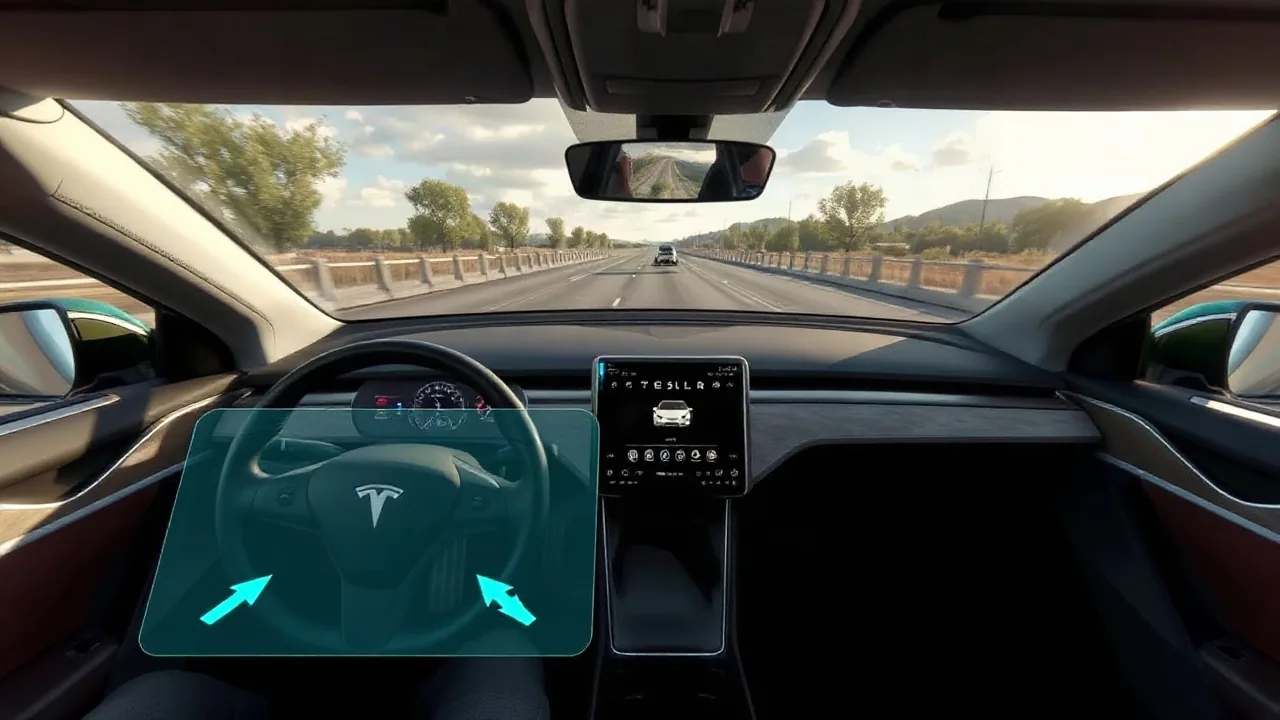
Tesla has rolled out the 15th iteration of its Full Self-Driving (Supervised) software with a visual overhaul that transforms how drivers see the road ahead. The update, released in late November 2026, introduces Tesla Reality View, which uses the vehicle's cameras to record the surrounding environment and recreate it on the central screen with video game-style graphics.
The new interface displays onscreen arrows to show what the driver assistance system plans to do next. Turns are clearly indicated, and the screen highlights which parking spot the vehicle has selected when using auto park. The rendering happens in real time, creating a seamless digital representation that mirrors how the car perceives its surroundings.
Performance Improvements and Safety Claims
Beyond the visual redesign, Tesla says the actual driver assistance capability has improved significantly. The system now detects and reacts better to potholes, small animals, and road debris. It also leverages fleet learning, meaning the software learns from trips other Teslas have taken on the same route, a strategy Tesla has used for several previous FSD iterations.
Tesla claims that V15 is 25 times safer in critical interventions compared to earlier versions. However, this assertion lacks supporting data such as miles driven or accident statistics. The claim remains Tesla's statement alone at this point.
Early user reports suggest the system is more cautious than before, sometimes overly so. Posts on Reddit's Tesla forum describe vehicles aggressively avoiding random items on the road and reacting to road repair sites as if they were potholes. Some forum users note that early FSD updates often appear imperfect at rollout but become more polished as the release reaches a broader user base.
Real-World Reliability and Driver Attention
In practice, Tesla's autonomous vehicles operate smoothly under normal conditions but can fail unexpectedly, requiring driver takeover. Tesla's own documentation reminds drivers to keep their attention on the road at all times. While the new Reality View graphics are visually appealing, they carry a risk: if a driver focuses on the screen instead of the windshield, the FSD system should theoretically disconnect automatically.
The appeal of the video game-style interface is clear. Watching the car's digital interpretation of the road in real time makes the technology feel tangible and transparent. Yet the core challenge remains unchanged. Software updates like V15 demonstrate rapid progress in electric vehicles, but they do not eliminate the need for attentive human oversight during every drive.