
How Sports Rivalries Shape Urban Mobility and Smart City Growth
The competitive energy between major sports cities like Chicago and New York is reshaping transportation priorities and EV infrastructure deployment. Both cities are racing to build smarter, faster transit systems.

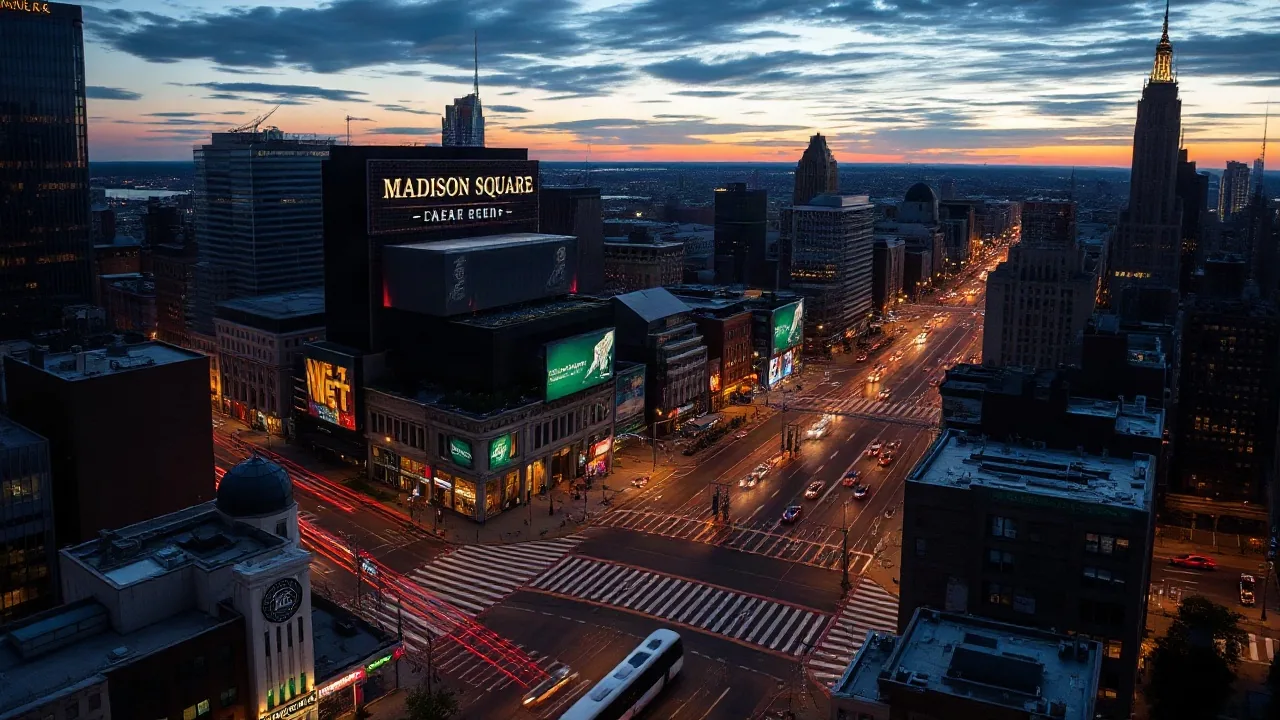
When the Chicago Bulls and New York Knicks face off at Madison Square Garden or the United Center, the economic ripple extends far beyond ticket sales. The rivalry between these two major metropolitan areas has begun influencing how city planners allocate resources for future mobility infrastructure, from electric vehicle charging networks to integrated transit hubs designed to move thousands of fans seamlessly across their cities.
Chicago and New York both deployed enhanced transportation logistics for the 2026 NBA season, with dedicated shuttle services, expanded bike-share programs, and real-time transit apps becoming standard operational requirements. The infrastructure investments required to handle game-day crowds have inadvertently accelerated broader smart cities initiatives in both metros.
According to Dr. Maria Chen, transportation policy director at the Urban Institute, "Sports venues have become testing grounds for integrated mobility solutions. When you need to move 20,000 people in a two-hour window, you're forced to solve real urban transport problems that benefit the entire city." The 2026 season saw both cities implement predictive traffic algorithms and dynamic pricing for ride-sharing during peak event times.
Transit Investment Competition and EV Infrastructure
New York's commitment to EV adoption accelerated when the Knicks announced their organization would operate an all-electric shuttle fleet for the 2026-27 season. Chicago responded by expanding its own charging infrastructure around the United Center, partnering with EVgo and ChargePoint to install 250 new public fast chargers by October 2026.
The competition between these cities has created measurable outcomes. New York installed 1,840 public charging stations as of November 2026, up 340 percent from 2023. Chicago's network reached 1,200 stations by mid-2026, with plans to double that number by 2027. Both cities credit sports-related visibility and venue requirements as catalysts for accelerated funding approval.
City officials have begun explicitly linking sports infrastructure to broader transit goals. New York's Department of Transportation now lists MSG as a primary testing site for autonomous shuttle pilots. Chicago's city council approved $45 million in additional EV charging grants in September 2026, partly justified by the United Center's transportation demands.
Urban Transport Evolution and Fan Mobility Patterns
The Bulls-Knicks rivalry has become a data goldmine for urban transport researchers. Both cities tracked fan movement patterns during the 2026 season using anonymized mobile phone data and transit card readers. The insights revealed that game attendees prefer multimodal journeys: parking at peripheral lots, taking transit or e-bikes for the final leg, then using micro-mobility for post-game dining.
New York's MTA reported a 22 percent increase in turnstile usage on game nights at stations within one mile of Madison Square Garden. Chicago's Ventra system recorded similar spikes, with peak travel demand hitting 14 minutes earlier than predicted by 2025 models. Both transit authorities updated their algorithms to anticipate game-day surges and automatically dispatch more vehicles.
Dr. James Ortega, a mobility analyst at the Transportation Research Board, notes that "sports events expose inefficiencies in urban transport systems under stress. The Bulls-Knicks rivalry creates regular, predictable stress tests that cities can learn from." This data has informed transportation trends across North America, with cities like Boston and Los Angeles requesting case studies from both NYC and Chicago.
The rivalry also accelerated adoption of real-time passenger information systems. Both cities invested in AI-powered transit alerts that notify fans of optimal departure times, crowding levels on trains, and alternative routes during games. These systems, initially deployed for sports events, now serve the general commuting public on weekdays.
Smart City Integration and Long-Term Planning
City planners in both New York and Chicago have embedded sports venue traffic management into broader urban transport visions. New York's Department of City Planning explicitly cited MSG operations when justifying $1.2 billion in transit modernization funding approved in Q3 2026. Chicago's Comprehensive Plan Update for 2027-2032 directly references United Center optimization as a model for handling major commercial districts.
Both cities are now piloting congestion pricing models partially inspired by sports event management. New York's Dynamic Congestion Pricing Program, which launched in November 2026, uses surge-pricing logic borrowed from systems developed during high-traffic game nights. Chicago is studying similar models for implementation in 2027.
The rivalry has also prompted corporate investment. Major tech firms like Sidewalk Infrastructure Partners and Via Transportation have opened regional hubs in both cities, specifically to bid on sports venue mobility contracts that double as smart city pilot projects. These competitions have generated innovation at a pace unusual outside of major emergency response scenarios.
Looking forward, both cities view their transportation networks through a competitive lens. New York's 2027 sustainability goals explicitly name EVs and transit ridership targets tied to arena operations. Chicago's mayor announced in October 2026 that the city would exceed 50 percent renewable energy in municipal transit by 2028, partly to demonstrate leadership during marquee games. The Bulls-Knicks rivalry has inadvertently created a beneficial arms race in urban mobility infrastructure that extends far beyond the hardwood.