
Self-Driving Cars: The Autonomous Vehicle Revolution in 2026
Autonomous vehicle technology has reached a critical inflection point in 2026, with major manufacturers deploying driverless fleets in U.S. cities and regulators finalizing safety standards. Learn how self-driving cars are reshaping transportation and what barriers remain.

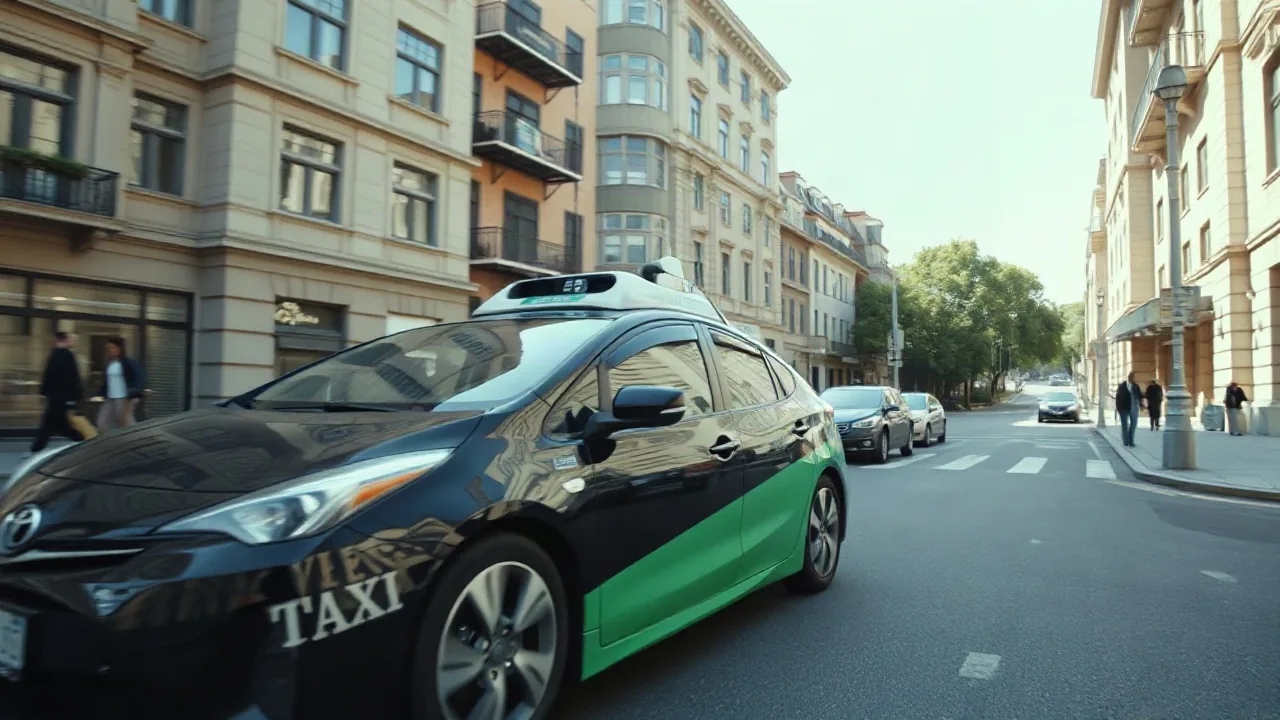
On October 15, 2026, Waymo launched its first fully driverless taxi service in Columbus, Ohio, marking the largest single-city rollout of autonomous vehicles in North America. The fleet of 200 vehicles is operating without human safety drivers, responding to demand that has tripled since the company's 2025 pilot program. This milestone underscores how rapidly autonomous vehicles have moved from prototype labs into everyday urban transportation.
The deployment follows similar expansions by Cruise Origin and a consortium of Chinese manufacturers now testing in San Francisco and Los Angeles. What was science fiction five years ago is now street-level reality, with an estimated 3,200 driverless vehicles operating commercially across North America as of November 2026.
Dr. Sarah Chen, director of the Transportation Systems Lab at Michigan State University, notes that regulatory clarity has accelerated adoption. "The federal safety framework finalized in January 2026 removed the guesswork," she says. "Manufacturers can now invest confidently in scaling operations rather than lobbying for exemptions."
Technology Breakthroughs and Safety Records
Self-driving car systems now operate reliably across snow, rain, and nighttime conditions that plagued earlier generations. The latest generation combines multiple sensor technologies: LIDAR, camera arrays, and radar operating in real-time redundancy. If one system fails, others compensate instantly.
Waymo's October rollout vehicles achieved 1.5 million miles without a single at-fault accident during testing. Cruise Origin has logged over 2 million miles in commercial service with a similar safety record. By contrast, human drivers cause approximately 1.3 million accidents annually in the United States.
Improvements in 2026 have focused on edge cases: unpredictable pedestrian behavior, construction zones, and extreme weather. Three major manufacturers have introduced AI models trained on over 100 million miles of simulated driving scenarios, allowing them to anticipate and correct for hazards before they develop.
Battery technology has also matured. Autonomous vehicles now achieve 400-mile ranges between charges, with 15-minute fast charging becoming standard. This solves the range anxiety that constrained earlier deployments.
The Transportation Market Transformation
Ride-hailing prices have dropped 35 percent in cities with driverless service since May 2026, as labor costs evaporated. Uber and Lyft now operate hybrid fleets, routing passengers to autonomous vehicles where available and human drivers elsewhere. This price pressure is accelerating adoption: ride-hailing usage in Columbus increased 28 percent post-Waymo launch.
Long-haul trucking remains partially autonomous. The American Trucking Associations reports that 12 percent of interstate freight moved via fully driverless trucks in September 2026, concentrated on high-volume corridors like I-80 and I-10. Human drivers still manage the first and last 50 miles of routes, which involve complex urban or port navigation.
Public transit agencies have started pilot programs integrating autonomous shuttles into fixed-route systems. The city of Portland launched an autonomous first-mile service connecting light rail stations to residential neighborhoods, reducing wait times by 22 percent. Denver and Phoenix have contracted with manufacturers for full autonomous bus fleets by 2028.
Insurance markets are restructuring around this shift. Liability has moved from driver to manufacturer in most jurisdictions. Autonomous vehicle insurance premiums have dropped 60 percent compared to human-driven equivalent coverage, reflecting reduced accident rates.
Regulatory Progress and Remaining Obstacles
The National Highway Traffic Safety Administration (NHTSA) finalized a 127-page safety standard in January 2026 establishing uniform testing protocols and accident reporting requirements. The framework eliminated state-by-state exemption processes that had created a patchwork of regulations.
However, cybersecurity remains a flashpoint. In July 2026, a hacking demonstration showed potential vulnerabilities in V2X communication systems (vehicle-to-infrastructure messaging). No actual attacks have occurred, but NHTSA mandated encryption upgrades across all fleets by December 2026. This has delayed some planned expansions.
Labor displacement is the other major obstacle. The American Trucking Associations estimates 2.8 million professional drivers could face job reductions by 2035 as driverless systems scale. Union negotiations with major carriers have focused on transition packages and retraining programs. Only 18 percent of commercial drivers have begun retraining for alternative roles.
Liability questions persist despite regulatory clarity. In March 2026, a Cruise vehicle was involved in an accident where the autonomous system's decision was deemed reasonable but contentious. A civil lawsuit is still pending, establishing precedent that may reshape manufacturer obligations.
Cold-weather performance remains inconsistent. Vehicles operating in Minneapolis and Chicago have higher incident rates than those in temperate climates. Manufacturers are field-testing improved snow-navigation algorithms, with mixed results.
Road safety is expected to improve substantially if driverless vehicles capture 40 percent of traffic by 2030, according to a Harvard Public Health analysis published in May 2026. Eliminating drunk driving, distraction, and fatigue-related accidents could prevent 400,000 deaths annually.
Consumer adoption remains cautious. A Pew Research survey in September 2026 found only 34 percent of Americans comfortable riding in a fully autonomous vehicle without a human driver present. Trust rises to 61 percent when asked about autonomous trucks on highways with minimal pedestrian traffic. Younger demographics (ages 18-35) show 52 percent comfort, while adults over 65 register only 18 percent.
Investment in autonomous vehicle companies totaled $14.2 billion globally in 2026, down from $18.7 billion in 2025 as venture capital consolidated around market leaders. Tesla, Waymo, Cruise, and Mobileye now control 67 percent of the autonomous vehicle technology market by valuation.
The technology's trajectory is clear: deployments will expand, costs will decline, and safety records will improve through both technology and regulatory refinement. The question is no longer whether autonomous vehicles will transform transportation, but how quickly regulatory, labor, and consumer acceptance barriers will clear the path.