
Charged Raindrops Cause New Metal Corrosion Threat, Study Finds
New research from Germany reveals that electrically charged raindrops can damage protective coatings on metals, leading to corrosion through a process called dielectric breakdown. This previously overlooked mechanism could impact everything from cars to cultural heritage sites.

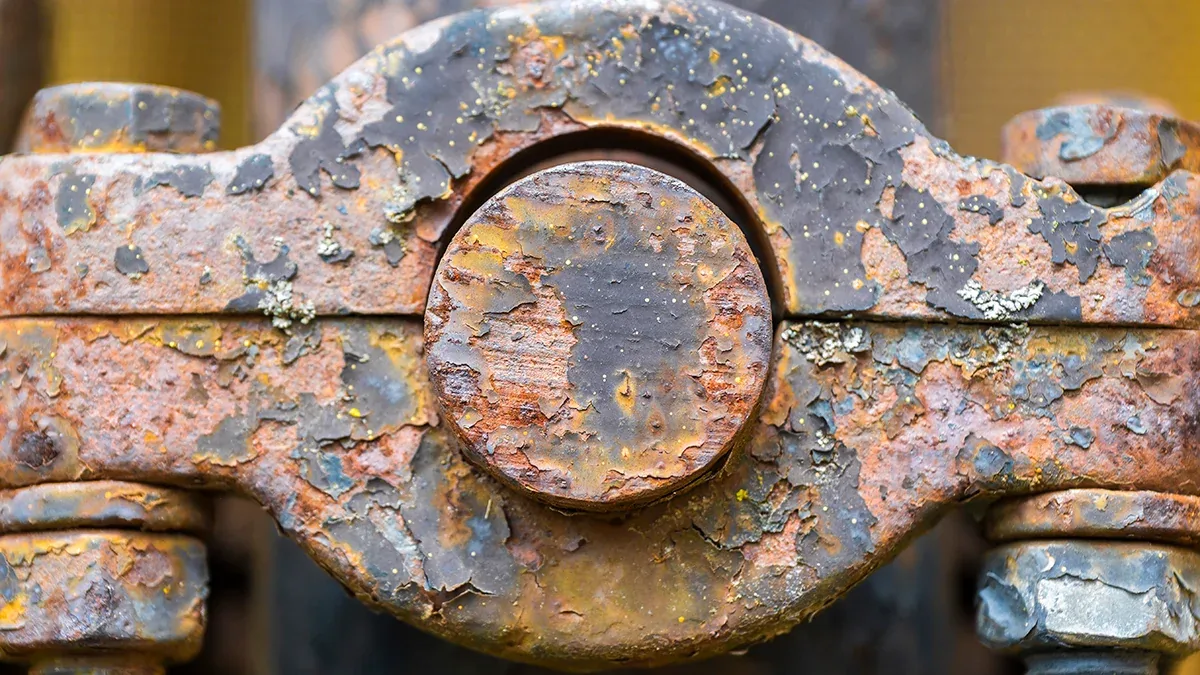
Researchers at the Max Planck Institute for Polymer Research in Germany have identified a new mechanism by which water can corrode metals, potentially impacting a wide range of applications from consumer goods to historical artifacts. Their findings indicate that electrically charged water droplets, which can form naturally through various environmental processes, can break down protective coatings on metals and initiate corrosion through a phenomenon known as dielectric breakdown.
The study, published in a scientific journal, details experiments where water droplets, after sliding across different surfaces, were allowed to fall or move over copper samples coated with protective layers like Teflon or polystyrene. The scientists observed that when these water drops carried an electrical charge, they could induce electrical breakdown in the coatings. This breakdown exposes the underlying metal, making it vulnerable to corrosion.
"We demonstrated that these charged drops can cause the coating to break down electrically and lead to corrosion of the metal," the researchers stated in their paper. "As spontaneously charged water drops form naturally, this previously overlooked corrosion mechanism may contribute to the degradation of cultural heritage sites, buildings, ships, cars and other metal components."
A New Understanding of Material Degradation
Traditionally, the breakdown of protective coatings on metals exposed to water has been attributed to physical abrasion from moving droplets or chemical degradation caused by acidic substances and pollutants within the water. This new research introduces a third, distinct pathway: charge-induced dielectric breakdown. The experiments specifically showed that when electrically neutral water drops were applied to the protected copper, no significant damage occurred. The corrosive effects were observed only when the water carried an electrical charge.
Scientists have only recently begun to understand how sliding water can acquire an electrical charge through charge exchange with surfaces, similar to static electricity. This new work builds upon that understanding by quantifying the impact of these charged droplets on common materials. The researchers employed advanced microscopy to observe the damage to the coatings and identify the byproducts of the corrosive reactions.
The potential sources of naturally charged water are numerous. The study notes that charged drops can form in clouds and thunderstorms, in ocean waves, or even in everyday scenarios like waterfalls and fountains. They can also be generated when water flows over hydrophobic materials before reaching a metal surface. Beyond natural occurrences, charged water is relevant in industrial settings such as electrostatic spraying, inkjet printing, and various chemical manufacturing processes. This broad applicability suggests the new corrosion mechanism might be a factor in many everyday and industrial scenarios.
While the study was conducted under laboratory conditions, the implications are significant. The researchers acknowledge that quantifying the exact extent to which natural rainwater carries a charge sufficient to cause this type of damage requires further investigation. However, the clear demonstration of the mechanism warrants a re-evaluation of how material degradation is understood and managed. "Our findings can improve anti-corrosion strategies and emphasize the need for protective materials capable of resisting charge-induced damage from water drops," the study authors concluded.
Future research aims to establish a clearer picture of how prevalent this charge-induced corrosion is in the real world. If the threat can be better quantified, it could lead to the development of more robust coatings and improved protection strategies for a variety of metal assets, safeguarding everything from bridges and vehicles to precious historical objects.