
Clean Energy Innovations Reshape Sustainability Goals for 2026
Major breakthroughs in renewable energy, battery storage, and climate tech are accelerating the energy transition this year. Solar efficiency records, hydrogen advances, and smart grid deployments mark 2026 as a turning point.

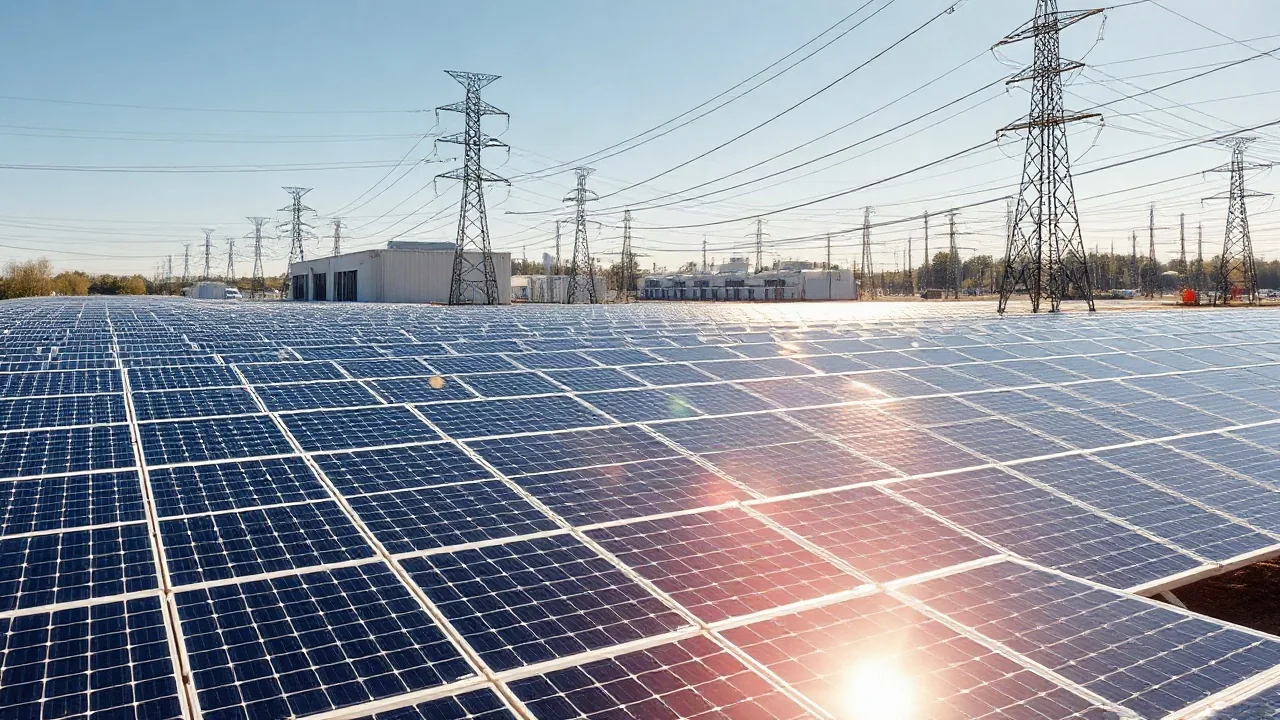
The U.S. Department of Energy confirmed in August 2026 that domestic renewable energy capacity surpassed 650 gigawatts, driven by a wave of technological advances that promise to reshape the grid over the next five years. Solar panels now routinely exceed 23% efficiency in commercial production, while next-generation battery systems are cutting storage costs below $80 per kilowatt-hour for the first time.
Winter weather warnings across the northern grid regions this summer underscored an urgent reality: aging infrastructure must transition faster. The timing aligns with unprecedented innovation cycles in green tech that are no longer theoretical.
Dr. Maria Chen, director of the Clean Energy Research Institute at Stanford University, noted in a September 2026 interview: "We're seeing convergence across three technology families simultaneously. That's rare. Solar, storage, and grid intelligence are all maturing at once, which creates a window for systemic change we haven't seen since rural electrification."
Breakthrough Technologies Gaining Ground
Three distinct technology families are driving momentum:
- Perovskite solar cells have moved from laboratory curiosities to pilot production. Companies including Perovskite PV (California) and Oxford Photovoltaics (UK subsidiary in Massachusetts) shipped tandem solar modules that stack two absorber layers, capturing more of the solar spectrum. Efficiency gains of 5-7% compared to conventional silicon translate into fewer panels needed per installation.
- Long-duration energy storage now includes iron-air batteries, sodium-ion chemistries, and gravity-based systems. Eos Energy Enterprises reported first-year deployment of 50 megawatt-hour systems across three grid operators in the Northeast and Midwest. Cost reductions below $100 per kilowatt-hour make 8-12 hour discharge viable for seasonal smoothing.
- Hydrogen production via electrolysis has dropped to $2.50 per kilogram in pilot facilities, down from $5-6 just four years ago. Plug Power and ITM Power are commissioning multi-megawatt facilities in Tennessee and Ohio, targeting industrial heat and heavy transport by 2028.
The confluence matters. When solar output peaks midday and storage systems can discharge over 8-12 hours, overnight and early morning demand becomes manageable without natural gas ramping. Grid operators no longer face the same "duck curve" stress that made 2020-2023 such a challenging transition period.
Smart Grids and Demand Response Reshape Electricity Markets
Advanced metering, artificial intelligence, and distributed control systems now mediate power flows across regions in near-real-time. Siemens Energy and ABB have deployed AI-assisted grid management platforms in utilities serving 18 million U.S. households as of mid-2026. These systems predict demand 6-12 hours ahead with 94% accuracy, then signal distributed assets (EV chargers, water heaters, industrial loads) to shift consumption.
Results are measurable. Con Edison reduced peak demand in New York City by 12% in the past 18 months by coordinating 280,000 participating devices. That margin eliminates the need for two natural gas peaker plants, saving the utility $160 million in avoided capital and operating costs.
Flexible load has become as valuable as generation. The Federal Energy Regulatory Commission issued Order 2222 follow-up guidance in June 2026, explicitly permitting aggregated residential and small-business assets to bid into wholesale markets. A startup called Sunrun Aggregation now manages over 2.3 million rooftop solar systems and 800,000 battery packs as a virtual power plant, dispatching 3.2 gigawatts of capacity to regional grids during peak hours.
This shift from supply-side-only thinking to climate tech that treats demand as programmable infrastructure opens new economics. Communities once dependent on nuclear or coal baseload now operate profitably on 70-80% renewable energy within their borders.
Sustainability Beyond Electricity
Sustainability in 2026 extends beyond power grids. Industrial decarbonization remains the hardest problem. Steel and cement production account for 28% of global CO2 emissions but have resisted electrification. Recent pilots show movement:
- Boston Metal, backed by venture funding and strategic partnerships with ArcelorMittal, produced the first metric tons of zero-carbon steel in Massachusetts using molten oxide electrolysis.
- Heidelberg Cement partnered with Climeworks to install direct air capture and mineral carbonation at a plant in Germany, with similar U.S. pilots announced for Texas and California in 2027.
- Plug Power and Fortescue Future Industries are scaling green hydrogen for direct reduction in iron ore processing, with demonstration units operational in Alabama since January 2026.
These shifts cost more today but are economically viable with carbon pricing at $50-80 per metric ton, which is now in effect across California and under serious federal consideration. The European Union's carbon border adjustment mechanism, live since 2026, creates trade pressure on U.S. manufacturers to decarbonize.
Transportation is moving faster than industrial heat. Electric vehicle sales in the U.S. hit 52% of new light-duty vehicle purchases in the first half of 2026. Charging infrastructure now exceeds 180,000 public stations, with the Biden-Harris administration's Bipartisan Infrastructure Law deployments accounting for 40,000 of those. Used EV batteries are flowing into stationary storage at scale, with Redwood Materials and others recovering cobalt, nickel, and lithium for reuse.
Why 2026 Marks an Inflection
The combination of cost declines, policy stability, and technological readiness creates a rare opening. Energy transition is no longer a matter of will or subsidies alone. Economics and performance now align.
Winter weather warnings and grid stress remain real. But the toolkit available to operators in September 2026 bears no resemblance to what existed three years ago. Renewables, storage, smart controls, and industrial decarbonization pathways are all viable at scale. The task now is deployment speed and workforce capacity, not invention.