
Stanford Scientists Find New Method to Rescue Coral Reefs
A lab accident at Stanford University revealed a potential breakthrough in coral reef restoration. Bleached corals were observed recovering rapidly when exposed to healthy coral fragments.

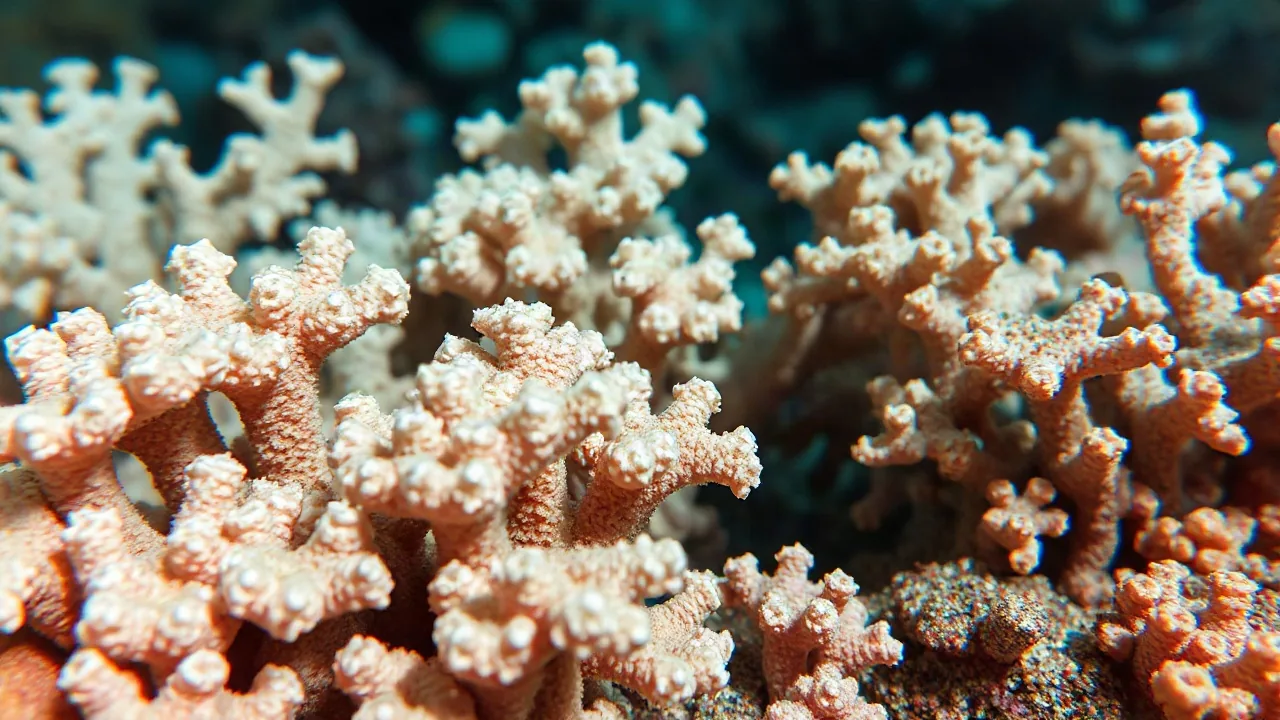
Stanford University researchers have accidentally discovered a promising new method for reversing coral bleaching, offering a potential lifeline to the world's rapidly degrading reefs. The breakthrough came when a laboratory accident exposed bleached coral fragments to healthy coral clones, leading to a surprisingly rapid recovery in a process that could revolutionize conservation efforts.
The incident, detailed in a recent study, involved a serendipitous interaction where dying coral samples came into contact with vibrant, healthy coral fragments. Scientists observed that the bleached corals, which had appeared on the verge of death, began to regain their color and vitality after this contact. This suggests a mechanism for accelerated recovery that was previously unknown and could be harnessed for large-scale restoration projects.
Aiding Coral Recovery
Coral reefs worldwide are facing an unprecedented crisis due to rising ocean temperatures, largely driven by climate change. When water temperatures become too high, corals expel the symbiotic algae living in their tissues, causing them to turn white and potentially die. This phenomenon, known as coral bleaching, has devastated vast stretches of reef ecosystems, impacting marine biodiversity and coastal communities reliant on them.
Dr. Sarah Jenkins, a lead researcher on the project at Stanford's Doerr School of Sustainability, described the moment of discovery. "We were initially dismayed by the accident, but when we saw the bleached corals showing signs of recovery, we knew we had stumbled upon something significant," she stated. "It appears that healthy corals can somehow transfer a vital signal or substance that helps their bleached counterparts bounce back."
The exact biological mechanism behind this rapid recovery is still under investigation. However, early hypotheses suggest that the healthy corals might release chemical cues or transfer beneficial microbes that aid in the re-establishment of symbiosis with the algae. This finding challenges the long-held belief that bleached corals are beyond saving once the process begins, especially if intervention occurs within a critical window.
This new approach could provide a critical tool for conservationists battling to save these vital underwater ecosystems. Traditional methods often focus on reducing environmental stressors, which is crucial but can be slow. The Stanford discovery offers a potential way to actively assist the corals' own recovery processes, potentially working in tandem with broader climate action initiatives. The team is now focused on replicating these results under controlled field conditions and understanding the scalability of this innovative technique.
The implications of this research are far-reaching, offering a beacon of hope for the future of coral reefs. If this method proves effective in natural settings, it could be deployed to bolster struggling reefs in critical areas, buying valuable time as global efforts to combat climate change continue. The science team plans further experiments to refine the process, aiming to develop standardized protocols for using healthy coral fragments to seed recovery in damaged reef sections.