
Clean Energy Solutions Drive America's Transition Away From Fossil Fuels
Solar, wind, and battery storage technologies are accelerating the shift to renewable power across the US. Major utilities and private investors are deploying billions in capital to meet decarbonization targets.

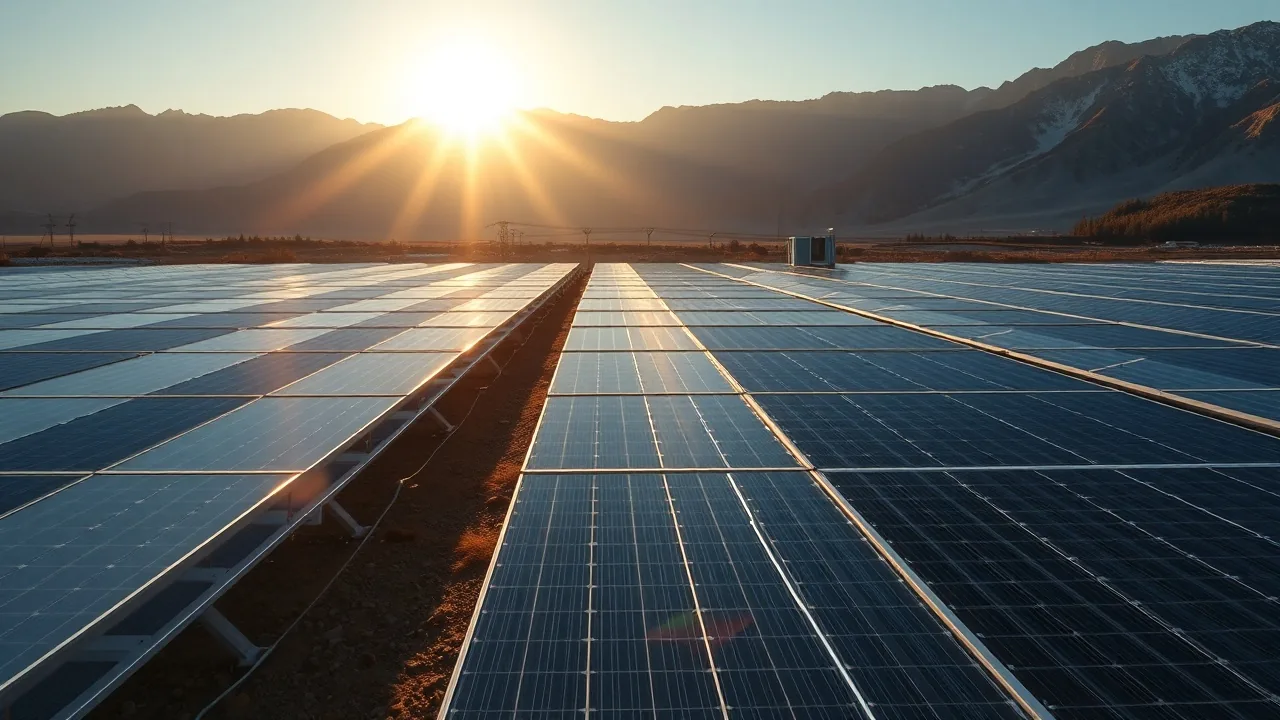
Ted Turner's decades-long advocacy for environmental conservation has found unexpected vindication in 2024 as American utilities and corporations race to deploy clean energy solutions at unprecedented scale. Last month, the U.S. installed 16.5 gigawatts of new renewable capacity, driven by falling costs and policy incentives that have reshaped investment decisions across the power sector.
The transition is no longer theoretical. Duke Energy announced in January that it would retire 11 coal-fired power plants across the Carolinas by 2032, replacing them with 6,000 megawatts of solar and battery storage. NextEra Energy, the nation's largest renewable power company, has committed $50 billion through 2027 to expand wind and solar assets. Even conservative-leaning utilities that once dismissed renewables as unreliable are now integrating large-scale solar power and grid-scale batteries into their portfolios.
"The economics have flipped," said Michael Webber, a mechanical engineering professor at the University of Texas at Austin. "Renewables are the cheapest source of new electricity generation. Coal and natural gas can't compete on price anymore, and that changes every conversation in a boardroom."
This economic shift reflects hard numbers. According to the U.S. Energy Information Administration, renewable energy accounted for 23 percent of U.S. electricity generation in 2023, up from 13 percent a decade earlier. Solar installations grew 47 percent year-over-year in 2023. Wind power, despite supply chain constraints, added 5,400 megawatts of new capacity. Battery storage deployments tripled.
Grid Infrastructure and Storage Become Critical Bottlenecks
However, widespread adoption of intermittent sources like wind and solar has created new technical challenges. The U.S. electrical grid, built for centralized coal and nuclear plants, now struggles to balance rapid fluctuations in renewable output. Texas experienced rolling blackouts in February when a sudden cold front reduced wind generation while demand surged. California has had to curtail excess solar production on mild spring afternoons, a sign that transmission capacity lags generation growth.
Grid operators and manufacturers are responding with aggressive investment in battery storage. Tesla's Megapack facilities now operate in California, Texas, and New York, storing excess daytime solar power for evening use. Eos Energy and Form Energy are deploying iron-air and thermal storage systems designed to hold energy for 10 to 12 hours, longer than lithium-ion batteries. The U.S. Department of Energy is funding 42 projects worth $3.1 billion to improve grid resilience and storage capacity.
"Storage is the missing link," said Jessie Jenkins, director of the Zero Carbon Energy Center at Princeton University. "You can't run a grid on 80 percent renewables without massive amounts of low-cost, long-duration storage. The physics and economics finally align to make that possible."
Regulatory reform is also accelerating deployment. The Federal Energy Regulatory Commission issued Order 2023 in July, which streamlines interconnection procedures for renewable projects and mandates faster approval timelines. Before the order, a solar farm could wait five to seven years for grid connection approval. Now the target is two years.
Corporate climate tech investment reflects confidence in these trends. Venture capital funding for energy transition companies reached $18.9 billion in 2023, according to BloombergNEF. Private equity firms have raised four new infrastructure funds focused on renewable energy assets, signaling institutional conviction that clean power infrastructure offers stable, long-term returns.
Manufacturing capacity is expanding domestically. In December, Ultium Cells announced a new lithium-ion battery plant in Kentucky, creating 2,500 jobs. Silfab Solar opened a 500-megawatt module factory in Washington state. First Solar, a U.S.-based photovoltaic manufacturer, increased domestic production capacity 60 percent in 2023 and plans another expansion this year.
The deployment of green technology extends beyond utilities to municipalities and agriculture. More than 300 U.S. cities have committed to 100 percent renewable electricity by 2050, and 80 cities have already achieved 50 percent or higher renewable penetration. Rural electric cooperatives, serving 42 million Americans, are installing solar on member farms as a source of income and decentralized generation.
Challenges remain substantial. The U.S. needs an estimated $2 trillion in grid modernization spending over the next decade. Supply chains for solar panels and batteries depend heavily on Chinese manufacturing. Construction bottlenecks and labor shortages have slowed project deployment in some regions. Wind developers face permitting delays and permitting opposition in some states.
Yet the momentum is tangible. Major oil and gas companies are diversifying into renewables. Shell and BP have launched renewable energy divisions. Even ExxonMobil has announced plans to invest in hydrogen and carbon capture technologies tied to energy transition goals. The shift reflects recognition that climate policy, investor pressure, and economics are converging in one direction.
The next five years will determine whether the U.S. can sustain this pace. The 2024 election and subsequent policy decisions will shape tax incentives, grid investment priorities, and regulatory frameworks. But the underlying economics and technological maturity suggest the transition is structural, not cyclical. Clean energy solutions have moved from the periphery of American power generation to its center.