
Artemis 2 Crew Spots Lunar Impact Flashes Beyond Camera's View
Artemis 2 astronauts observed meteoroid impact flashes on the Moon's far side, a phenomenon difficult for cameras to capture. This visual data provides crucial insights for lunar science and future missions.

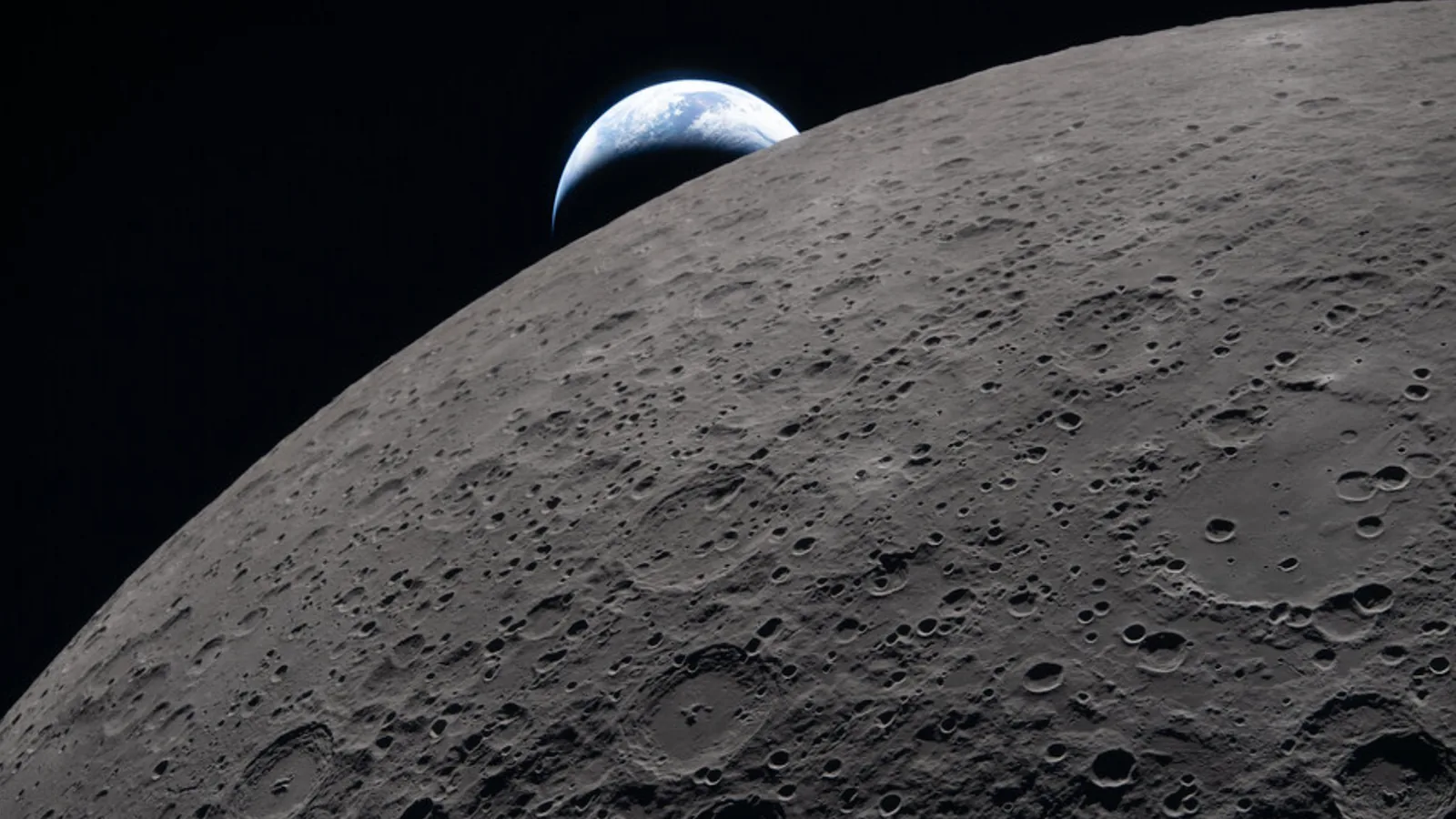
Astronauts aboard NASA's Artemis 2 mission observed multiple light flashes on the far side of the Moon during their April 6 flyby, indicating meteoroid impacts on the lunar surface. These fleeting events, created when small space rocks strike the Moon and vaporize, were detected with the naked eye, highlighting a key advantage of human observation over automated camera systems. "These observations were made with the unaided eye. It's extremely difficult to capture impact flashes with a camera, which is one of the benefits of sending trained crew to observe the moon," Molly Wasser, media lead for NASA Headquarters' Planetary Science Division, told Space.com. Early data suggests these flashes occurred on the lunar far side.
The Artemis 2 mission, which marked the first crewed journey to the Moon since the Apollo 17 mission in 1972, launched on April 1. While the astronauts scanned the lunar surface, citizen scientists on Earth also participated in detecting impact flashes through the newly established Impact Flash citizen science project. This initiative is part of the Geophysical Exploration of the Dynamics and Evolution of the Solar System (GEODES), a program within NASA's Solar System Exploration Research Virtual Institute. The project aims to collect more data on the location and intensity of these flashes during current and future Artemis missions.
Understanding Lunar Dynamics Through Impact Events
Tracking these impact flashes is vital for scientists studying the Moon. "By tracking when and where they happen, scientists can learn how often impacts of different sizes occur, what kinds of craters they create, and how the shock waves travel through the moon's interior," states the Impact Flash project website. Combining these crew observations with data from NASA's Lunar Reconnaissance Orbiter (LRO), future lunar surface instruments, and citizen science efforts can provide valuable constraints on the origin and characteristics of impactors, as well as the resulting craters, according to Wasser. Benjamin Fernando, of Johns Hopkins University, noted that coordinated observations from both Earth and lunar flybys can yield more detailed information about the timing, location, and dynamics of these flashes than single-method approaches. This enhanced data can better constrain the impact flux and associated hazards on the lunar surface.
The implications of this research extend to long-term lunar habitation. Understanding the rate and intensity of meteoroid impacts is crucial for planning Artemis Base Camp, an outpost planned near the Moon's south pole. A 2025 study led by Daniel Yahalomi, a Torres Postdoctoral Fellow at MIT, emphasized that accounting for environmental hazards like impacts is essential for designing long-duration habitats. The study suggests the lunar south pole offers a reduced impact risk compared to equatorial regions, making it a suitable location for sustained human presence. The research also indicated that current shielding technology can effectively mitigate micrometeoroid hazards, reducing the risk to a manageable level for habitat designs.
The hunt for impact flashes was just one of several scientific objectives for the Artemis 2 astronauts during their April 6 flyby. The mission's science team is currently analyzing the extensive data collected, which includes imagery from 31 cameras aboard the Orion capsule, before archiving it on NASA's Planetary Data System. This ongoing analysis promises to deepen our understanding of the lunar environment and the dynamic processes shaping it.