
Curiosity Rover's Arm Freed After Martian Rock Snag
NASA's Curiosity rover experienced a week-long delay after a 28.6-pound Martian rock became lodged in its drill arm. Engineers successfully freed the rover on May 1.

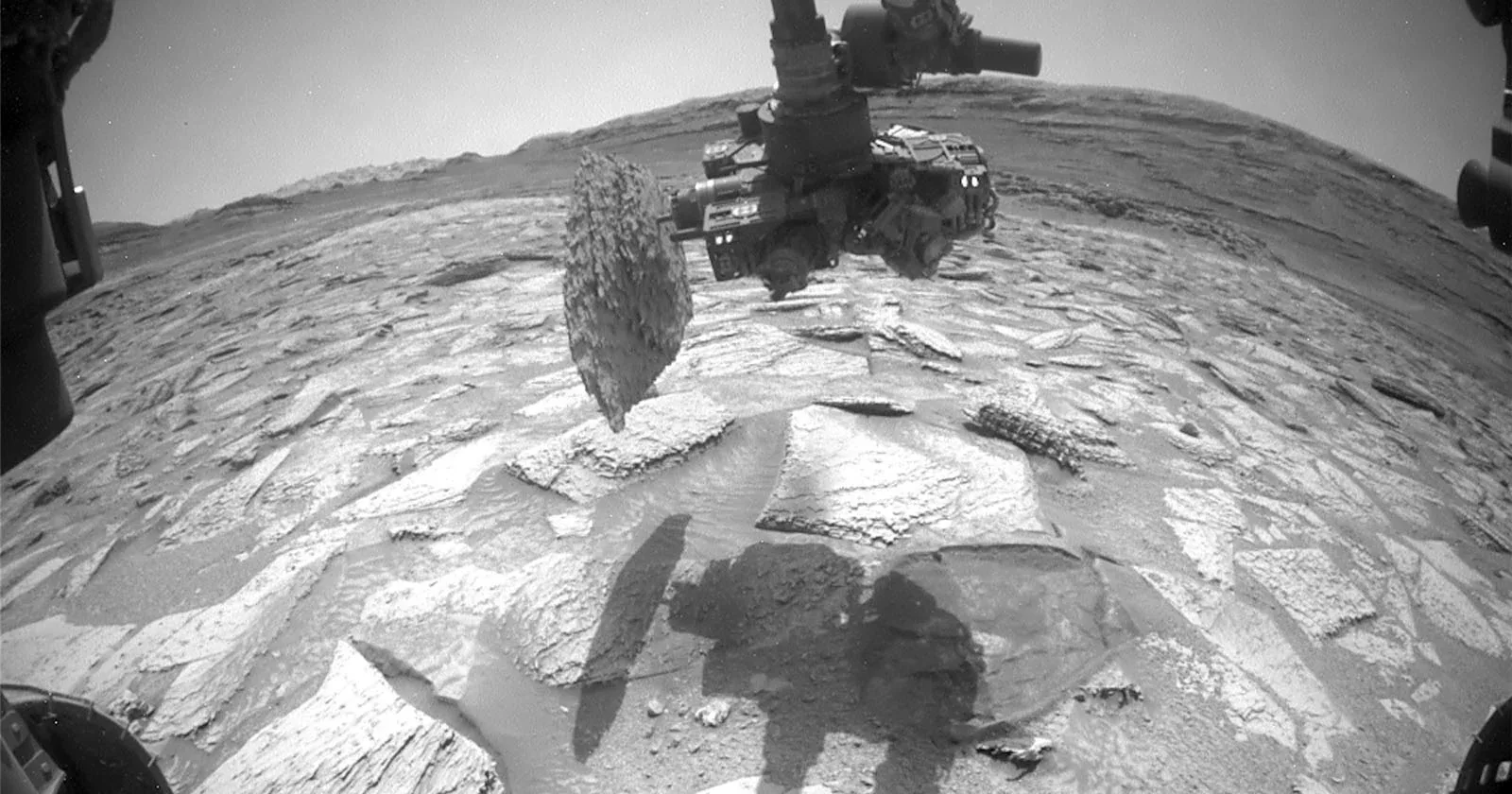
NASA's Mars rover, Curiosity, recently encountered a peculiar predicament on the Red Planet when a sizable rock became lodged in its robotic arm, halting its operations for nearly a week. The incident, which began when the rover drilled into a rock on April 25, saw the rock, weighing approximately 28.6 pounds (13 kilograms) and estimated to be 1.5 feet in diameter, refuse to detach. This unusual obstruction required a meticulous problem-solving effort from mission control, millions of miles away.
The rock, nicknamed "Atacama," presented a unique challenge. "When the rover retracted its arm, the entire rock lifted out of the ground, suspended by the fixed sleeve that surrounds the rotating drill bit," NASA explained in a blog post detailing the event. "Drilling has fractured or separated the upper layers of rocks in the past, but a rock has never remained attached to the drill sleeve." Initial attempts to dislodge "Atacama" involved vibrating the drill, but these efforts proved unsuccessful, showing no change in the rock's grip.
Challenges on the Red Planet
The vast distance separating Earth from Mars, with radio signals taking up to 30 minutes one-way, underscores the complexity of such on-site repairs. The mission team had to carefully plan and execute maneuvers remotely. After the initial unsuccessful vibrations, NASA reoriented the rover's robotic arm and continued to try and shake the rock loose over several days. The Martian environment itself, with its harsh conditions and abrasive dust, continuously challenges the longevity of the rover operations. This isn't the first time unexpected physical interactions with the Martian terrain have caused delays or required extensive analysis.
Finally, on May 1, a coordinated sequence of actions proved effective. "Curiosity’s team tried again, tilting the drill more, rotating and vibrating the drill, and spinning the drill bit," NASA reported. The plan involved potentially repeating these actions multiple times, but the rock detached successfully on the first attempt. Upon its release, "Atacama" fractured as it hit the ground. This successful resolution allowed the Curiosity rover to resume its scientific mission.
The Curiosity rover has been exploring Gale Crater on Mars since its landing in August 2012. Over its extended mission, the rover has gathered invaluable data about the planet's geology, atmosphere, and potential for past microbial life. However, the demanding Martian surface has also taken a toll on the vehicle. In March, images revealed significant wear on the rover's wheels, particularly the middle-right one, a testament to the relentless nature of its exploration across rocky and sandy terrains. These persistent challenges highlight the engineering marvel that is the Mars Science Laboratory mission and the ongoing efforts to maintain robotic explorers in such an extreme environment.