
Earth's 3 Trillion Trees Outnumber Milky Way Stars
A major global study estimates Earth has about 3 trillion trees, far exceeding the estimated 100-400 billion stars in our Milky Way galaxy. This striking comparison highlights both our planet's biodiversity and the vastness of space.

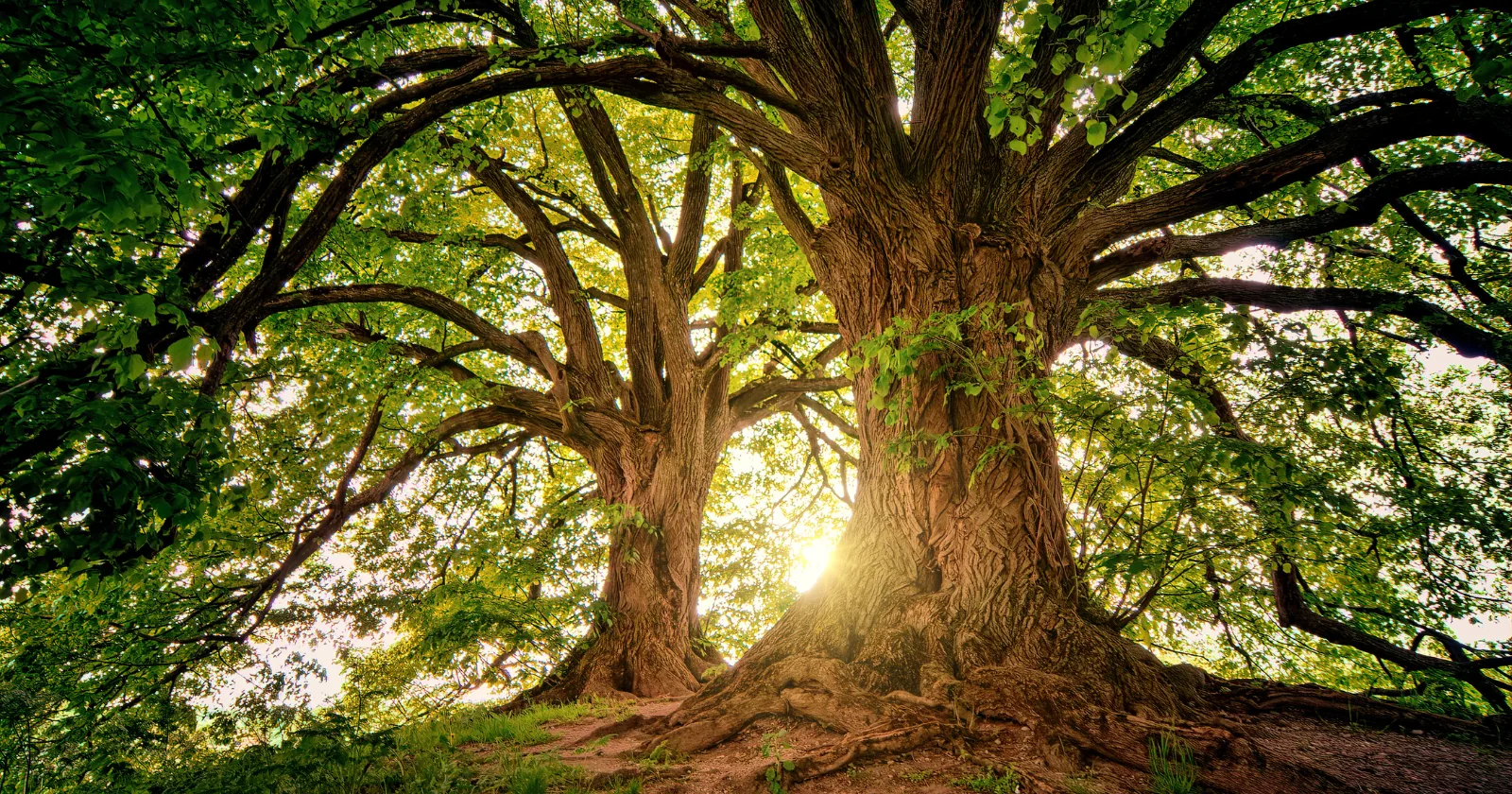
Our planet Earth boasts an estimated three trillion trees, a number that significantly surpasses the estimated star population within the Milky Way galaxy, which ranges between 100 and 400 billion. This widely cited figure for terrestrial trees originates from a comprehensive 2015 study published in the journal Nature. The research, led by Thomas Crowther, revolutionized previous estimations by integrating over 400,000 ground-based tree-density measurements with satellite data, revealing a count an order of magnitude higher than prior assessments.
The stark difference between the two figures is not a result of new trees spontaneously appearing but rather a testament to improved scientific methodology. Earlier estimates relied heavily on satellite imagery and broad forest-area calculations, which often underestimated the actual density of trees on the ground. The 2015 study's groundbreaking approach provided a more accurate, though still an estimate, of the global tree population. It is crucial to understand that this three trillion number represents the most thorough attempt to date rather than a definitive, final tally, and it carries inherent uncertainties.
Galactic Estimates and Methodological Challenges
The uncertainty surrounding the star count in the Milky Way arises from fundamentally different reasons. Astronomers do not count stars individually; rather, they estimate the galaxy's total mass and then determine what fraction of that mass is composed of stars. This figure is then divided by the average mass of a star. The significant range provided, from 100 to 400 billion stars, is largely due to the prevalence of faint, low-mass red dwarf stars. These stars emit little light and are prone to undercounting. Small variations in estimating the population of these common, dim stars can lead to substantial fluctuations in the total galactic star count.
The European Space Agency’s Gaia mission has meticulously mapped the positions of over a billion stars, yet even its advanced capabilities cannot detect the faintest celestial bodies. Consequently, the overall estimate for the Milky Way remains a range. One tree estimate relies on augmenting satellite observations with ground-truth data, while the star count is derived from mass estimations and average star sizes. Both methodologies involve inherent approximations and are not precise headcounts.
This comparison of Earth's trees and Milky Way stars is only valid within the specific confines of our galaxy. When the scope widens to the observable universe, the celestial bodies vastly outnumber terrestrial flora. NASA estimates suggest the observable universe may contain up to two trillion galaxies, with a staggering potential for up to a septillion stars – a one followed by twenty-four zeros. Against this cosmic backdrop, Earth's three trillion trees represent a mere fraction.
Beyond the intriguing comparison, the Crowther study revealed a more sobering reality: the number of trees on Earth has declined significantly. It is estimated that approximately 46 percent of Earth's trees have been lost since the dawn of human civilization. Furthermore, an alarming rate of more than 15 billion trees are lost annually. The approximately three trillion trees remaining today constitute roughly half of the historical forest cover. While the factoid that trees outnumber stars in our galaxy is captivating, the underlying data points to a critical environmental concern: the substantial reduction in global tree populations and the ongoing deforestation crisis.