
Green Hydrogen Production Innovations Transform Steel Industry
Steel manufacturers are adopting advanced green hydrogen technologies in 2026 to cut carbon emissions and meet climate targets. New electrolyzer breakthroughs and cost reductions are making clean hydrogen production economically viable at scale.

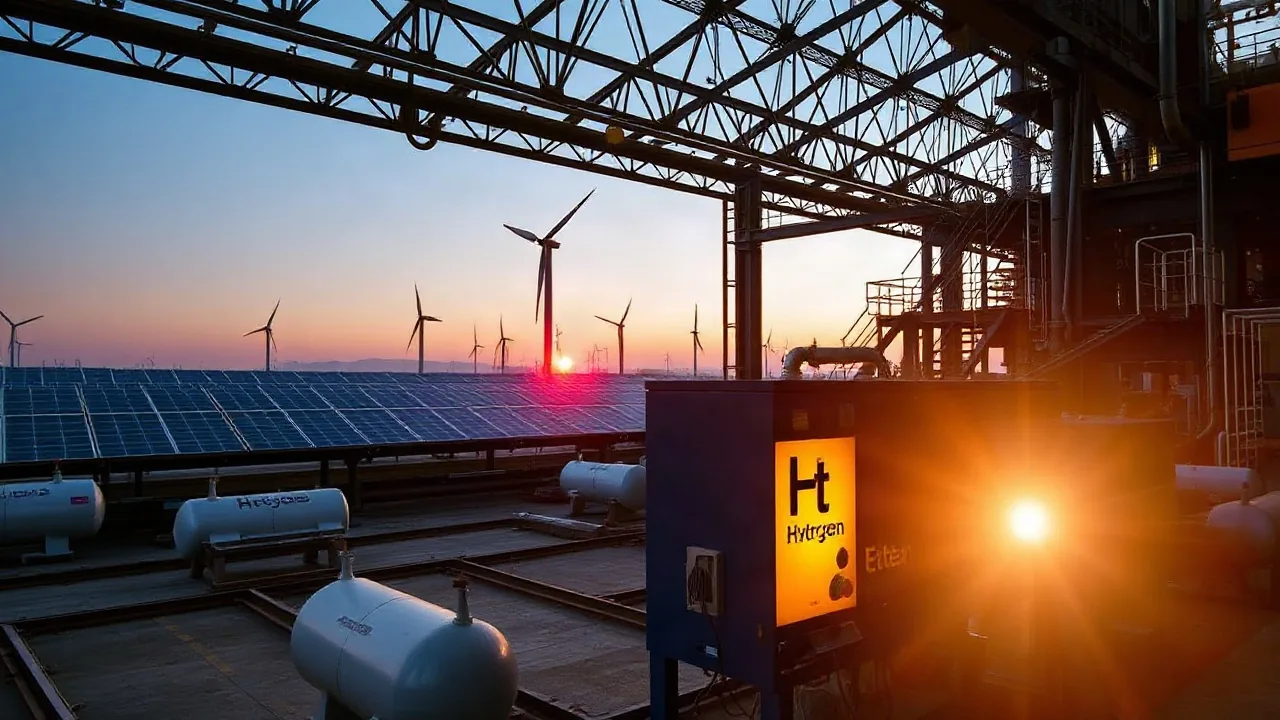
Eliana Moreno, a leading researcher at the International Energy Agency's Clean Energy Division, confirmed in September 2026 that green hydrogen electrolyzer efficiency has crossed the 75 percent threshold for the first time at commercial scale. This milestone represents a turning point for steelmakers across North America and Europe, who collectively produce over 100 million tons of steel annually and are under mounting pressure to eliminate carbon-intensive blast furnaces.
Green hydrogen, produced by splitting water using renewable electricity, is becoming the preferred clean energy pathway for heavy industry. Unlike gray hydrogen, which relies on natural gas reformation and generates 10 tons of CO2 per ton of hydrogen, green hydrogen production emits zero carbon at the point of generation. The steel sector accounts for roughly 7 percent of global CO2 emissions, making it one of the hardest industrial segments to decarbonize.
Three major steelmakers announced joint investments totaling $2.8 billion in August 2026 to build integrated green hydrogen facilities adjacent to their blast furnace complexes. ArcelorMittal's Hamburg facility, Nippon Steel's pilot in Ehime Prefecture, and SSAB's operation in northern Sweden will each produce between 50,000 and 100,000 tons of hydrogen annually by 2029.
Electrolyzer Technology and Cost Reduction
Proton exchange membrane (PEM) and alkaline electrolyzers have seen dramatic cost declines in 2026. Manufacturing expenses fell below $1,000 per kilowatt of capacity, down from $3,200 in 2022. This 69 percent reduction is attributed to economies of scale, standardized component design, and increased competition among suppliers in Germany, South Korea, and China.
"We are at a genuine inflection point," said Dr. Chen Liu, Chief Technology Officer at Nel Hydrogen, in an interview on September 10, 2026. "Stack durability now exceeds 100,000 operating hours, and capital recovery occurs within eight to ten years in regions with renewable power costs below $40 per megawatt-hour."
Alkaline electrolyzers dominate production today, accounting for approximately 60 percent of new installations globally. PEM technology is gaining market share due to superior efficiency with variable renewable input, a critical advantage in regions relying on wind and solar.
Key electrolyzer improvements launched in 2026 include:
- Automated stack assembly reducing defect rates by 40 percent
- Advanced catalyst coatings extending lifespan to 15 years
- Modular design allowing rapid scaling from 10 megawatt to 100 megawatt systems
- Integration with AI-driven power management to optimize renewable intermittency
Steel Industry Adoption and Regulatory Push
The European Union's Carbon Border Adjustment Mechanism (CBAM), which took effect in October 2023 and escalates tariffs through 2026, has accelerated steelmaker investment in sustainability measures. Under the current framework, steel exports face tariffs of 20 percent on embedded carbon above a benchmark of 1.95 tons of CO2 per ton of steel.
Replacing carbon-intensive coking coal with green hydrogen requires operational redesign. Blast furnaces are being retrofitted with hydrogen injection ports, while direct reduction electric (DRE) furnaces, which use hydrogen or natural gas to reduce iron ore to sponge iron, are being constructed in parallel production lines. This hybrid approach allows steelmakers to phase out coal without abandoning existing assets.
The U.S. Environmental Protection Agency announced in March 2026 that steel production facilities utilizing green hydrogen are eligible for up to $15 per kilogram in production tax credits under the Inflation Reduction Act. This incentive has prompted domestic steelmakers in Ohio, Indiana, and Pennsylvania to accelerate their hydrogen procurement timelines.
ArcelorMittal, which operates approximately 30 percent of North American steel capacity, committed to achieving net-zero carbon emissions by 2050 and has designated green hydrogen as its primary decarbonization technology. The company has signed long-term contracts to purchase 200 megawatts of dedicated renewable power capacity in Texas and California to feed its electrolyzer plants.
Supply Chain Challenges and Market Outlook
Despite rapid innovation, green tech infrastructure for hydrogen remains incomplete. Pipeline networks suitable for bulk hydrogen transport exist only in western Europe and parts of the Midwest. Building new dedicated hydrogen pipelines requires 8-10 years of permitting and construction, creating a bottleneck for steelmakers in geographically isolated regions.
On-site hydrogen production via electrolyzer is the near-term solution, but it requires proximity to renewable power plants. This constraint has driven steelmaker partnerships with wind and solar developers. In June 2026, U.S. Steel signed a 15-year power purchase agreement with a 500 megawatt wind farm in Wyoming, with hydrogen production as the primary end-use.
The global green hydrogen market is projected to reach $45 billion by 2030, according to analysis from Bloomberg NEF published in July 2026. Steel industry demand alone is expected to comprise 28 percent of that market, equivalent to 12 million tons of hydrogen annually by decade's end.
Cost competitiveness with gray hydrogen remains the critical metric. At current renewable electricity rates of $25-$45 per megawatt-hour in optimal regions, green hydrogen reaches price parity or cost advantage in parts of Scandinavia, Texas, and the U.S. Great Plains. Most other regions will require either lower power costs, higher carbon tariffs, or production subsidies to justify conversion.
Climate tech investors continue to fund innovation in hydrogen storage, transportation, and end-use applications. Hydrogen carriers such as ammonia and methylcyclohexane are being developed to transport hydrogen over longer distances without requiring new pipeline infrastructure.
The steel industry's transition to green hydrogen is neither complete nor irreversible. However, the convergence of regulatory pressure, cost reduction, and technology maturity in 2026 makes it the dominant decarbonization pathway for the decade ahead. Investment decisions made in the next 12-24 months will determine which steelmakers lead the transition and which fall behind in competing for low-carbon metal markets.