
AI Pet Project Outpaces Meta's Virtual Companions
An independent developer has created an AI-powered virtual pet, predating similar concepts rumored from Meta. The device uses an ESP32 chip and LLM for interactive companionship.

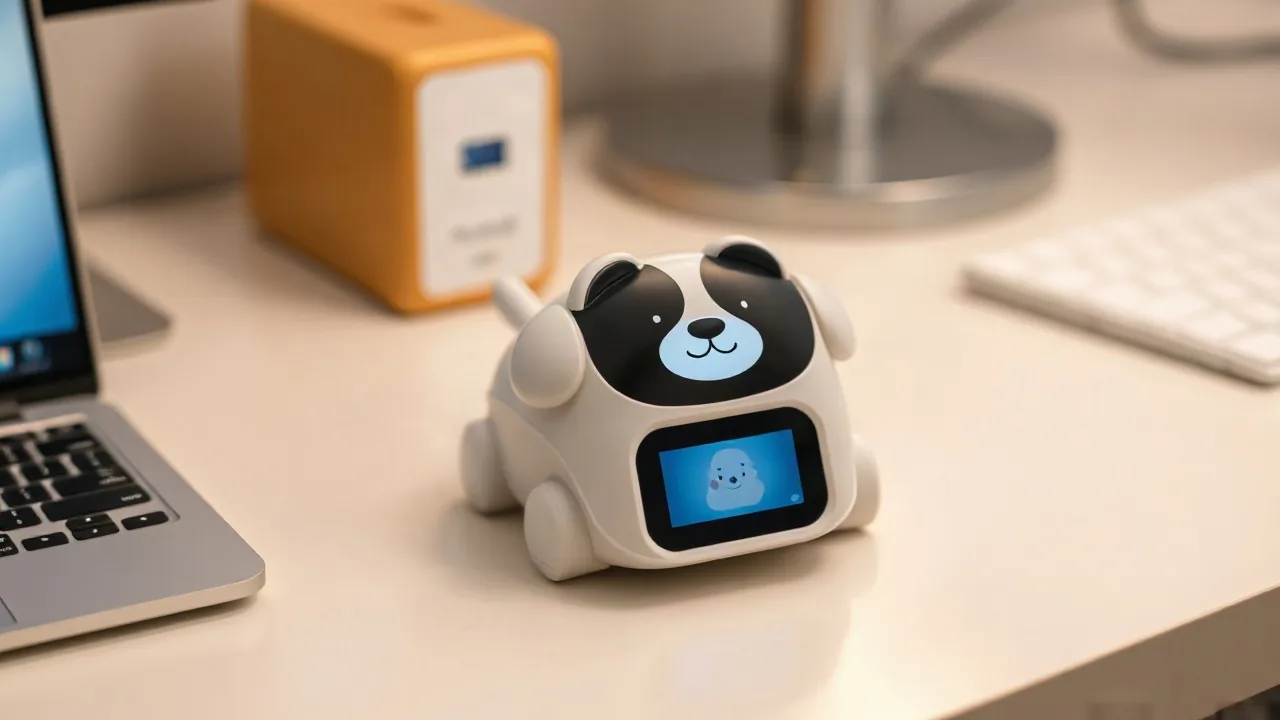
A hobbyist developer has successfully created an interactive AI virtual pet, dubbed "Muse Charm," weeks before Meta Platforms is rumored to be working on a similar concept. The small, palm-sized device features a screen and speaker, allowing it to interact with its owner through synthesized speech and animated expressions, offering a glimpse into the future of personal AI companionship.
The project, led by an individual developer, highlights the rapid pace of innovation in the artificial intelligence space, where independent creators can quickly bring novel ideas to life. Unlike Meta's rumored project, which is expected to be integrated into its existing social platforms, the Muse Charm is a standalone gadget designed for direct, personal interaction. Early demonstrations show the AI pet responding to user input, displaying emotions, and engaging in simple conversations, powered by an advanced language model.
Interactive AI Companionship Evolves
The core technology behind Muse Charm is its reliance on a Waveshare ESP32-S3 development board, equipped with a small LCD screen and a microphone. This hardware enables the AI to process voice commands and respond with both auditory cues and visual feedback. The AI model used is an open-source large language model (LLM), which allows for dynamic and personalized interactions. This approach bypasses the need for constant cloud connectivity for basic functions, offering a more immediate and responsive user experience.
The developer stated, "The goal was to create something genuinely interactive and emotionally resonant, a digital companion that feels alive." This sentiment underscores a growing trend in consumer electronics towards AI that offers more than just utility, aiming instead for emotional connection and companionship. While Meta's reported efforts are focused on integrating AI into virtual and augmented reality environments, this independent project demonstrates that tangible, physical AI companions are also a viable and accessible frontier.
Background context for this innovation lies in the broader advancements in LLMs and microcontrollers. The increasing power and decreasing cost of these technologies have democratized AI development, enabling individuals and small teams to compete with tech giants. Projects like Muse Charm are not just proof-of-concepts; they represent a shift towards personalized AI experiences that can be tailored to individual needs and preferences, moving beyond generic virtual assistants.
The development cycle for Muse Charm was notably swift, with the creator aiming to deliver a functional prototype in a matter of months. This agility is a stark contrast to the longer development timelines often seen in large corporations. The success of such independent projects could influence future product development strategies for major tech companies, potentially leading to a more diverse and competitive market for AI-driven gadgets.
Looking ahead, the potential applications for this type of AI companionship are vast. Beyond simple entertainment, such devices could serve as therapeutic tools, educational aids, or even personal organizers with a more engaging interface. The ethical considerations and the long-term impact of fostering emotional bonds with AI are areas that will undoubtedly be explored as these technologies mature and become more widespread.