
Allan Nascimento on Gaming Hardware and Performance Optimization
Brazilian esports analyst Allan Nascimento breaks down the hardware choices and PC build strategies that drive competitive gaming performance in 2026.

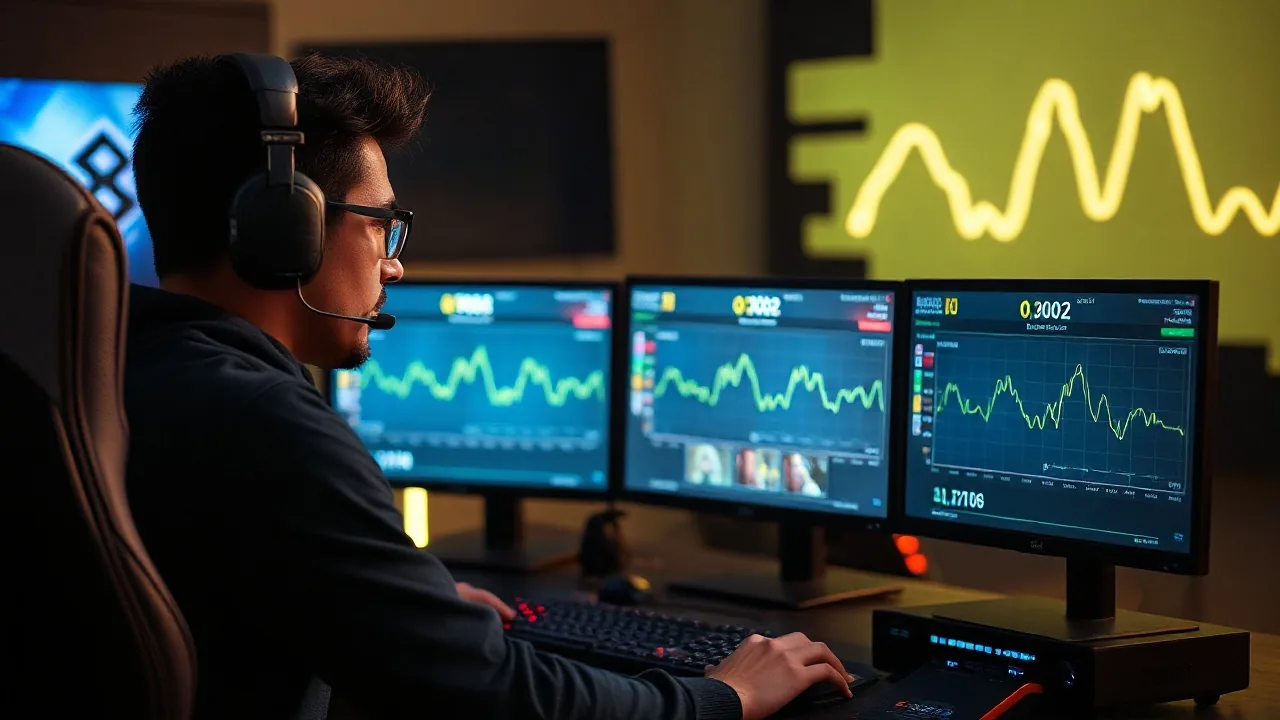
Allan Nascimento has become one of Latin America's most influential voices in esports hardware analysis, offering detailed breakdowns of the gear and setups that separate top-tier competitors from the rest. In August 2026, his latest content focuses on the intersection of budget constraints and peak performance, addressing what professional players and serious enthusiasts actually need versus what marketing teams want them to buy.
Nascimento's approach differs from typical gaming gear reviews because he ties every recommendation directly to measurable frame rates, input latency, and real tournament results. Rather than reviewing the most expensive components available, he identifies the performance-per-dollar sweet spots that have changed dramatically over the past 18 months due to supply chain normalization and new manufacturing processes from Intel, AMD, and NVIDIA.
The 2026 PC Build Framework
According to Nascimento's latest analysis, the foundation of a competitive PC build in 2026 rests on three pillars: CPU architecture improvements that favor esports engines, GPU efficiency gains in the mid-range, and power supply stability that prevents frame inconsistency. "The player who understands the difference between consistent 240 frames and inconsistent 280 frames will win," Nascimento explained in a recent stream, emphasizing that stability matters more than peak numbers.
Current-generation CPUs from AMD's Ryzen 9 series and Intel's Core i9 processors deliver diminishing returns for esports titles compared to their predecessors. Nascimento recommends the Ryzen 7 7800X3D for most competitive gamers, citing its 3D V-Cache technology, which improves cache hit rates in fast-paced games like Counter-Strike 2 and Valorant by 8 to 12 percent over baseline Ryzen 7 models. The total system cost sits around $2,100 to $2,400 USD, down from $2,800 to $3,200 two years ago.
Graphics cards have also experienced a major shift in value. Nascimento argues that NVIDIA's RTX 4070 Super now handles 1440p 240Hz gaming in esports titles with stable power consumption, reducing heat output by 15 watts compared to earlier flagships. "Most players don't need a 4090. They need consistency and driver stability," he noted in a hardware roundup published mid-July.
Monitoring and Input Latency: The Hidden Variable
Beyond the core components, Nascimento emphasizes that peripheral selection and gaming setup ergonomics determine whether hardware potential translates to actual wins. He has spent considerable time measuring end-to-end input latency, from mouse sensor to monitor display, across different configurations.
His testing revealed that monitor response time remains the largest variable in perceived lag. High-refresh 240Hz to 360Hz panels from manufacturers like ASUS ProArt and BenQ Zowie deliver consistently sub-4-millisecond gray-to-gray latency, but only when connected via DisplayPort and paired with the correct refresh rate settings in the GPU control panel. One misconfigured setting can add 8 to 12 milliseconds of unintended delay.
Mouse hardware has stabilized around 8000Hz polling rates as the industry standard, making the difference between competing models marginal. Nascimento instead focuses on surface material, cable weight, and shape ergonomics based on grip style. His recommendation list includes peripherals ranging from $35 to $120, showing that price alone does not correlate with competitive advantage.
Keyboard choices present a different challenge. Nascimento notes that mechanical switch travel distance and actuation point matter far more than brand prestige or RGB lighting. For esports, he favors linear switches with 45-gram actuation force and 2.0mm actuation distance, enabling rapid, repeatable keypresses without finger fatigue during eight-hour practice sessions.
The Reality of Budget Constraints
One of Nascimento's strongest contributions to the esports community is his refusal to pretend that elite performance requires unlimited spending. He regularly publishes tiered build guides: competitive-entry at $800 to $1,200, mid-tier at $1,800 to $2,500, and high-end at $3,200 and above. Each tier targets specific achievement levels and play styles.
For regional qualifiers and semi-professional tournaments, Nascimento's $1,200 baseline build delivers sufficient performance. The bottleneck shifts from hardware to player fundamentals, decision-making, and team communication. He has documented cases where players spent $8,000 on gear and still placed below competitors using $1,500 systems because they neglected aim training and game sense.
This message resonates strongly in emerging esports markets across Latin America and Southeast Asia, where sponsorship dollars don't flow as freely. Nascimento's hardware recommendations have influenced purchasing decisions for hundreds of aspiring players, and several organizations now reference his analysis in their scouting materials.
The esports tech landscape continues to evolve. Nascimento is currently tracking the rollout of new ray-tracing acceleration features in upcoming game engines, which could shift GPU selection criteria by Q4 2026. He remains skeptical that ray-tracing will impact esports competitively before 2027, but he monitors the development closely to advise his audience ahead of any industry-wide pivot.
Nascimento's content demonstrates that gaming hardware analysis, when grounded in measurement and skepticism toward marketing claims, serves a genuine audience need. Players want clarity on where to allocate limited resources. His work delivers that clarity through rigorous testing, transparent reasoning, and an unwavering focus on measurable competitive advantage rather than prestige or price tags.