
Apple Free Mac Mini Upgrades: M4 Orders Shift to M6 and M5 Pro
Apple is offering complimentary upgrades for recent Mac mini orders featuring the M4 chip to newer M6 or M5 Pro models due to backorder issues. Customers awaiting delivery are being moved to the advanced configurations.

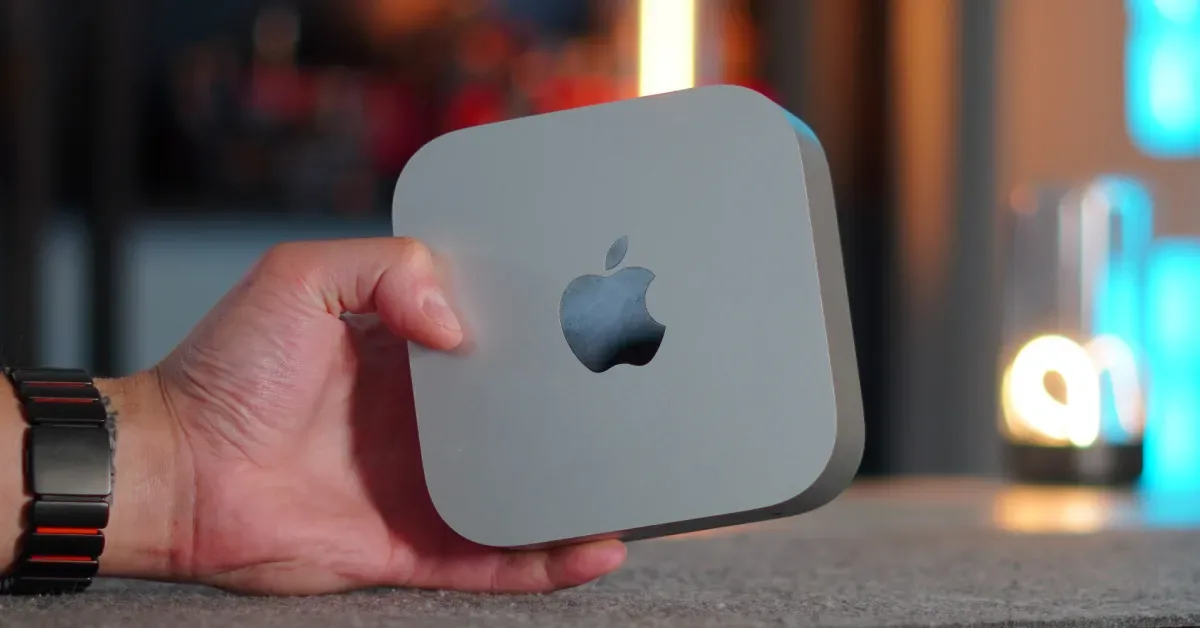
Apple has begun automatically upgrading customers who recently placed orders for the M4 Mac mini to its newer M6 and M5 Pro chip configurations at no extra cost. The move comes as a response to significant backorders affecting various Mac mini models, particularly those equipped with the M4 processor.
Reports surfaced online, notably from MacRumors and Reddit, detailing instances where customers awaiting M4 Mac mini shipments were contacted by Apple with an upgrade offer. Instead of waiting for their original order, these users will receive a Mac mini equipped with either the M6 or M5 Pro chip. This proactive approach aims to mitigate customer dissatisfaction arising from the announcement of superior models after purchase and lengthy delivery times.
One user shared on Reddit that their M4 Pro model order, placed about ten days prior and not yet shipped, was upgraded to an M5 Pro version. This customer effectively saved approximately $300, the price difference between the M4 Pro and the M5 Pro models. The situation suggests that Apple may be experiencing production or supply chain advantages with the newer M6 and M5 Pro chips compared to the M4 models, making it more feasible to fulfill these upgraded orders promptly.
Supply Chain Dynamics Influence Customer Experience
The free upgrade initiative highlights Apple's strategy to manage inventory and customer expectations amid potential supply chain challenges. Historically, Apple has faced periods of intense demand and limited availability for its popular products, leading to extended wait times. Offering upgrades to newer, potentially more capable, hardware can serve as a goodwill gesture, preserving customer loyalty and potentially mitigating the impact of delayed deliveries.
This practice is not entirely new for Apple, which has previously offered comparable upgrades in similar situations. The decision to absorb the cost difference for these upgrades underscores the company's commitment to customer satisfaction, especially for its premium Mac mini product line. The M6 and M5 Pro chips represent a performance leap over the M4, offering enhanced processing power and efficiency, which ultimately benefits the end-user. The company has not publicly commented on specific production challenges related to the M4 chip but the widespread upgrades point to a strategic decision to leverage existing stock and production capacity for newer models.
For customers, this unexpected upgrade represents a significant value proposition, providing them with a more powerful machine than they originally ordered without additional expense. The Mac mini, a compact desktop computer, is favored by professionals and home users alike for its versatility and performance. The introduction of the M6 and M5 Pro chips signifies the latest advancement in Apple's silicon technology, promising even greater speed and capabilities for demanding tasks such as video editing, software development, and graphic design.
The implications of these free upgrades extend beyond individual customer satisfaction. They also provide valuable insight into Apple's internal production and inventory management. The apparent ease with which Apple can substitute M6 and M5 Pro chips for M4 chips suggests a strategic prioritization of its latest silicon. This situation may also prompt consumers to consider the potential for future benefits when ordering products that are experiencing extended backorders, as companies may look for ways to rectify the customer experience.