
SpaceX Falcon 9 Rocket Performance: Launch Capacity Analysis
SpaceX's Falcon 9 continues to dominate commercial spaceflight in 2026 with record payload delivery and reusability milestones. We break down the latest launch metrics and mission success data.

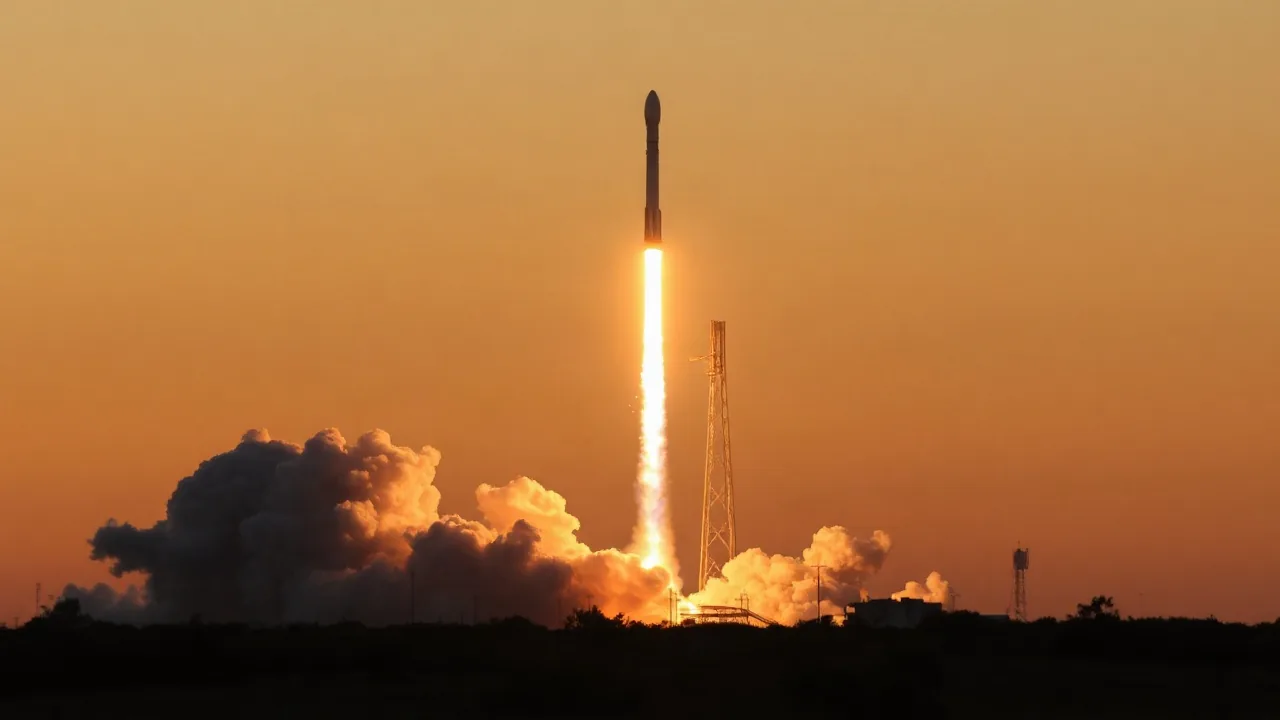
SpaceX launched its latest Falcon 9 mission in late September 2026, deploying a batch of Starlink satellites and a commercial cargo payload to orbit in a single flight that underscored the rocket's role as the workhorse of American spaceflight. The two-stage vehicle lifted off from Cape Canaveral Space Force Station at 2:14 p.m. EDT, completing its primary objective within 32 minutes of ignition.
The Falcon 9 has become synonymous with routine orbital access. Since its first successful orbital launch in 2015, the vehicle has logged over 280 total flights as of October 2026, making it statistically the most frequently launched orbital rocket in history. This consistency has reshaped the economics of space transportation.
"The Falcon 9's reusability model has compressed launch costs by an order of magnitude compared to expendable systems," said Tom Sheldon, aerospace analyst at commercial spaceflight research firm Orbital Insights, in a statement to reporters on September 28. "We're seeing price points that were unimaginable five years ago."
Technical Specifications and Payload Capacity
The Falcon 9 employs two propulsive stages fueled by RP-1 kerosene and liquid oxygen. The first stage generates 1.7 million pounds of thrust at sea level, powered by nine Merlin engines arranged in a 3-by-3 grid. This configuration allows the vehicle to lift 22,800 kilograms to low Earth orbit (LEO) in expendable mode, or 15,600 kilograms when the first stage is recovered for reuse.
The second stage carries a single Merlin vacuum engine rated at 220,500 pounds of thrust in the thin upper atmosphere. Payload fairings, which protect cargo during ascent, measure 5.2 meters in diameter and 13.1 meters in length. Most commercial missions use the Dragon capsule or carry multiple satellites in a stacked configuration within the fairing.
Recent launches in 2026 have highlighted the vehicle's rocket performance across different mission profiles:
- Sun-synchronous orbit (SSO) insertions at 500 kilometers altitude with 5,100-kilogram payloads
- Geostationary transfer orbit (GTO) missions carrying 8,300-kilogram satellites
- Low Earth orbit constellation replenishment flights with 60-spacecraft Starlink batches
- Lunar transit trajectories for private cargo landers
First-stage recovery remains the defining feature of Falcon 9 operations. SpaceX has landed and reflown the B5 booster variants more than 40 times as of Q3 2026, with the oldest active core completing its 19th flight in August. This dramatic reduction in per-launch costs has allowed the company to undercut traditional launch providers by 60 to 75 percent on comparable missions.
Mission Success Rates and Reliability Metrics
Through October 5, 2026, SpaceX has achieved a 100 percent mission success rate on Falcon 9 flights in 2026, completing 26 launches without a primary objective failure. This record, combined with the vehicle's 98.9 percent historical success rate across all 280 flights, positions it as the most reliable American orbital launcher.
The 2026 flight cadence has accelerated significantly. SpaceX achieved 26 Falcon 9 launches in the first nine months of the year, averaging nearly three launches per month. This pace reflects growing demand from commercial satellite operators, government agencies, and international customers seeking assured access to orbit.
Payload analysis from October 2026 missions shows a shift toward heavier commercial satellites. Traditional telecom operators have ordered 35 additional GTO-class spacecraft for 2027 deployment, requiring multiple Falcon 9 GTO missions. Meanwhile, the Starlink constellation expansion continues unabated, consuming approximately 12 Falcon 9 flights annually to maintain constellation phasing and augment total satellites.
Specific performance data from the latest launches reveals consistent thermal margins during ascent. Booster boiloff levels remain below design thresholds, suggesting no near-term need for propellant tank modifications. Second-stage vacuum engine throttling, used to achieve precise orbit insertion, has been refined to maintain sub-100-meter altitude tolerances at deployment.
Commercial and Strategic Applications in 2026
The Falcon 9's aerospace technology platform now supports distinct operational tiers. Commercial customers range from Netflix-funded satellite internet startups to established telecom firms. Government customers include the U.S. Space Force, National Reconnaissance Office, and NASA, which uses Falcon 9 to resupply the International Space Station.
International partnerships have expanded the vehicle's footprint. Japan's NEC completed a Falcon 9 launch in July 2026 for a weather satellite, while the UAE contracted two additional missions for earth observation spacecraft. European operators have booked five confirmed flights through 2027.
The competitive landscape has tightened. Blue Origin's New Glenn remains in development, targeting operational debut in late 2027. Relativity Space's 3D-printed rockets are undergoing final testing. Yet none have achieved the launch cadence or reliability profile that SpaceX maintains with Falcon 9 as of October 2026.
Looking forward, SpaceX launch plans include sustained Falcon 9 operations through at least 2030 alongside Starship development. Engineers at SpaceX have indicated that Falcon 9 will continue carrying national security payloads even as Starship enters frequent crewed flights, since the smaller rocket requires less range infrastructure and poses lower risk for sensitive classified missions.