
Framework Laptop 13 Pro: Repairable Notebook Elevates Design and Performance
Framework's latest Laptop 13 Pro offers a premium design, enhanced performance, and remarkable repairability, aiming to rival top-tier machines despite high costs due to RAM shortages.

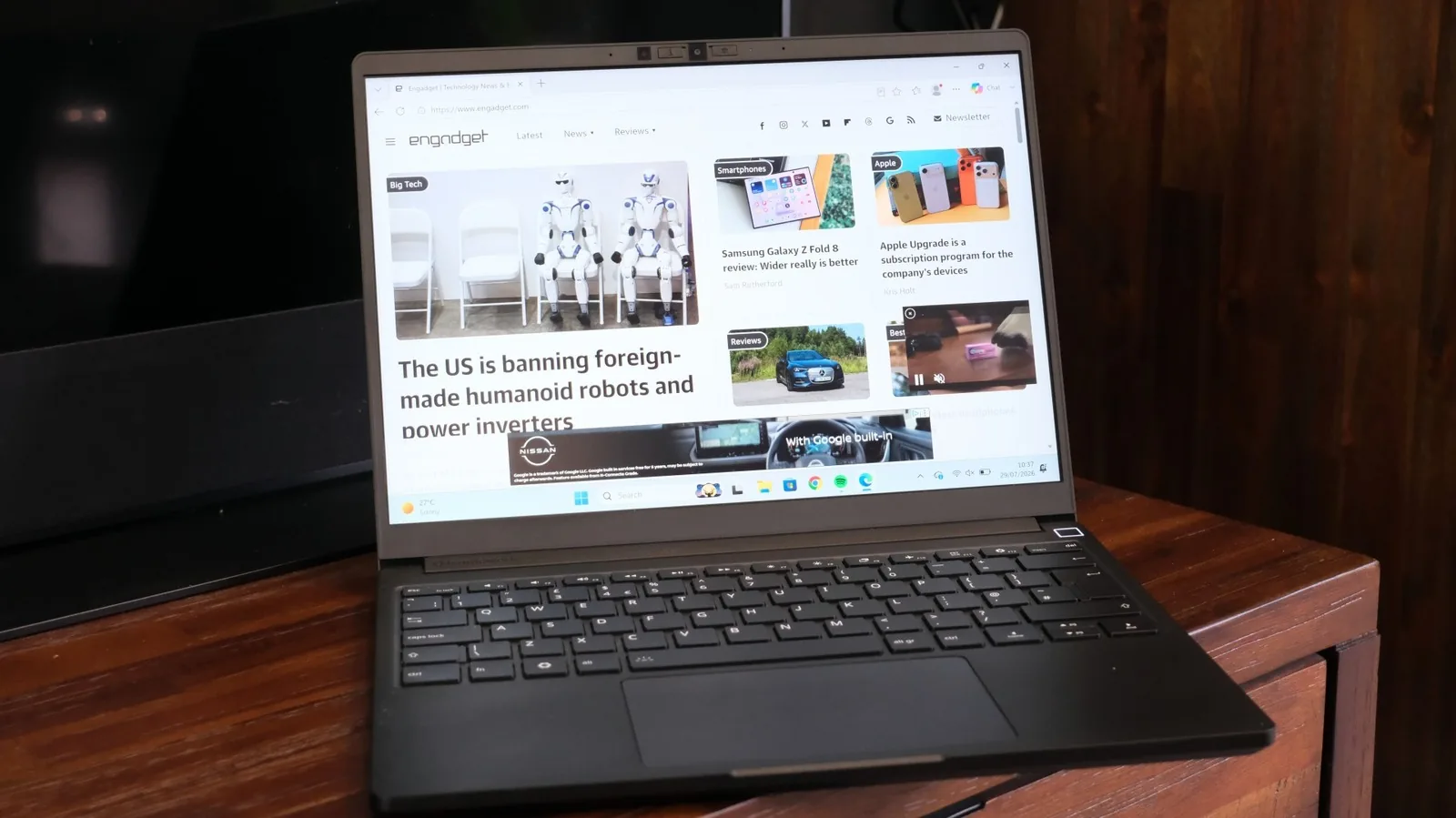
The Framework Laptop 13 Pro has arrived, marking a significant evolution for the company's vision of a modular and repairable notebook. Designed to compete with industry giants, this latest iteration boasts a refined aesthetic, boosted performance, and user-upgradability that aims to eliminate the perception of compromise. CEO Nirav Patel's benchmark has been the MacBook Pro, and the 13 Pro is Framework's ambitious attempt to deliver a comparable experience for Linux and Windows users. Early impressions suggest Framework has not only met but exceeded expectations, creating a device that is visually appealing, performs exceptionally, and feels superior to the touch, with the primary caveat being a temporarily inflated price point due to current RAM market conditions.
From the moment it's unboxed, the commitment to detail is apparent. The machined aluminum chassis feels robust, complemented by a sophisticated "Graphite" paint job. Subtle design enhancements, such as chamfered edges replacing sharp angles and rounded rubber feet, contribute to a more premium look and feel. The seamless integration between the input cover and bottom case creates the illusion of a single metal piece, a stark contrast to the more utilitarian appearance of earlier models. Framework's core mission—to create a single, 13-inch modular laptop that users can repair and upgrade over time—remains central. This commitment is evident in the compatibility of new components with older Framework Laptop 13 models, allowing for seamless mainboard upgrades, though some component pairings, like Wi-Fi modules with specific mainboards, require attention.
Enhanced Performance and User Experience
The 13 Pro introduces several key upgrades designed to elevate the user experience. A new 74Wh battery, larger than its predecessors, necessitates a redesigned bottom cover, which paradoxically makes the laptop appear sleeker. The input cover features a familiar 1.5mm chiclet keyboard, but this iteration is paired with a new haptic touchpad, engineered to rival the precision and feel of those found in MacBooks. Quality-of-life improvements include a revised expansion card slot mechanism, adopting the latch system from the Laptop 16 for easier swapping. As standard, four USB-C ports offer versatile connectivity, with the Intel model supporting Thunderbolt 4 across all slots. A notable addition is the 13.5-inch, 2,880 x 1,920 touchscreen display, an upgrade compatible with most existing 13-inch Framework Laptop models, excluding the Chromebook variant.
For users opting for the AMD configurations, the Framework 13 Pro can be equipped with the Ryzen AI 300 series chips, utilizing DDR5 RAM. Those favoring Intel will find the new Panther Lake chips require LPCAMM2 RAM. This removable format of LPDDR5x RAM, while contributing to the current elevated price of the machine, offers a distinct advantage: users can upgrade their RAM without replacing the entire motherboard, extending the device's lifespan. The review unit featured an Intel Core Ultra X7 358H processor with Intel Arc B390 graphics, 32GB of LPCAMM2 RAM, and a 1TB SSD. While such specifications would typically retail around $1,500, the current market conditions, particularly the "AI bubble" and RAM scarcity, have pushed the price to approximately $3,100.
The keyboard offers a satisfying tactile response, and the haptic touchpad lives up to its promise, providing a premium feel. The anti-glare display performs admirably even in bright conditions. While the touchscreen functionality is present, its utility on a clamshell design that lays flat is debatable for some users. However, areas like audio and webcam quality suggest room for improvement. The integrated 2W side-firing speakers produce thinner audio compared to some competitors' built-in solutions. Similarly, the HD webcam's output appears grainy and desaturated, though software updates may address these shortcomings over time.
Framework's long-standing challenge has been thermal management. The modular design, integrating fans and heat pipes directly onto the mainboard, historically required the fans to work harder, leading to noticeable noise under load. This iteration, however, sees significant improvements. Assistance from Intel on cooling design, combined with the efficiency of the new 18A process Panther Lake/Core Ultra Series 3 chips, results in a remarkably quiet operation. Under normal use, the laptop is virtually silent, with fan noise only becoming apparent when subjected to heavy processing tasks, and even then, it is substantially reduced compared to previous models. This quiet operation, even during a heatwave while writing this review, represents a major leap forward for Framework Laptop engineering.