
iPhone 20th Anniversary: Major Redesign, Under-Display Face ID Rumored for 2027
Apple's 20th-anniversary iPhone, expected in fall 2027, may feature a radical all-glass design, under-display Face ID, and custom camera sensors, marking a significant evolution for the device.

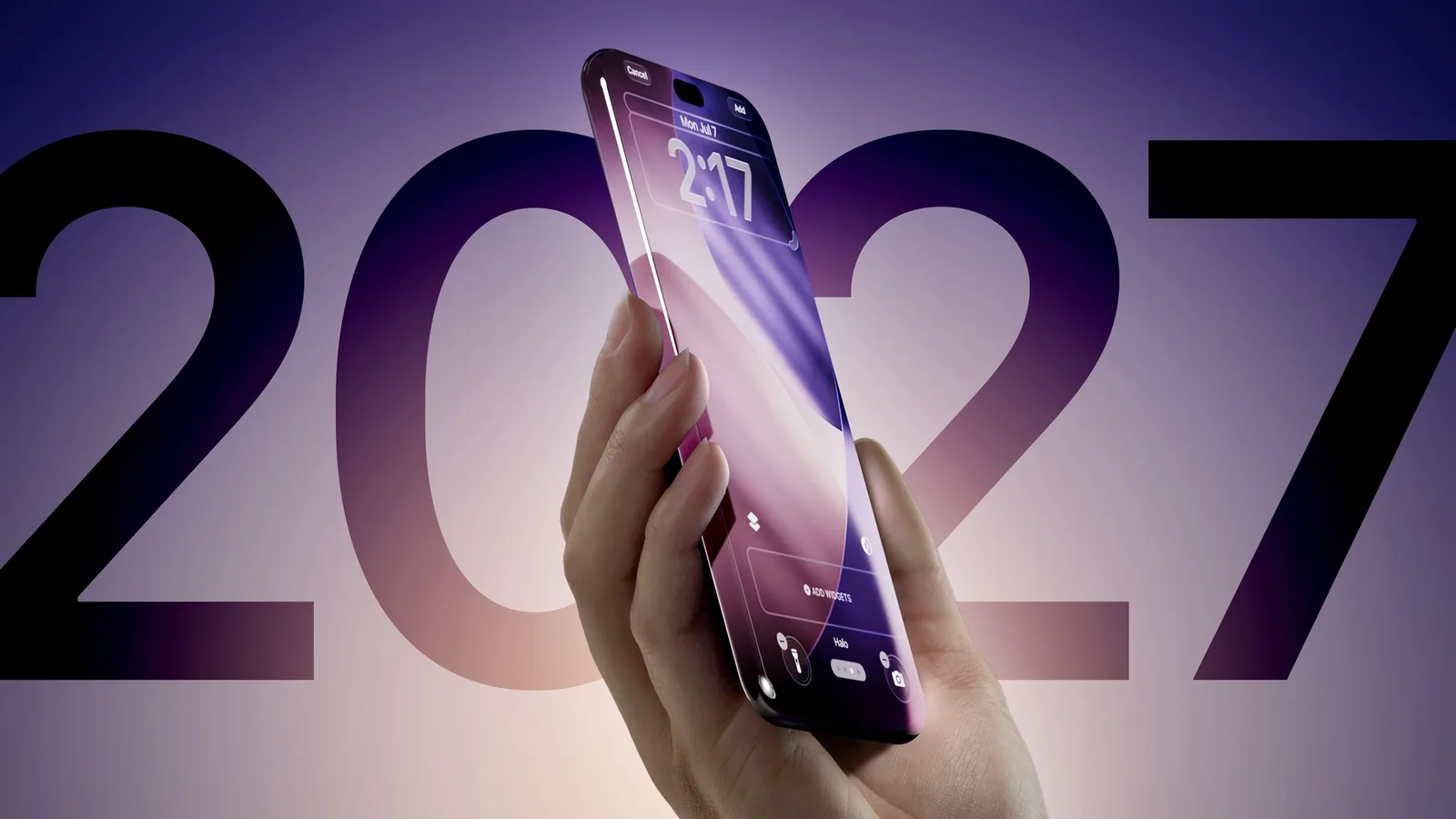
Apple is reportedly gearing up for a revolutionary redesign of its flagship smartphone for the iPhone's 20th anniversary, slated for release in the fall of 2027. This upcoming model, potentially named "iPhone 20" or "iPhone XX," is anticipated to be the most substantial visual and technological overhaul since the iPhone X introduced in 2017. The first iPhone, unveiled in January 2007 and released in June of that year, will celebrate its two-decade milestone in mid-2027. While Apple typically launches new iPhones in September, the anniversary edition is expected to follow the iPhone X's precedent of a fall release, even if the anniversary itself falls in the summer.
Rumors circulating for over a year suggest an ambitious vision for the device, encompassing an all-glass aesthetic and advanced display innovations. This new design is expected to set the trajectory for future iPhone generations, much like the iPhone X did a decade prior. The potential skipping of the "iPhone 19" moniker, mirroring the absence of "iPhone 9" before the iPhone X, further emphasizes the significance of this upcoming release.
Radical All-Glass Design and Display Enhancements
The most striking rumored feature is a curved, all-glass body with an edge-to-edge display that wraps around the front and back. Sources describe this as a "curved iPhone without cutouts," potentially eliminating notches or Dynamic Islands in favor of a seamless screen. Manufacturing facilities are reportedly undergoing renovations to accommodate production, with quality standards said to rival the original iPhone. The display is expected to feature subtle, shallow curves on all four edges for a borderless look, avoiding the more aggressive "waterfall" effect seen on some competitor devices. This quad-curved design aims to enhance the natural feel of edge swipes and minimize screen distortion. To protect the advanced OLED panel from environmental factors, an ultra-thin film encapsulation layer is said to be employed, potentially resulting in extremely thin bezels, estimated at 1.1mm compared to the current iPhone 17 Pro's approximately 1.44mm.
Beyond the form factor, the display technology itself is poised for a leap forward. Apple is reportedly considering Samsung-made panels utilizing Color Filter on Encapsulation. This technique removes the polarizing film and applies the color filter directly to the encapsulation layer, leading to a thinner display stack. This not only allows more light to pass through, enhancing brightness, but also reduces power consumption. Paired with next-generation 16nm display driver chips, the screen is expected to boast superior energy efficiency. Additionally, a crater-shaped light diffusion layer is being explored to ensure uniform brightness across the entire display, including the curved edges.
A significant area of development is the integration of Face ID technology beneath the display. While initial reports suggested this feature might debut on iPhone 18 Pro models, industry analysts like Ross Young indicate that full under-display Face ID might not be perfected even by 2027. A more likely scenario for the anniversary iPhone could be a smaller Dynamic Island, similar to what is anticipated for the iPhone 18 Pro. Apple is also reportedly planning two size options for the anniversary model, mirroring the 6.3-inch and 6.9-inch dimensions of the iPhone 18 Pro and Pro Max, though the larger model might be marketed as a 7-inch device due to its slim bezels.
Internal component upgrades are also a major focus. Apple is reportedly developing its own custom image sensor, moving away from the Sony sensors currently used. This new sensor, rumored to employ LOFIC (Low-power Lossy Image Sensor) technology, could significantly improve dynamic range, potentially reaching up to 20 stops. Furthermore, the company is exploring the revival of "Project Bongo" to replace physical buttons with solid-state haptic equivalents. These touch-sensitive buttons, integrated into the iPhone's frame, are said to function even with gloves, wet hands, or extreme temperatures, and an ultra-low energy microprocessor would ensure they work even if the battery is depleted.
The anniversary iPhone is expected to be powered by the new A21 chip, built on a 2-nanometer process. Apple is also considering integrating high-bandwidth memory (HBM) for increased GPU performance and improved on-device artificial intelligence capabilities. This technology, developed in conjunction with suppliers like Samsung and SK Hynix, could offer a substantial boost to AI tasks. For cellular connectivity, Apple aims to debut its own modems in high-end U.S. models by 2027, potentially surpassing Qualcomm's offerings in speed and AI functionality. This would represent a significant milestone, as Apple-designed modems have previously only been available outside the United States.
Powering these advancements will be a new pure silicon battery technology. Offering higher energy density than traditional lithium-ion cells, silicon batteries could allow for greater capacity within the same physical space, potentially leading to a 6,000mAh battery. Other rumored features include reverse wireless charging, under-display audio that eliminates the need for a traditional earpiece speaker, and a next-generation Ceramic Shield for enhanced durability. However, with the release still more than a year away, the final specifications of the iPhone's 20th-anniversary model remain subject to change. Supply chain reports indicate a possible two-stage rollout for the curved panel technology, with a more refined version potentially arriving in 2028.