
Microsoft Surface Laptop Ultra: Nvidia RTX Spark Power Arrives
Microsoft unveiled the Surface Laptop Ultra at Computex 2026, featuring Nvidia's new RTX Spark chip for enhanced AI capabilities. The device boasts a premium design and powerful internals.

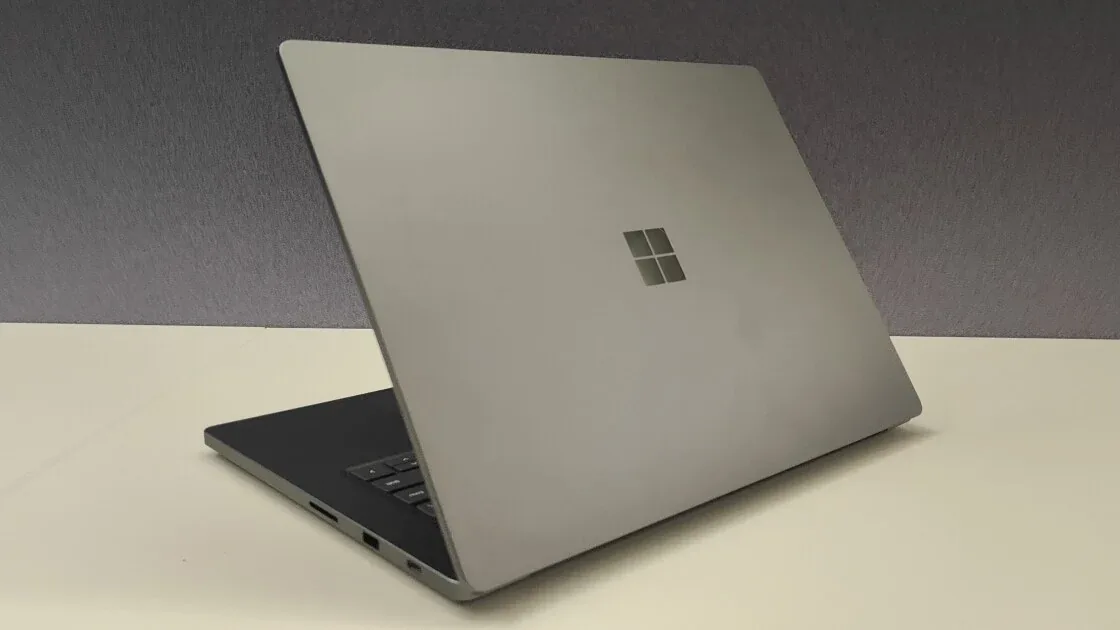
TAIPEI – Microsoft has officially revealed the Surface Laptop Ultra, a new flagship device showcasing Nvidia's cutting-edge RTX Spark hardware. Unveiled at Computex 2026, this laptop represents a significant step forward in portable AI computing, promising unprecedented on-device performance for complex AI tasks.
The RTX Spark platform, powered by Nvidia's N1X chip, integrates a 20-core CPU with a GPU equivalent to an RTX 5070 laptop, combined into a single system-on-a-chip (SoC). This powerful configuration, supporting up to 128GB of unified memory, is designed to handle demanding AI workloads, including the local execution of 120-billion-parameter AI models. This capability brings advanced AI processing, previously confined to servers and specialized systems, directly to consumers. Microsoft claims the Surface Laptop Ultra will achieve up to 1 petaflop of AI compute, a substantial leap over existing AI PCs.
The design of the Surface Laptop Ultra maintains the familiar premium aesthetic of Microsoft's Surface line. Measuring less than 18mm thick and weighing under 4.5 pounds, the all-metal chassis is available in Platinum and Nightfall finishes. A prominent polished Windows logo adorns the lid, and a subtle raised design gives the impression the laptop is floating. The device features a 15-inch mini-LED PixelSense Ultra touch screen with a 3:2 aspect ratio, offering a peak HDR brightness of 2,000 nits and a pixel density of 262 PPI. Microsoft states the display will support Variable Refresh Rate (VRR) and a 120Hz peak refresh rate, while managing battery life for all-day use.
Enhanced Cooling and Connectivity
Internally, the Surface Laptop Ultra is engineered for serious thermal management to support the powerful RTX Spark hardware. It features a dual-fan, dual-heat-pipe cooling system designed to provide more than double the thermal capacity of previous 15-inch Surface Laptop models. Airflow is directed from the sides and exhausts through the rear, efficiently cooling both the heat pipes and surrounding components. Microsoft demonstrated this advanced cooling system using smoke to visualize the airflow path.
Connectivity options are robust, including a full-size HDMI output, USB Type-C and Type-A ports, a 3.5mm headphone jack, and a full-size SD card reader. The keyboard offers the familiar tactile feel praised in previous Surface Laptops, complemented by the largest haptic touchpad Microsoft has ever implemented on a Surface device. This expansive touchpad provides detailed haptic feedback and is designed for user customization, with Microsoft working alongside software partners to enhance the experience. The webcam, integrated into thin bezels above the display, supports Windows Hello facial recognition.
The internal components are designed with serviceability in mind. Microsoft highlighted that the SSD, a Type-2280 M.2 drive, is user-swappable. QR codes placed near components link directly to service instructions, an approach reminiscent of Framework Computer's modular design. While the exact configuration details for memory remain fluid, some models are expected to ship with significantly less than the maximum 128GB, with lower-end configurations potentially starting at 16GB of unified memory. This variability could impact the device's ability to run large AI models locally. Unlike some modular laptops, there appear to be no SO-DIMM slots, suggesting the RAM is soldered.
Microsoft indicated that the Surface Laptop Ultra, along with other RTX Spark laptops, will be available this fall. Specific pricing details have not yet been released, but given its positioning as a premium, AI-first device, it is expected to command a high-end price point. These new machines are targeted at early adopters and professionals seeking advanced AI capabilities on a Windows platform. The true measure of their performance and user experience will become clearer as the devices enter the market and undergo comprehensive testing.