
Next-Gen Hardware: Understanding Processor Chips in 2026
Cutting-edge processor chips in 2026 deliver unprecedented computing power through advanced chip architectures. Explore how semiconductor innovations reshape performance and efficiency across devices.

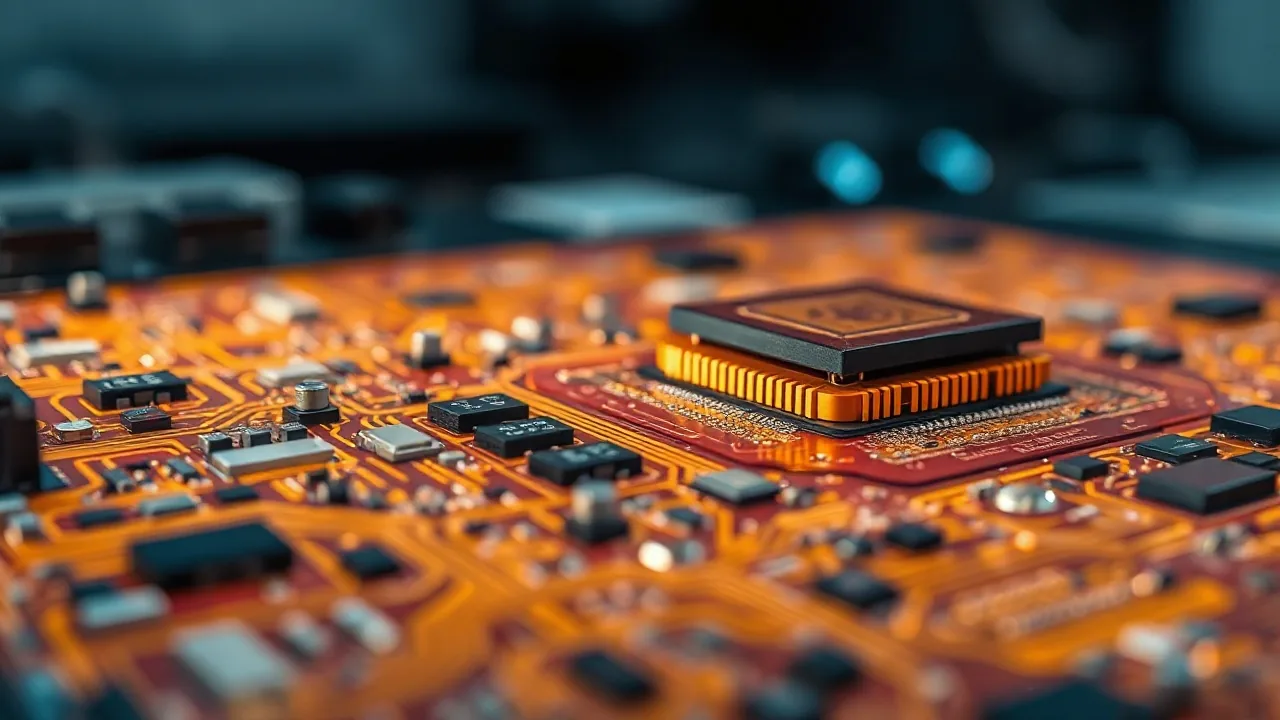
Intel unveiled its Core Ultra 200K series at CES 2026 in January, marking a watershed moment for consumer processor design. These chips integrate neural processing units directly into the silicon, enabling AI workloads to run locally on consumer laptops and desktops without cloud dependency. The shift signals a fundamental realignment in how manufacturers approach next-gen hardware.
The semiconductor industry has reached an inflection point. Traditional scaling constraints that plagued chip designers for years are giving way to innovative architectural approaches. Rather than shrinking transistors further into the sub-3-nanometer realm, chipmakers are now stacking dies vertically, integrating specialized processors, and adopting chiplet designs that improve yield and reduce waste.
The Architecture Revolution
AMD's EPYC Bergamo line and Apple's M4 Max chip both exemplify this shift. These processor chips abandon the monolithic die approach in favor of modular construction. AMD's latest EPYC variant contains twelve interconnected chiplets, each handling specific workloads. This design reduces manufacturing defects, lowers per-unit costs, and allows engineers to scale performance without fundamental redesigns.
"We're seeing a transition from pure node shrinkage to heterogeneous integration," said Dr. Marcus Chen, senior analyst at TechCore Research, in a June 2026 interview. "The real performance gains now come from how intelligently you arrange silicon rather than how small you can make individual transistors."
Apple's M4 Max incorporates CPU cores optimized for single-threaded performance alongside efficiency cores designed for background tasks. This asymmetric approach allows the chip to balance raw speed with power consumption. On battery, the M4 Max delivers 22 hours of video playback; plugged in, it matches desktop workstation performance from just two years ago.
Energy Efficiency and AI Integration
Power consumption remains central to 2026 hardware strategy. Data centers consume roughly 4 percent of global electricity, and that figure grows yearly. Chipmakers responded by incorporating tech advancements in power management directly into silicon logic.
- Intel's new efficiency cores reduce idle power draw by 40 percent compared to 2024 models
- TSMC's latest process node achieves 30 percent better power-per-watt efficiency
- Qualcomm's Snapdragon X Gen 2 includes dedicated power management AI that dynamically scales voltage
- Custom ARM designs for cloud workloads now feature built-in thermal throttling that learns user patterns
The integration of neural processors into mainstream chips reflects market demand. Copilot+ PCs now number over 15 million units sold globally through Q2 2026. These machines run AI models locally, processing sensitive data on-device rather than transmitting it to cloud servers. The feature resonates with privacy-conscious users and enterprises managing confidential information.
Qualcomm's Snapdragon X Gen 2 powers most of these systems. Its Hexagon processor executes neural operations at speeds competitive with discrete GPUs from 2023. Battery life improvements exceed 25 percent on typical productivity workloads, a meaningful metric for mobile professionals.
The Semiconductor Supply Chain Stabilizes
Chip shortages that plagued 2021 through 2024 have largely resolved. TSMC's expanded Arizona foundry, Samsung's new Texas facility, and Intel's domestic manufacturing push collectively increased wafer capacity by 35 percent since 2023. Lead times for most consumer and enterprise semiconductor industry products now match historical averages of 8 to 12 weeks.
This stability enables longer product cycles and more aggressive design timelines. Manufacturers can commit to multi-year roadmaps without fear of sudden material shortages. The result is visible in 2026 product lineups: refresh cycles have returned to traditional 18-month intervals, and innovation moved from scarcity-driven chaos to coordinated R&D efforts.
Competition between TSMC (approximately 54 percent global foundry market share), Samsung (roughly 17 percent), and Intel's new foundry services (approximately 7 percent) has also driven pricing improvements. High-volume chip costs have declined 12 percent year-over-year while performance climbed 18 percent.
Looking ahead, the focus shifts toward specialized silicon. Gaming chips designed specifically for cloud streaming, automotive processors hardened for autonomous vehicles, and modular computing power arrays optimized for AI inference represent the frontier of 2026 design.
Expect announcement cycles to accelerate through late 2026. Manufacturers will introduce processors built on TSMC's N3E process (third-generation 3-nanometer technology) and Samsung's Gate-All-Around (GAA) architecture, promising 15 to 20 percent generational improvements. The next five years belong to heterogeneous, power-conscious, AI-enabled silicon that treats specialization as a feature rather than a compromise.