
Pixel 11 Pro Fold Alternatives: 5 Top Android Foldable Phones
Google's new Pixel 11 Pro Fold faces stiff competition. Discover five top Android foldable phones that offer compelling alternatives with features like superior battery life, advanced cameras, and different form factors.

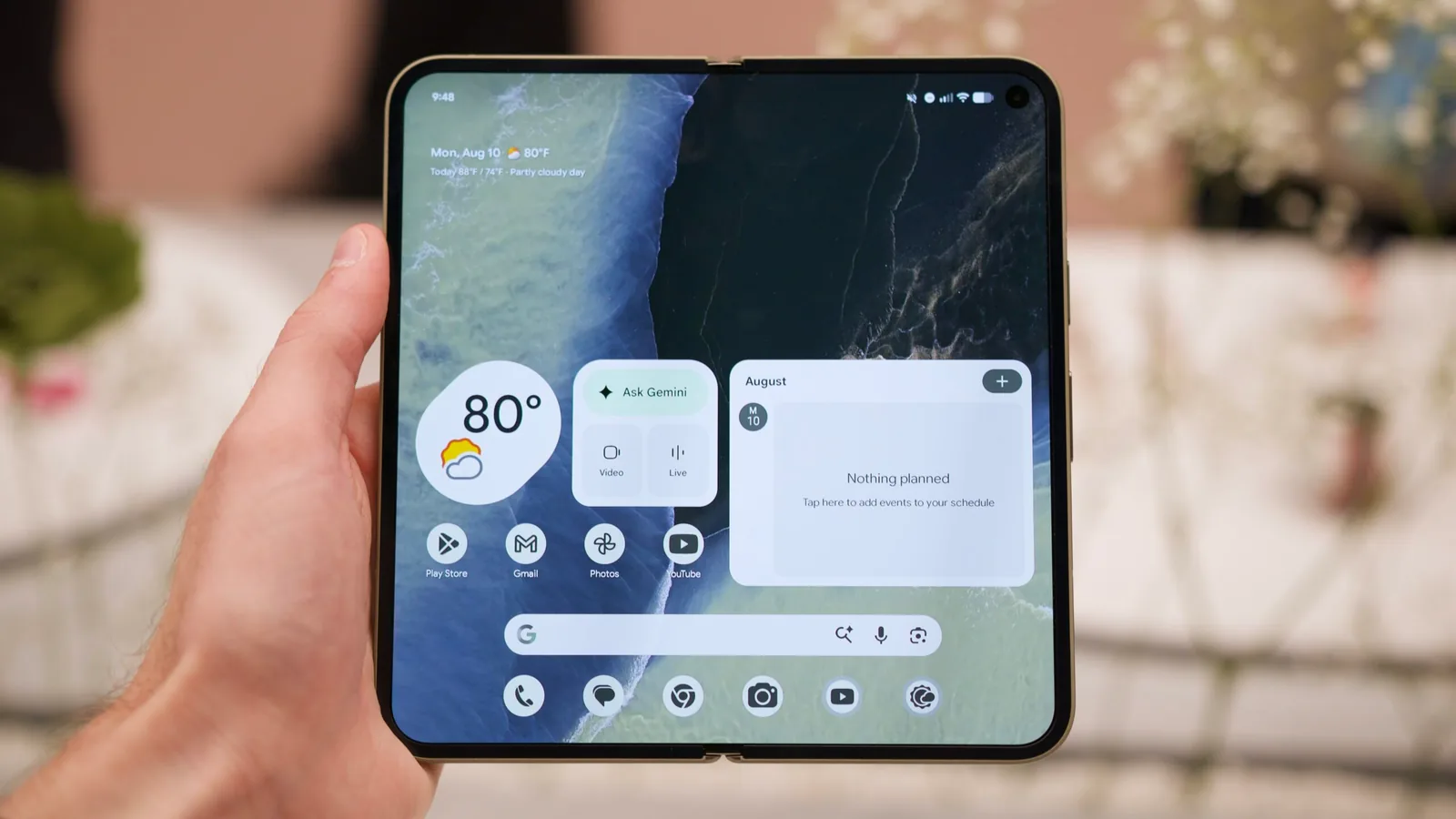
The foldable phone market is heating up as Google enters the fray with its latest offering, the Pixel 11 Pro Fold. While the new device aims to improve on its predecessor's shortcomings, potential buyers might find compelling reasons to look at other premium Android foldable phones. Several alternatives boast superior battery performance, more advanced camera systems, and unique design philosophies, offering a diverse range of choices for consumers seeking the cutting edge of mobile technology.
One of the most direct competitors is the Motorola Razr Fold, which offers a striking similarity to the Pixel 11 Pro Fold in terms of form factor and price. Despite being slightly thicker at 10.04mm and weighing 243 grams compared to the Pixel's 10.1mm and 239 grams, the Razr Fold packs a substantial 6,000mAh silicon-carbon battery. This large capacity, coupled with rapid 80W wired and 50W wireless charging, significantly outperforms the Pixel 11 Pro Fold's 4,750mAh battery, which Google apparently reduced to achieve a thinner profile. The Razr Fold also features an expansive 8.1-inch inner display and is powered by a Qualcomm Snapdragon 8 Gen 5 chip, which is expected to rival or surpass Google's Tensor G6 processor. Additionally, Motorola equips its foldable with a versatile triple 50MP rear camera setup, a clear advantage over the Pixel's lower-resolution ultrawide and telephoto lenses. While it offers three years of OS upgrades, its robust multitasking software remains a strong selling point.
Exploring Different Form Factors and Features
Shifting away from the traditional passport-style foldable, Samsung's Galaxy Z Fold 8 presents a distinctly wider design, optimized for media consumption and gaming. This unconventional aspect ratio, with a 4:3 main display, minimizes the black bars typically seen on widescreen content. While this design results in slightly smaller screen dimensions—a 5.5-inch cover display and a 7.6-inch folding display—it offers a more immersive viewing experience for videos and games. The Galaxy Z Fold 8 also boasts a larger 4,800mAh battery, a faster Snapdragon 8 Elite Gen 5 for Galaxy chip, and a thinner, lighter build than the Pixel 11 Pro Fold. Priced identically at $1,899, it represents a compelling alternative for users prioritizing a wider screen and powerful performance.
For those seeking the pinnacle of Samsung's foldable technology, the Samsung Galaxy Z Fold 8 Ultra stands out. This device represents a significant leap in design refinement, measuring an incredibly slim 8.9mm when closed and weighing a mere 215 grams, making it lighter than the Pixel 11 Pro Fold. Despite its slim profile, it houses a generous 5,000mAh silicon-carbon battery, surpassing the Pixel's capacity. The Ultra model shares the same 6.5-inch cover and 8-inch folding displays as its wider sibling but benefits from the top-tier Snapdragon 8 Elite Gen 5 for Galaxy processor. Its camera system is equally impressive, featuring a 200MP primary shooter and a 50MP ultrawide lens, though its 10MP telephoto lens could be sharper. While it omits Qi2 magnets for its thinness, the Galaxy Z Fold 8 Ultra offers a premium foldable experience that, on paper, outclasses the Pixel 11 Pro Fold.
Beyond the book-style foldables, consumers interested in a more compact form factor might consider a flip phone. While Google does not produce a flip foldable, options like the Motorola Razr Ultra (2026) and the Samsung Galaxy Z Flip 8 are available. However, the latest models come with a higher price tag or software limitations. The previous generation, the Motorola Razr Ultra (2025), offers a more balanced proposition. It presents a stylish, compact design that opens up to a larger screen, providing a different foldable experience compared to the larger-format devices.
The choice between these foldable phones ultimately depends on individual priorities. The Pixel 11 Pro Fold enters a competitive landscape, and while it brings Google's software prowess to the foldable arena, alternatives like the Motorola Razr Fold and the various Samsung Galaxy Z Fold models offer distinct advantages in battery life, camera technology, processing power, and design. The recent advancements in foldable phone technology in 2026 demonstrate a maturing market with increasingly compelling options for consumers.