
Sony PS6 Digital-Only Future Sparks Gamer Backlash
A poll of over 45,000 viewers on Digital Foundry revealed 86% prefer physical games and oppose Sony's potential move to an all-digital PS6.

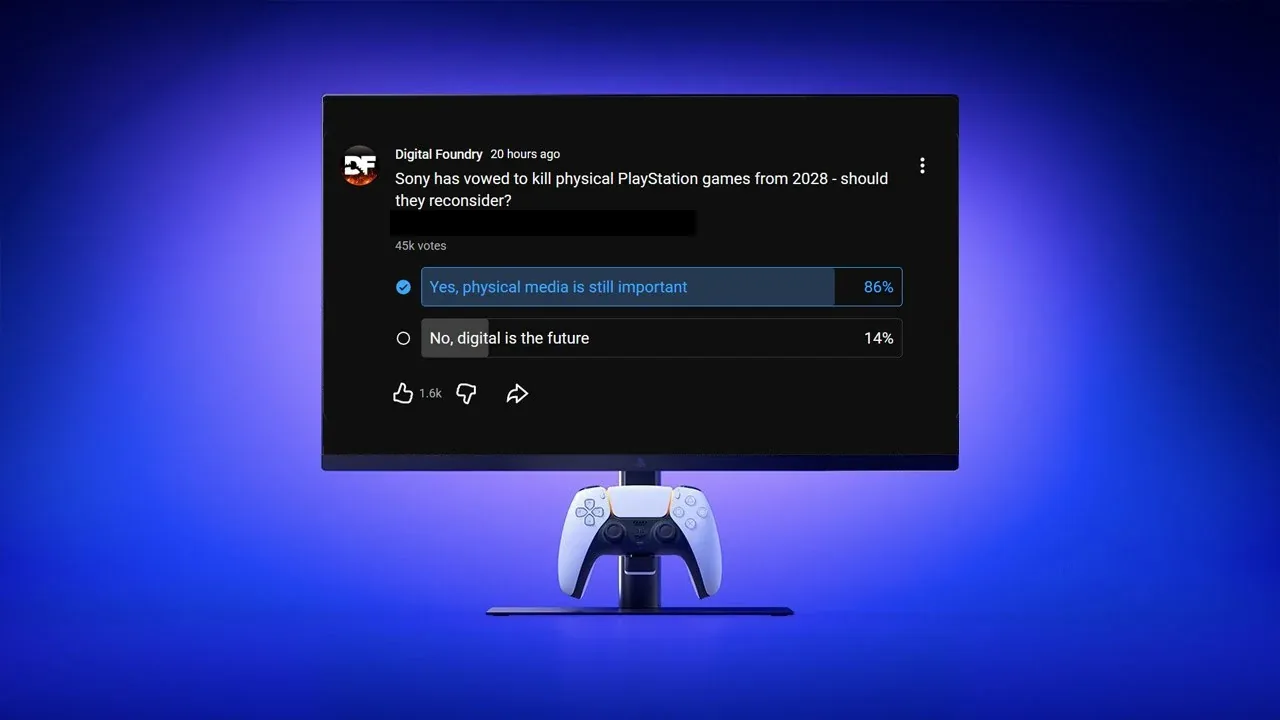
A significant portion of the gaming community is expressing strong opposition to Sony's potential shift towards an all-digital console future, with a recent poll indicating widespread discontent. The survey, conducted by the enthusiast gaming outlet Digital Foundry, saw over 45,000 participants vote, with 86% indicating that Sony should reconsider abandoning physical game media for its next-generation PlayStation, speculated to be the PS6.
The results suggest a deep-seated preference for physical game collections among a substantial segment of gamers, many of whom value the tangibility and ownership that discs provide. This sentiment stands in contrast to the broader industry trend, which has seen a steady increase in digital game sales and a corresponding decline in physical media. Casual gamers, in particular, appear less concerned with the move to digital, often prioritizing convenience over ownership, according to comments within the gaming community.
For many enthusiasts, the appeal of consoles extends beyond simply playing games on a television. The ability to build and display a physical library, akin to books or movies, offers a unique sense of satisfaction and permanence. This contrasts with digital-only platforms, where ownership can feel less absolute, especially given past instances of digital purchases being revoked or content becoming inaccessible due to store closures. The idea of entrusting one's entire game library to a single platform provider, like Sony, raises concerns about long-term access and the potential for future price hikes without competition.
Concerns Over Ownership and Long-Term Access
Beyond the sentimental value of a physical collection, practical concerns about digital ownership are fueling the backlash. Gamers are wary of situations where digital licenses might be revoked, or where games could become unplayable if Sony were to shut down its digital storefronts for older consoles, a common practice in the industry. The recent news of Sony removing digital movie purchases from users' libraries has further amplified these anxieties, suggesting that digital content is not as permanent as physical media.
Furthermore, the lack of competition in an all-digital market raises fears of escalating game prices. Without the option to purchase physical copies, players may be forced to pay inflated prices set by Sony, with no recourse. This potential scenario is a significant deterrent for many who currently rely on the competitive pricing of physical media, including the second-hand market, to make gaming more accessible.
The data Sony might be using to justify a digital-only future is also under scrutiny. Critics argue that reported digital sales figures may not accurately reflect true consumer preference, as they often fail to account for mixed purchases (both digital and physical), digital-only console owners who have no choice, or the prevalence of digital-only releases and DLC. Moreover, the lucrative pre-owned market, where games are bought and sold between consumers, falls outside Sony's direct sales metrics, leading to an incomplete picture of how people actually consume games. This data interpretation, some argue, is being used to "justify" a business decision that benefits Sony's bottom line by eliminating retailer cuts and the second-hand market.
Ultimately, for many long-time PlayStation fans, the prospect of an all-digital PS6 is unappealing. Some have stated they will simply hold onto their current consoles, like the PS5 Pro, and continue to play their existing physical collections. Others are considering switching to platforms that still offer physical media, such as the Nintendo Switch 2, or dedicating more time to PC gaming, where digital storefronts like Steam and GOG offer more consumer-friendly policies and a wider array of purchasing options. The debate highlights a fundamental tension between the industry's drive for digital ubiquity and a significant segment of players who cherish the permanence, ownership, and choice that physical media provides.