
Amazon's New AI Generates Fake Product Images in Search
Amazon is rolling out a new AI feature that generates images of non-existent products as users type search queries. The goal is to help shoppers visualize their needs, but critics question its practicality.

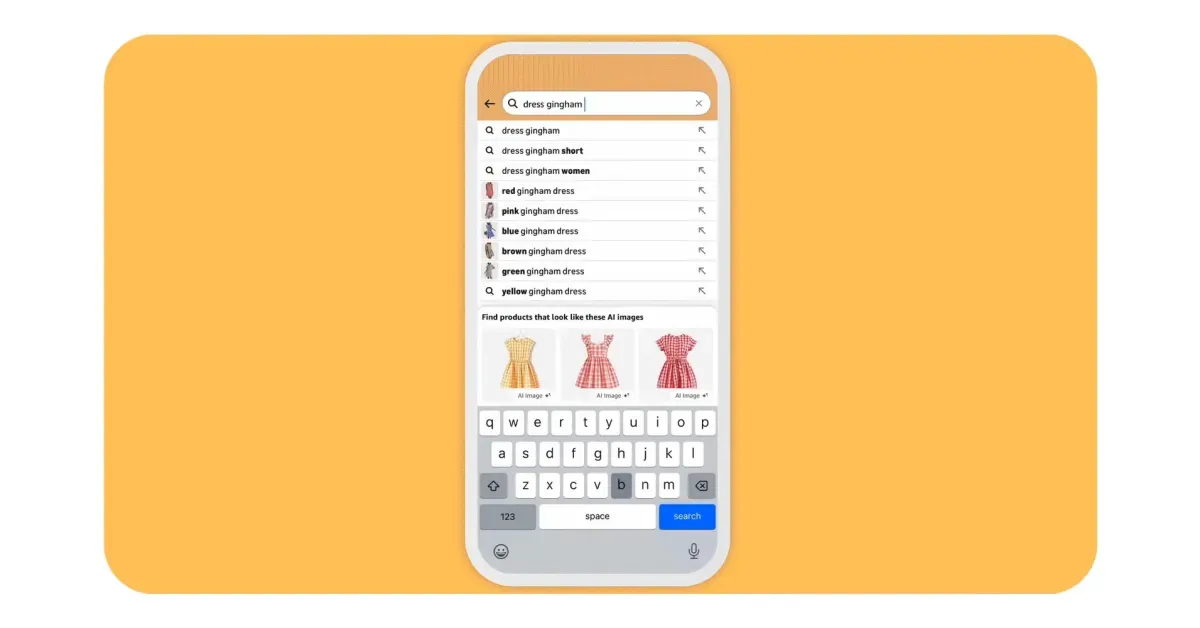
Amazon has introduced a new artificial intelligence feature within its shopping app that generates images of hypothetical products as users type their search queries. This innovative tool, available starting today, aims to bridge the gap between a shopper's imagination and the discovery of actual items.
The AI-powered search experience populates suggestions with instantly generated images that adapt with each word entered. For instance, a customer looking for a shirt with a draped collar, but lacking the precise term "cowl neck," can now see AI-generated visuals of such a garment. Similarly, someone desiring a couch with woven side panels without knowing the term "rattan" will see a corresponding AI image.
Users can then select the AI-generated image that best matches their vision and proceed to shop for visually similar, real-world products. Amazon reports that this feature is particularly effective for items where visual details are paramount, and it is currently accessible for searches in apparel and home goods, with plans to expand to more categories.
Beyond this dynamic image generation, Amazon is implementing several other AI enhancements. These include "AI-generated shoppable collages" designed to assist users in "Shop by style," the ability to add text to image-based searches, and a quick access shortcut for finding visually similar products. Additionally, "Amazon Lens Live" will offer real-world interaction and answer questions, complemented by a homescreen shortcut and "circle to search" functionality for the Lens feature.
Bridging Imagination and Reality
The underlying concept of this new AI tool is to assist customers who struggle to articulate their desires using exact product terminology. In many cases, shoppers have a clear mental image of what they want but lack the specific vocabulary to find it efficiently. This feature attempts to provide a visual bridge, allowing users to express their needs through descriptive language, color, texture, or pattern, and receive instant visual feedback.
The company believes this will streamline the product discovery process, making it more intuitive and less frustrating. By presenting tangible visual representations of abstract ideas, Amazon hopes to reduce the time and effort consumers spend searching for specific items. This is especially relevant in categories like fashion and home decor, where aesthetic preferences play a significant role.
However, the introduction of AI-generated images of non-existent products has drawn some skepticism. Critics argue that generating images of items that cannot be purchased might confuse consumers, who may be led to believe the depicted products are available. The core function of a shopping platform is to facilitate the sale of actual goods, and the creation of ephemeral visual representations raises questions about its ultimate utility and potential for misdirection. While the intention is to aid discovery, the execution could inadvertently lead to a disconnect between the visual suggestion and the available inventory.
Amazon states that the generated images are intended to guide users toward discovering real products that match the AI's visualization. The effectiveness and user reception of this novel approach will likely become clearer as more consumers interact with the feature. The company's ongoing integration of AI across its platform signals a significant shift in how it approaches customer interaction and shopping assistance.