
Google Gemini Notebook Integrates Book Knowledge for Users
Google's Gemini Notebook now features 'Expert Intelligence,' allowing users to query and interact with information from their purchased books. This AI-powered update enhances the note-taking app's utility for research and learning.

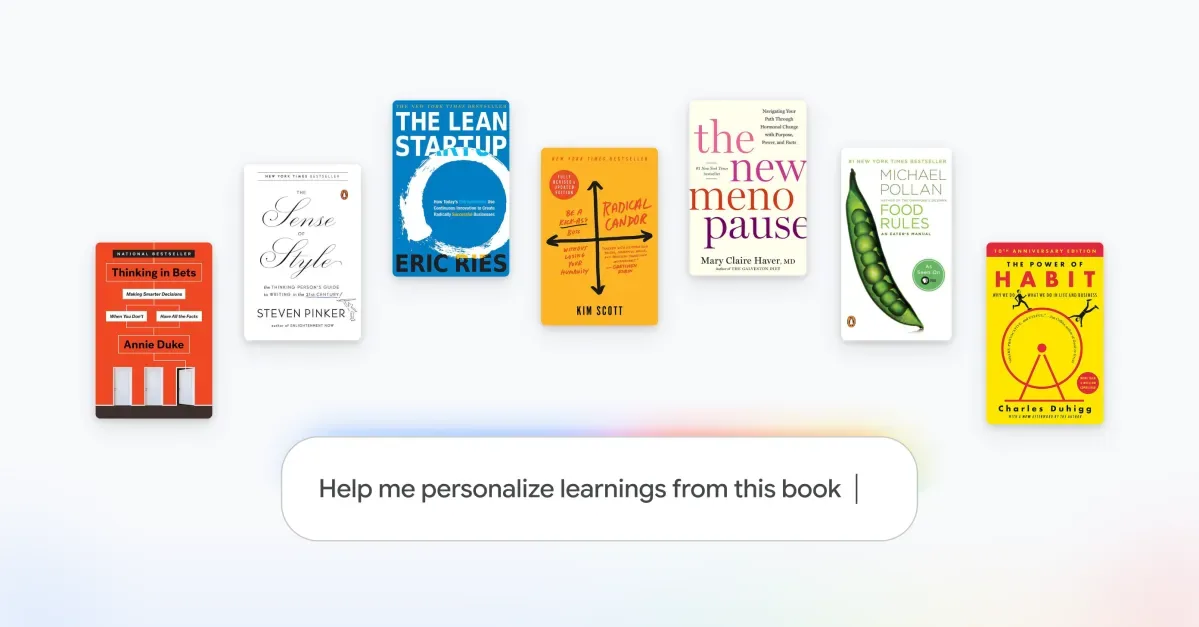
Google's AI-powered note-taking application, Gemini Notebook, has introduced a significant new capability dubbed 'Expert Intelligence.' This feature enables users to directly interact with the content of books they have purchased, transforming the application into a more dynamic research and learning tool. The update integrates information from a user's digital library directly into the AI's capabilities, allowing for nuanced queries and information retrieval.
Previously, Gemini Notebook served primarily as a digital space for organizing thoughts, meeting notes, and research snippets. With the 'Expert Intelligence' integration, the AI can now access and process the vast textual information contained within books previously acquired through Google's platforms. This means a user could potentially ask Gemini Notebook to summarize a specific chapter, compare arguments from different authors, or extract key definitions and concepts from an entire collection of works.
Enhancing AI-driven Research
The implementation of 'Expert Intelligence' positions Gemini Notebook as a powerful assistant for students, academics, writers, and anyone engaged in in-depth research. Instead of manually searching through books or relying solely on the AI's general knowledge base, users can now leverage the specific, often authoritative, content found in their personal libraries. For instance, a student researching a historical event could ask Gemini Notebook to find all mentions and analyses of that event across several history books they own, receiving a synthesized answer that draws directly from those sources.
This development reflects a broader trend in artificial intelligence towards more personalized and context-aware tools. By connecting with a user's existing digital assets, such as their book purchases, AI applications can offer more relevant and tailored assistance. This move by Google aims to make their AI tools more indispensable by embedding them deeper into users' workflows and knowledge ecosystems. The ability to cite information directly from purchased texts also adds a layer of credibility and utility that general AI models often struggle to provide.
The integration requires users to have their books linked to their Google account, ensuring that the AI only accesses content the user has legitimately obtained and authorized. Google has stated that the system is designed with privacy in mind, processing book content securely and without making it accessible to other users. The company also highlighted that this feature is an ongoing development, with plans to expand the range of interactions and the types of documents the AI can engage with in the future. This could potentially include academic papers, reports, and other forms of digital literature, further solidifying Gemini Notebook's role as a comprehensive knowledge management system.