
Top VCs Discuss AI Frenzy, SpaceX IPO, and Market Dynamics
Leading venture capitalists share insights on the current AI investment boom, the potential market impact of SpaceX's IPO, and the evolving landscape for startups and founders.

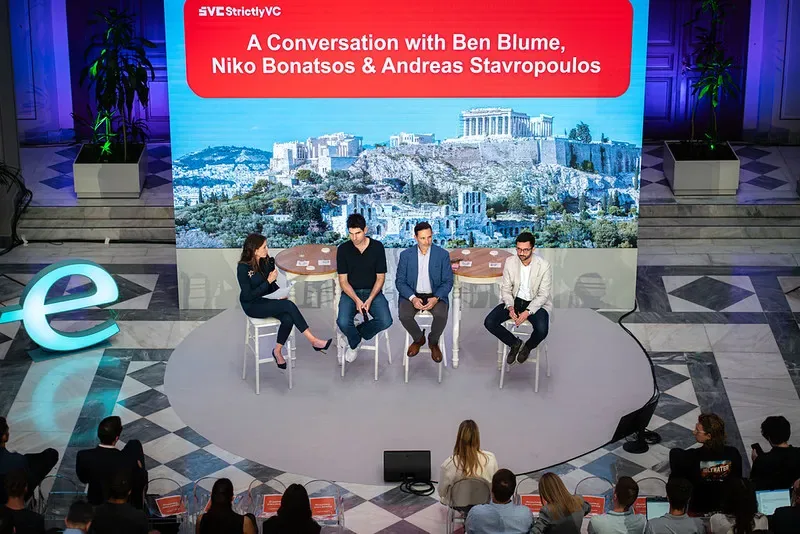
ATHENS – At TechCrunch’s StrictlyVC event held this week as part of the Panathenea festival, three prominent venture capitalists offered their perspectives on the dynamic state of technology investing. Niko Bonatsos of Verdict Capital, Andreas Stavropoulos of Threshold Ventures, and Ben Blume of Atomico discussed the prevailing AI investment surge, the anticipated mega-IPO of SpaceX, and emerging areas of opportunity. Their conversation, edited for clarity, provided a glimpse into the strategies and outlooks shaping the venture capital world.
The impending $1.75 trillion valuation for SpaceX’s initial public offering, alongside potential similar valuations for AI giants like OpenAI and Anthropic, raises questions about their broader market impact. Andreas Stavropoulos recalled the excitement surrounding Google’s IPO in the early 2000s, which revitalized a cautious tech market and inspired a new generation of entrepreneurs. He believes a similar effect is unfolding now, with each major technological shift amplifying the scale of opportunities. "What business today in the information age is not a technology business?" he posited.
Ben Blume echoed this sentiment, highlighting how significant liquidity events create wealth that fuels subsequent waves of innovation. Niko Bonatsos pointed to companies like Cursor, noting that even niche ventures can achieve remarkable success. He emphasized that founders from immigrant backgrounds often possess the ambition to tackle massive markets, citing Elon Musk as a prime example.
Shifting Market Dynamics and Capital Flows
Concerns have been raised that a blockbuster SpaceX IPO could absorb substantial public market capital, potentially hindering other companies. Stavropoulos acknowledged that such events can be viewed optimistically or pessimistically, but argued that a company of SpaceX’s magnitude is likely to attract more participants to the market than it draws away in the short term. He observed the dramatic shift in consumer market involvement over the past three decades, from a nascent interest to daily trading via mobile devices.
Blume described SpaceX as a unique entity, noting that its potential to provide investors financial access to the space sector, historically dominated by governments, could capture broad public imagination. While acknowledging it might divert some capital from other ventures, he contended that the generated interest would more than compensate. This inflow of capital into sectors like AI, however, prompts questions about its justification by future earnings versus a fear of missing out (FOMO).
Bonatsos described the current environment as a "groupthink boom," where capital disproportionately flows to a few dominant companies, particularly in AI. He stated that in his 17 years in Silicon Valley, he has never witnessed such a phenomenon. "Three quarters of all venture capital raised over the last year went into five companies," he noted. While acknowledging the real technological advancements, he pointed out that AI tools now enable two founders to achieve in two months what previously took a year and a larger team, potentially allowing companies to bypass early funding rounds.
Stavropoulos anticipates a market correction that will reallocate some capital. He believes the promise of AI still outstrips its current ability to deliver tangible results in the short to medium term, though he remains optimistic about its long-term potential. The challenge, he cautioned, is distinguishing genuine breakthroughs from overhyped ideas.
Pricing deals in such a rapidly evolving market presents difficulties. Blume explained that the best founders have numerous funding options, forcing investors to focus on securing meaningful ownership stakes. The disparity in fund sizes, with large asset managers competing against smaller firms for the same opportunities, distorts round sizes and complicates comparisons.
Bonatsos elaborated on his firm’s strategy of investing in highly driven individuals, or "freaks," who exhibit extraordinary progress. These founders often target nascent markets invisible to larger institutions, allowing for lower valuations. "Most of the founders we’ve backed so far are working on markets that don’t have a name yet," he said, explaining why valuations can remain attractive.
The trend of very young founders receiving term sheets quickly also came under scrutiny. Stavropoulos suggested that periods of rapid disruption often favor those with less experience, as established approaches can become hindrances. While this phase is temporary, it creates fertile ground for novel ideas and younger entrepreneurs. Bonatsos drew a parallel to 2009, when the nascent iPhone ecosystem attracted significant venture interest. He noted that today, a 19-year-old building in AI might receive a Series A offer, highlighting the accelerated pace.
Blume stressed that intensity and adaptability are more critical than age. Founders who can move ahead of market pace and possess mental dexterity in a constantly changing landscape are the ones to watch, regardless of their age. The discussion also touched on the evolving reporting of metrics like Annual Recurring Revenue (ARR), with VCs emphasizing the need to look beyond potentially creative accounting to discern true company performance.