
1998 KY26 Asteroid Movement Sparking New Study on Dark Comet Identity
New research challenges the dark comet status of near-Earth asteroid 1998 KY26, suggesting sunlight pressure drives its movement instead of melting ice.

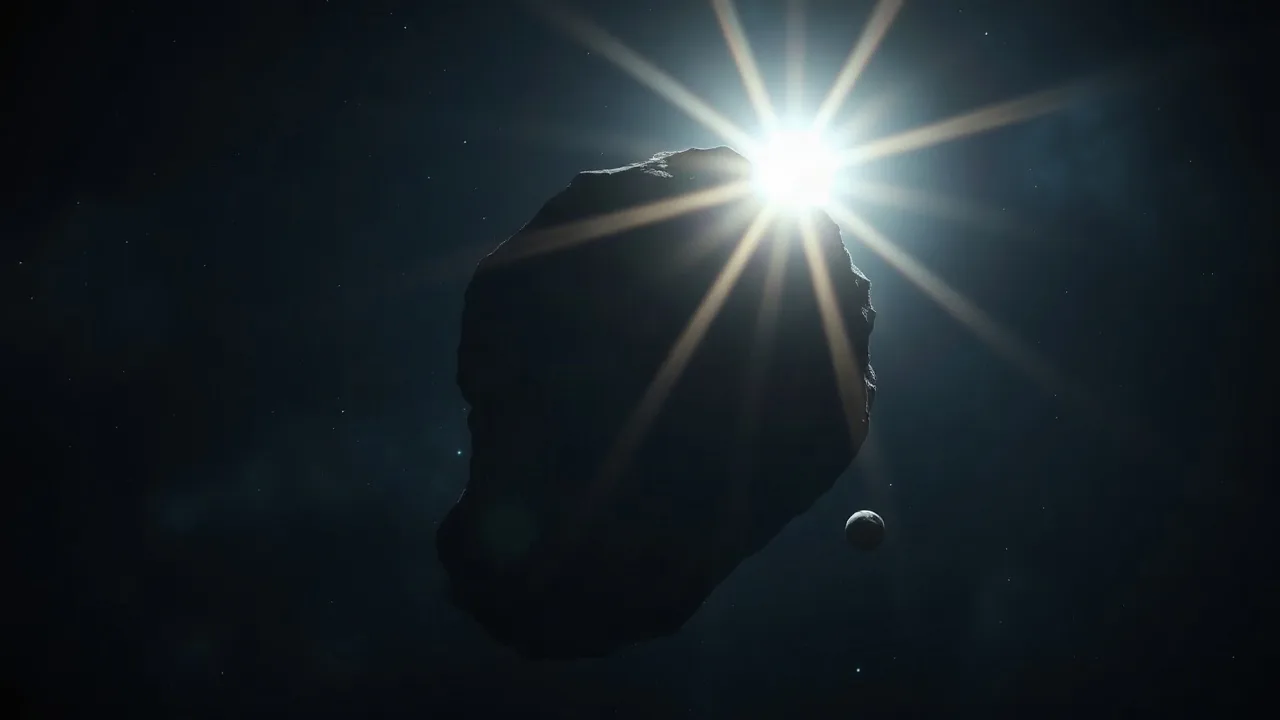
Recent research published in the journal Icarus examines 1998 KY26, a near-Earth asteroid orbiting the Sun, following unusual movement that has puzzled scientists. The object has previously been proposed as a dark comet—an entity that appears like an asteroid but travels through space like a comet, according to NASA. However, a study conducted by researchers at the Georgia Institute of Technology casts doubt on that designation, indicating the object is likely a dehydrated asteroid.
Past hypotheses suggested that the space rock could be a dark comet containing ice buried deep inside, which would melt and provide the thrust necessary to explain its unusual trajectory. The new study counters this idea by theorizing that both the surface and interior of the asteroid are too warm to preserve buried ice. Any such ice would turn into vapor and escape too quickly to survive over extended periods. Instead, the findings align with earlier research indicating that pressure from sunlight and heat radiating from the asteroid itself could account for its distinct movement.
Asteroid Characteristics and Future Exploration
According to size estimates within the research, 1998 KY26 is estimated to measure about 36 feet across, though it could reach up to 43 feet. Furthermore, the asteroid rotates rapidly, completing one full rotation every 5.35 minutes. Data from the European Space Agency (ESA) asteroid database shows that it completes a full orbit around the sun every 498 Earth days. The ESA notes that the asteroid's next close approach to Earth will occur in May 2039, passing at a distance of about 10.1 million miles without any expectation of interfering with Earth.
Additional data may soon become available through the Japanese spacecraft Hayabusa2, which launched in 2014 and has previously completed multiple asteroid flybys and sample collections. According to approximations from the Japan Aerospace Exploration Agency (JAXA), Hayabusa2 is scheduled to rendezvous with the asteroid in July 2031 as its final target.