
2026 QQ8 mini-moon orbits Earth as temporary natural satellite
Earth has captured a tiny asteroid designated as 2026 QQ8, which is orbiting the planet as a temporary mini-moon until early December.

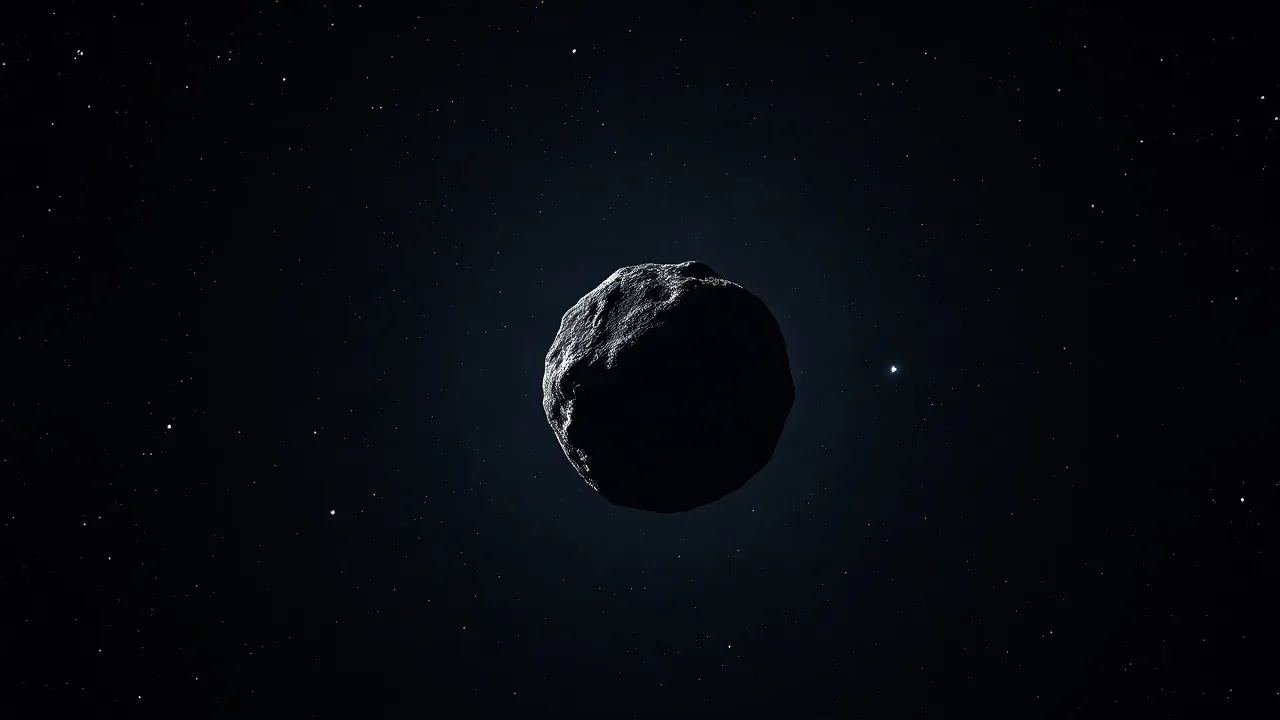
Earth is currently hosting a temporary companion in orbit, a small asteroid identified as 2026 QQ8. Our planet's gravity captured the tiny space rock, which measures about 2 meters or 6 feet in diameter, back in April. Astronomers indicate that the object will stick around until early December, at which point it is expected to leave Earth's sphere of influence and continue on a path around the sun.
Because the object is exceptionally small and dim, astronomers required several weeks of observation to confirm it was not a defunct satellite or a fragment of one. The International Astronomical Union's Minor Planet Center named the newcomer in late October. While the term mini-moon is not an official designation, astronomers have previously used the moniker for other natural objects, including 2006 RH120, which spent around one year in Earth orbit, and 2020 CD3, which orbited the planet for roughly three years.
Transient companions of this nature are not uncommon. “On average, there's probably one there at any given time,” said Matthew Payne, director of the Minor Planet Center. He added that they typically hang around for a few weeks or months, though the catalog remains relatively short because most visitors slip under the radar due to their small size and fast movement.
There is currently no concern that 2026 QQ8 could impact the planet. Even if it entered the atmosphere, experts note it would break up harmlessly, yielding at best a bright meteor in the sky and a minor sound. Astronomer Krisztián Sárneczky initially detected the object in August while searching for near-Earth asteroids, provisionally calling it Sar2901.
Confirmation and Origin of Near-Earth Objects
“I was searching for Near-Earth asteroids, as I have done on every clear night since 2020,” said Sárneczky, a research coordinator at Hungary's Konkoly Observatory, in an email. Following precise orbital calculations and the use of the Lowell Discovery Telescope in Arizona and the University of Hawaii's 2.2-meter telescope on Mauna Kea, the natural origin of the object was confirmed.
Most near-Earth objects originate from the asteroid belt between Mars and Jupiter. Over millions of years, gravitational forces can shift their orbits toward the inner solar system, where a gentle encounter with Earth can alter their paths into temporary loops.