
Supermoon Triggers King Tide Flooding Risks Before Thanksgiving
The upcoming Beaver Moon will serve as the first of three consecutive supermoons, bringing stronger tidal pulls that threaten coastal flooding.

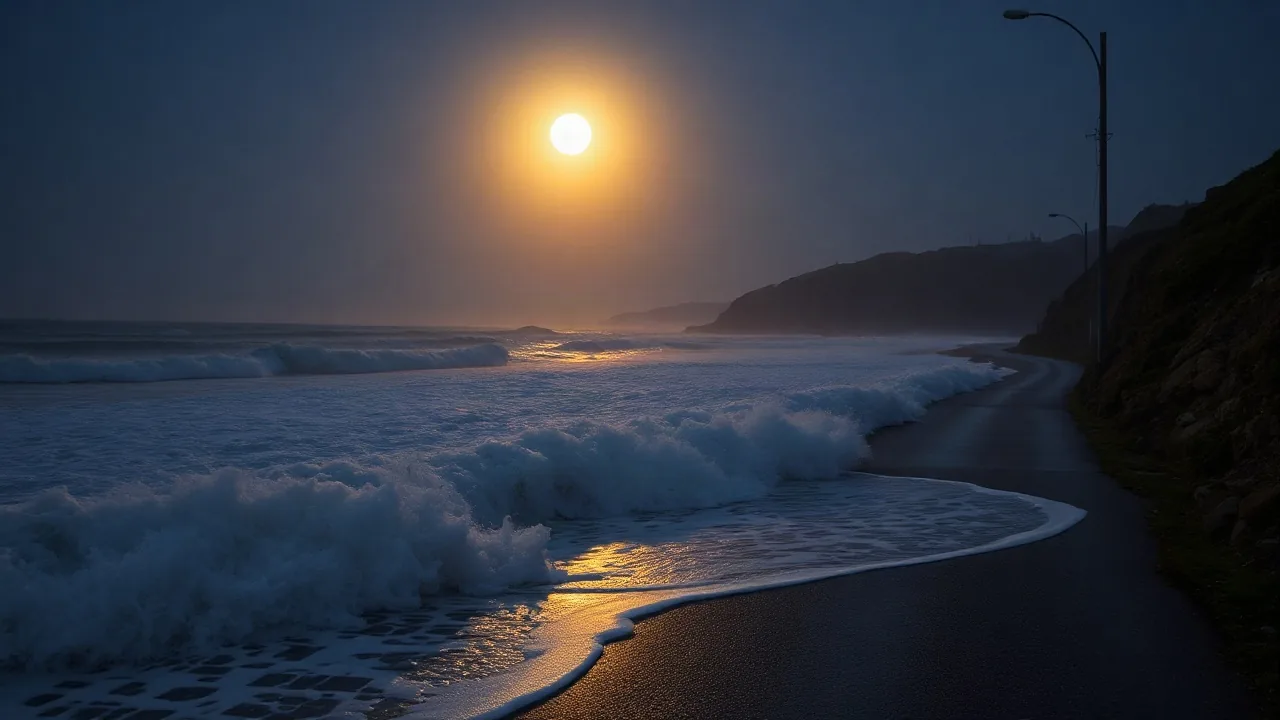
The upcoming Beaver Moon marks the first in a sequence of three consecutive supermoons, bringing stronger tidal pulls that could push water onto low-lying coastal roads and sidewalks through Thanksgiving week. According to AccuWeather meteorologist Brian Lada, the lunar event is set to peak on Tuesday night, combining with seasonal king tides to elevate flood risks in vulnerable coastal regions.
The full moon arriving on Nov. 24 is traditionally called the Beaver Moon, a moniker tied to the period when beavers begin sheltering in their lodges after storing food for the winter, as noted by The Old Farmer’s Almanac. Alternative historical names for this lunar phase include the Frost Moon, Freezing Moon, and Deer Rutning Moon, mirroring late autumn weather patterns and wildlife behavior.
Coastal Communities Prepare for King Tides
Because this month's full phase aligns near the closest point of the moon's orbit around Earth, it qualifies as a supermoon, appearing slightly larger and brighter than standard full moons. During a full moon, the sun, Earth, and moon align to create heightened differences between high and low tides. When this alignment coincides with a closer lunar orbit, the gravitational effect intensifies, contributing to king tides.
These exceptionally high tides can submerge coastal streets and sidewalks even in the absence of rain. In regions like Southern California, municipal crews in places such as Laguna Beach have initiated preparations using sandbags, sand berms, and water pumps to defend against coastal flooding and beach erosion during the holiday week.