
Antarctic Dinosaur Fossil Found Decades Later in Desk Drawer
A rare titanosaur fossil, discovered in Antarctica in 1985, has finally been identified decades later after being stored in a drawer. The bone offers new insights into prehistoric life on the icy continent.

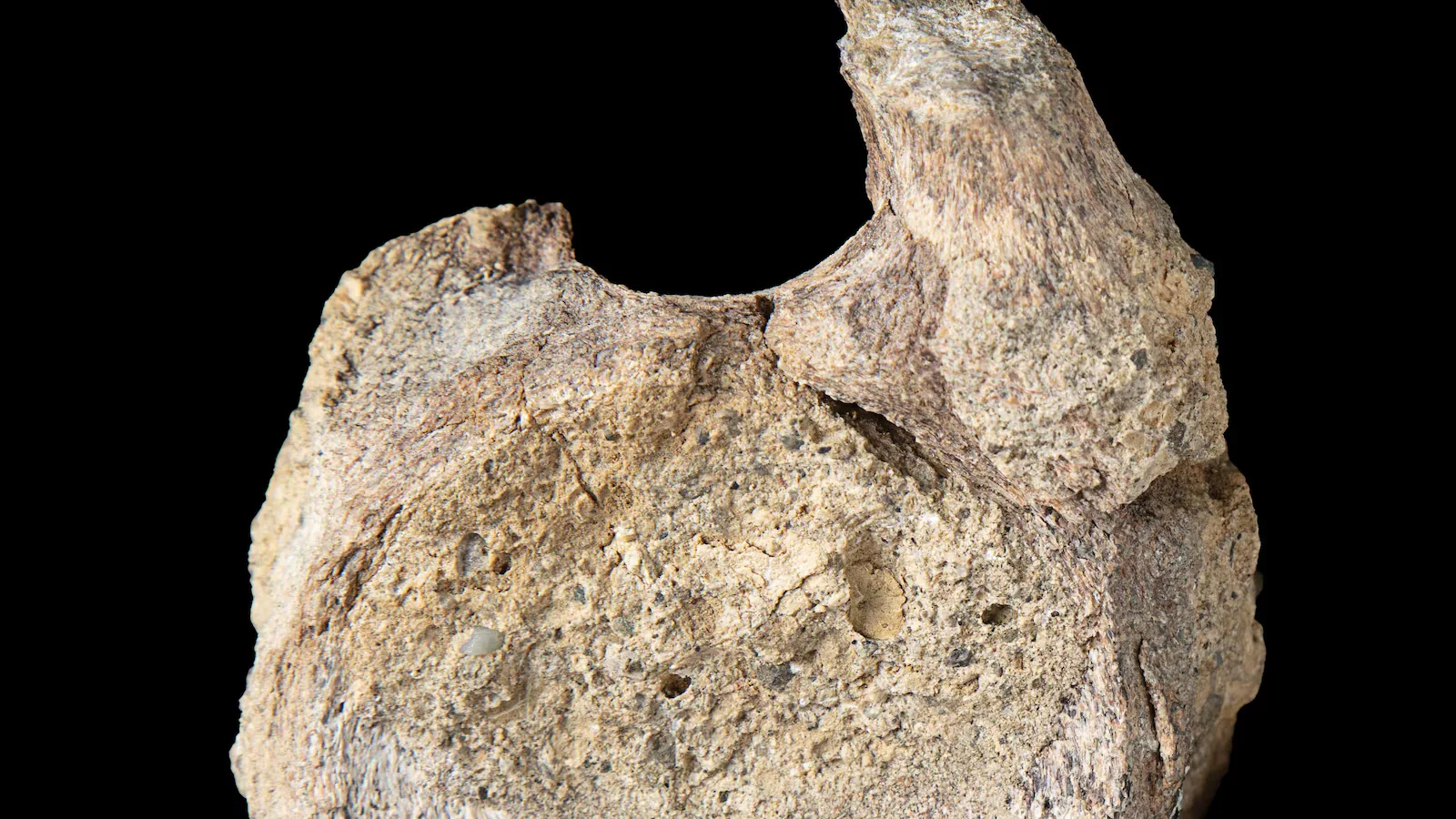
A rare dinosaur fossil from Antarctica, initially collected in 1985, has been identified decades later, having been stored away in a drawer. The fossilized bone belongs to the tail of a titanosaur, a large, long-necked, plant-eating dinosaur, though scientists have not yet pinpointed the exact species. The discovery highlights the often-unforeseen journeys of scientific finds and the evolution of paleontological analysis.
Geologist Mike Thomson first collected the bone on an expedition to Antarctica's James Ross Island in 1985. His work at the time with the British Antarctic Survey focused on mapping rock layers and collecting marine reptile fossils to aid in future dating efforts. He cataloged the specimen simply as a large reptile, unaware of its true prehistoric significance. The bone remained in the survey's collections for decades.
The breakthrough came when paleontologist Mark Evans, also associated with the British Antarctic Survey, encountered the specimen. His curiosity was piqued, and he suspected it might be dinosaurian. A subsequent detailed analysis by Evans and his research team, involving comparisons with more complete dinosaur remains and careful examination of the bone's morphology, confirmed it as a dinosaur fossil.
Insights into Prehistoric Antarctica
The findings, published recently in the journal Acta Palaeontologica Polonica, shed light on the ancient ecosystems of Antarctica. Dinosaur fossils are exceptionally scarce on the continent due to its extensive ice sheets. However, millions of years ago, during the time this titanosaur lived, Antarctica was a vastly different environment, characterized by lush forests. "Rather different and much more hospitable place than we think of today," commented study co-author Paul Barrett of the Natural History Museum in London, contextualizing the ancient climate.
The titanosaur, estimated to be around 23 feet (7 meters) in length, is considered relatively small for its group, suggesting it may have been a juvenile at the time of its death. Researchers are still uncertain about the precise cause of its demise. Current hypotheses suggest its body may have floated from the coast and sunk to the seabed, where it eventually became fossilized within marine rock layers. This location is key to understanding how such remains are preserved in areas now covered by ice.
Technological advancements have played a crucial role in re-examining older specimens. Modern techniques allow scientists to non-invasively study the internal structures of fossils, providing a level of detail unattainable when the bone was first collected. These methods have been instrumental in confirming the identity of this particular Antarctic dinosaur.
Tragically, Mike Thomson, the geologist who originally found the fossil, passed away in 2020, before the specimen was definitively identified as a dinosaur. "If he were still with us, he would be delighted to know what this was," stated Mark Evans, a co-author of the study, reflecting on the late geologist's contribution. The re-evaluation of this specimen underscores the importance of carefully cataloging and preserving even seemingly unremarkable finds, as future scientific developments may unlock their hidden secrets. This discovery adds another piece to the puzzle of life on the ancient southern continents.