
Perseid Meteor Shower Peaks Alongside Summer Solar Eclipse
The Perseid meteor shower, one of the summer's most anticipated celestial events, is set to peak this week. Its visibility is enhanced by a new moon and, for some regions, a coinciding solar eclipse.

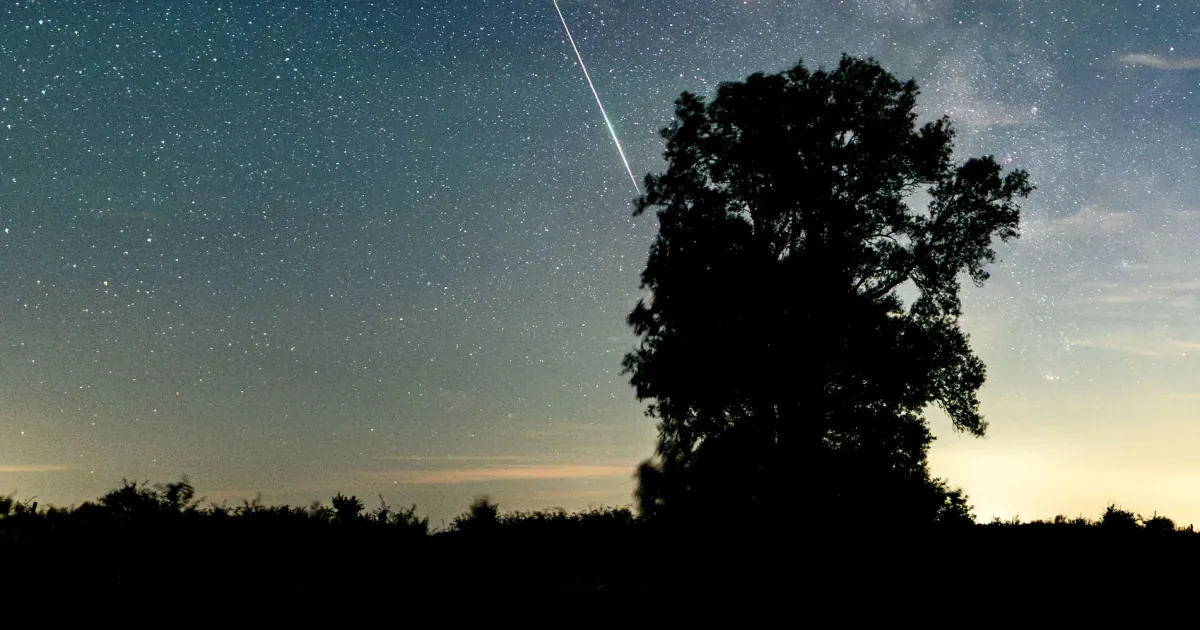
Skygazers are in for a spectacular treat as the annual Perseid meteor shower reaches its zenith this week, coinciding with a rare solar eclipse. The celestial display, expected to peak overnight from Wednesday to Thursday, offers an exceptional viewing opportunity due to the new moon phase, which will leave the night sky exceptionally dark.
This year's Perseid peak is particularly noteworthy as it aligns with a total solar eclipse visible across parts of Spain, Portugal, Greenland, Iceland, and northern Russia on Wednesday. A total solar eclipse occurs when the Moon passes directly between the Sun and Earth, casting a shadow and momentarily obscuring the Sun.
In areas where the eclipse takes place near sunset, observers may be able to witness Perseid meteors even during totality – the brief period when the Sun is fully hidden. This phenomenon creates a temporary twilight, allowing for clearer views of the streaking lights.
Perseid Shower's Origins and Viewing Tips
The Perseid meteor shower, active since mid-July, originates from debris left by Comet 109P/Swift-Tuttle, first identified in 1862. As Earth plows through this cosmic dust cloud each year, these particles burn up in our atmosphere, creating the brilliant streaks of light we call shooting stars. The Perseids are known for producing bright fireballs, meteors that leave persistent glowing trails.
Under optimal conditions, including clear weather and minimal light pollution, the Perseids can produce up to 100 meteors per hour at their peak. While the highest activity occurs during the peak night, shooting stars will remain visible for about two weeks following. For the best viewing experience in the Northern Hemisphere, experts recommend looking skyward in the early morning hours before dawn.
NASA advises skywatchers to find a location with an unobstructed view, away from city lights. Allowing your eyes 20 to 30 minutes to adjust to the darkness will significantly enhance your ability to spot the meteors. Patience is key, as the streaks of light appear intermittently.
Unfortunately, viewers in most of the Southern Hemisphere will have a more challenging experience. The radiant point for the Perseids, the area in the sky from which the meteors appear to emanate, often remains below the horizon, making observation difficult.