
Millions of Space Junk Pieces Threaten Satellites and Operations
Millions of pieces of space junk are circling Earth at extreme speeds, raising collision risks and prompting new cleanup proposals.

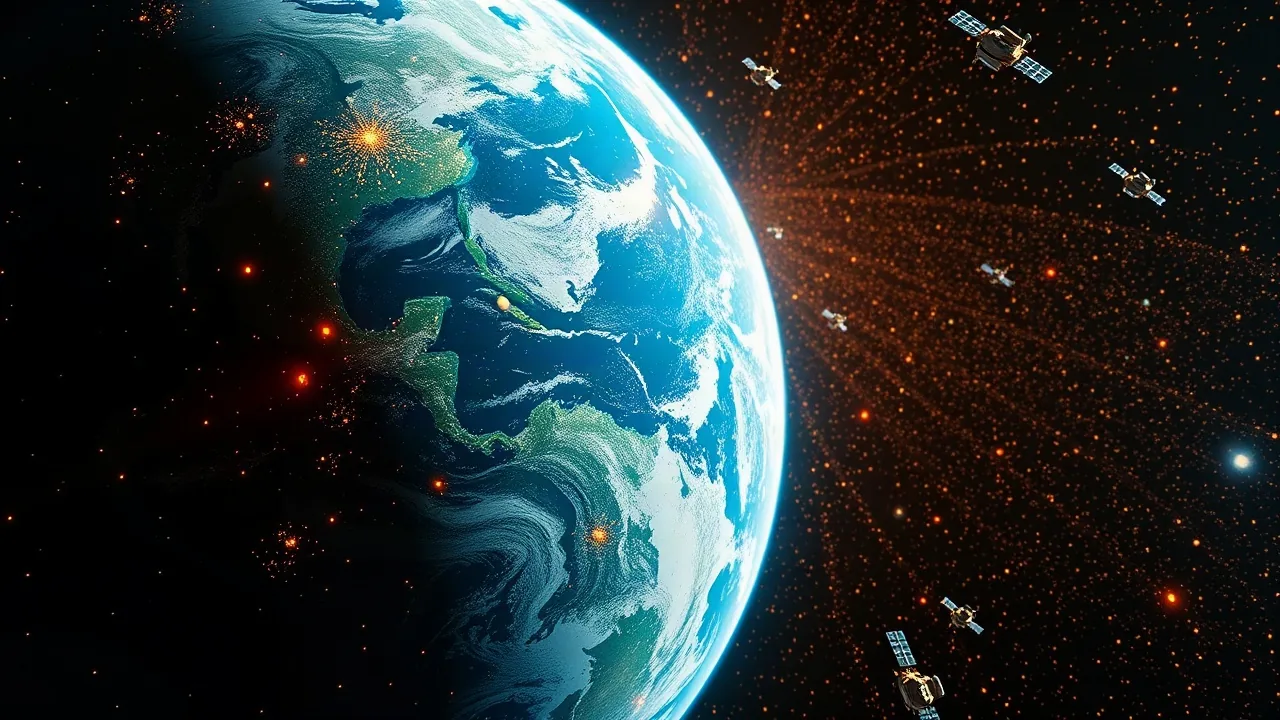
A growing traffic jam is surrounding Earth as millions of pieces of space debris circle the planet at extreme speeds, threatening functioning satellites and future space operations. Scientists estimate that more than 230 million fragments measuring between 1 millimeter and 1 centimeter are in orbit, alongside 1.5 million larger items. Operating at speeds that can surpass 17,000 mph, even relatively small fragments can cause severe damage to spacecraft.
The situation could continue worsening even if all launches ceased immediately. As companies investigate placing artificial intelligence data centers in space and expand satellite networks, researchers warn that potential collisions could trigger a cascading process known as Kessler syndrome. This chain reaction could render parts of Earth's orbit increasingly hazardous to navigate.
Cleanup Initiatives and Astronomical Concerns
To address the mounting hazard, a new British mission aims to deploy a robotic spacecraft to remove dead satellites, while researchers at North Carolina State University are investigating a deposit system similar to returnable bottles to encourage cleanup efforts. The UK Space Agency announced a contract with ClearSpace to develop technology capable of capturing and deorbiting two abandoned satellites by 2032.
“The risk with space is we don't have cleanup crews, right?” said Mark Moretto, an assistant professor of mechanical and aerospace engineering at NC State.
Meanwhile, observational astronomers are facing disruptions as satellite traffic grows. Reflective surfaces on passing satellites leave bright streaks across telescope observations, forcing researchers to mask the artifacts and discard valuable information.
“Every time we have to mask them, we lose some some precious data that we are taking,” said Arun Kannawadi, an assistant research professor of physics at Duke University.
As commercial operators like SpaceX expand their constellations and explore future orbital infrastructure, researchers continue studying both the immediate collision hazards and the long-term environmental impacts of satellite reentry on Earth's upper atmosphere.