
NASA ESCAPADE Mars Probes Complete Historic Earth Flybys
NASA's twin ESCAPADE spacecraft successfully performed an unprecedented double powered Earth flyby to set course for Mars.

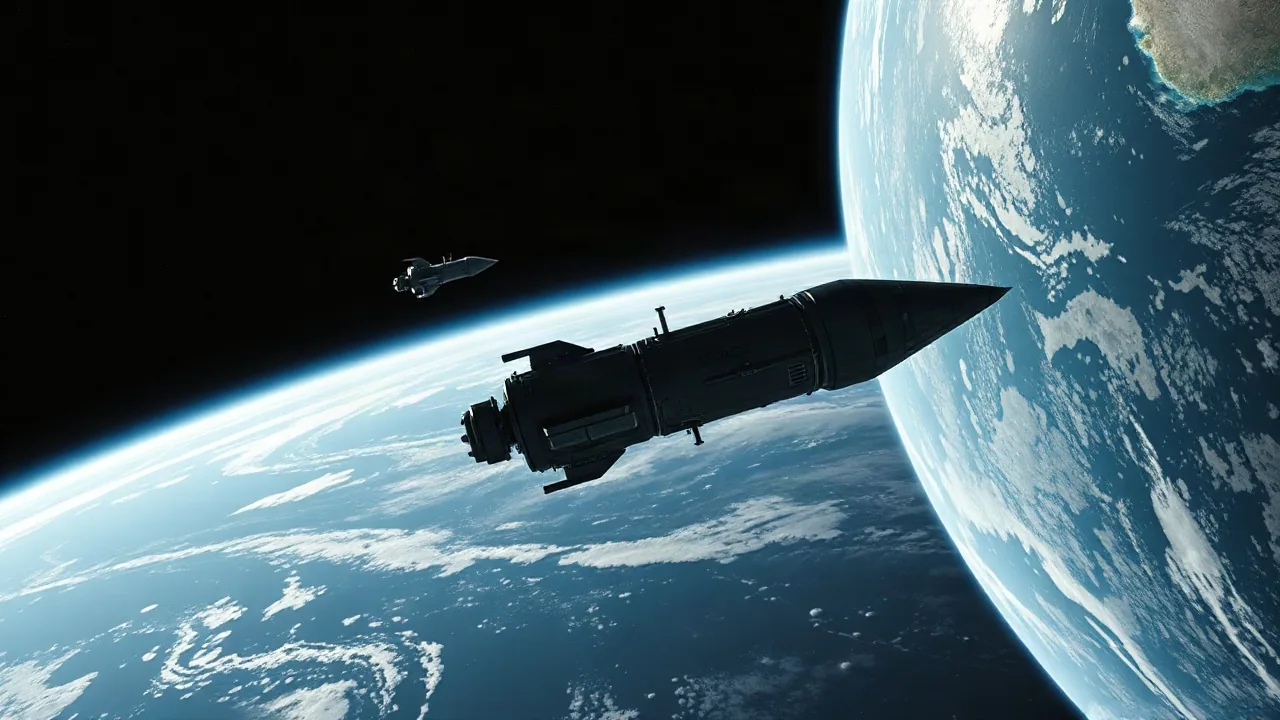
NASA's twin ESCAPADE Mars probes have successfully executed an unprecedented series of powered Earth flybys, completing engine burns designed to propel them toward the Red Planet. Built by Rocket Lab, the Escape and Plasma Acceleration and Dynamics Explorers spacecraft originally launched in November 2025 aboard a Blue Origin New Glenn rocket. Due to launch delays that caused the mission to miss a standard planetary alignment window, mission planners devised a unique kidney-bean-shaped loitering trajectory that brought the probes back to Earth.
The maneuver required both spacecraft to perform precise engine burns within Earth's gravity well. The first probe completed the feat on Nov. 7, while the second followed on Monday, Nov. 9. According to NASA, the operations were executed without issue, setting the stage for a September 2027 arrival at Mars.
Mission Objectives and Unique Trajectory
“No NASA mission has ever done this before,” said Rob Lillis, a planetary and space physicist at the University of California, Berkeley and principal investigator of the ESCAPADE mission. “For most missions, it just isn't necessary.”
Traditionally, Mars missions rely on a planetary alignment that occurs every 26 months. Because the New Glenn delay forced the mission to sit out the October 2024 window, mission architects designed the loitering orbit to return the spacecraft to Earth by November 2026. This setup allowed the probes to perform a first-of-its-kind powered Earth gravity assist.
“This is the first time NASA has used a powered Earth flyby to propel a spacecraft toward Mars, and we've now executed this maneuver twice, flawlessly, in just two days,” Asal Naseri, acting associate flight director for NASA's Heliophysics Division said in a statement.
Each refrigerator-sized spacecraft carries scientific instruments and cameras aimed at studying planetary magnetic fields. During their extended loitering phase, the probes also gathered data on Earth's magnetotail at a distance of some 1.19 million miles away, and later partnered with the ARTEMIS-THEMIS spacecraft near the moon to observe the region from four perspectives simultaneously.