
Solar Eclipse Timing: Midwest Viewers Can Catch Partial Show
North America will witness a partial solar eclipse on Wednesday. While full totality is visible elsewhere, select U.S. cities, including some in the Midwest, will get a glimpse.

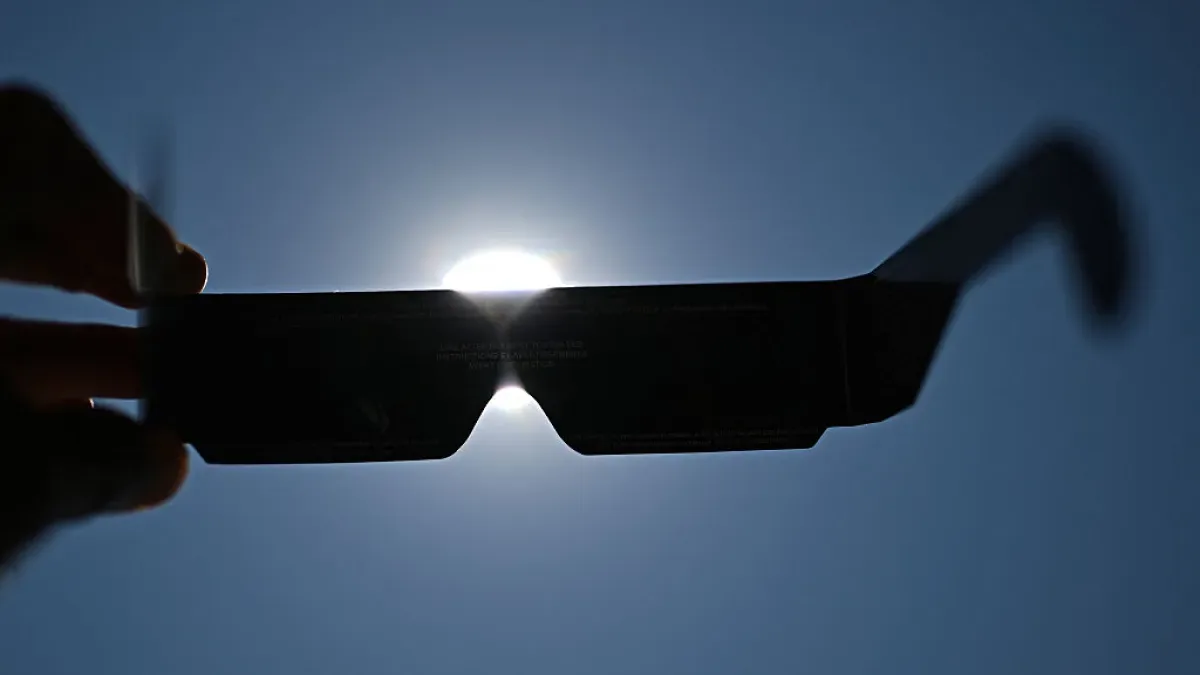
A partial solar eclipse will grace the skies over parts of North America on Wednesday, August 13, 2026, offering a celestial spectacle for those in the right locations. While the path of totality will traverse regions far to the north and east, including Greenland, Iceland, and Spain, many across the United States and Canada can anticipate a partial viewing. The event begins for the U.S. around 10:34 a.m. CT, with peak coverage expected at 11:52 a.m. CT, concluding around 1:52 p.m. CT, according to University of Indiana astronomy professor Catherine Pilachowski.
For residents in the immediate Chicago area and much of Illinois, the eclipse will be a subtle event, with less than 1% of the sun’s surface anticipated to be obscured by the moon. Similarly, cities like Detroit can expect only about 3% coverage. Despite the limited views in some major Midwestern hubs, other locations will experience more significant partial eclipses. For instance, Anchorage, Alaska, is set to witness 28% coverage, beginning at 7:36 a.m. local time and peaking at 8:21 a.m. Bangor, Maine, will see 24% coverage, with its peak at 1:53 p.m. ET.
Viewing Opportunities Across North America
Beyond the continental United States, several Canadian cities are also positioned for notable views. Montreal, Quebec, will experience 18% coverage, peaking at 1:45 p.m. ET. Further east, St. Johns, Newfoundland and Labrador, stands out with the most significant coverage expected on the continent, at 53%, with its peak at 3:35 p.m. AT. Other major cities like New York City anticipate 9% coverage, peaking at 1:54 p.m. ET, while Washington D.C. expects 4% coverage, peaking at 1:53 p.m. ET. Even further west, Winnipeg, Manitoba, will see about 5% coverage, peaking at 12:02 p.m. CT.
The diminishing visibility of solar eclipses across the U.S. highlights the infrequent nature of these astronomical alignments. The next total solar eclipse visible across a significant portion of the United States is not slated to occur until 2045, a cross-country event that promises widespread dramatic views. However, astronomers note that a subsequent partial solar eclipse is scheduled for January 14, 2029, which is expected to offer nearly 60% solar coverage in the Chicago area, providing a more substantial viewing experience for those regions.
The August 13, 2026, event underscores the importance of astronomical observation and the precise calculations involved in predicting these cosmic dances. Each solar eclipse offers a unique window into the mechanics of our solar system. While some areas may be disappointed by the minimal coverage, the event serves as a reminder of the vastness of space and the predictable yet awe-inspiring movements of celestial bodies. Planning for future eclipses, such as the significant one in 2045, encourages public engagement with science and astronomy, fostering a deeper appreciation for the cosmos. Experts like Professor Pilachowski emphasize that even partial eclipses provide valuable data and opportunities for public scientific outreach.
For those hoping to catch a glimpse of Wednesday's event, clear skies will be crucial. Cloud cover can significantly obscure the view, turning a highly anticipated astronomical show into a muted experience. Observers are also reminded of the importance of eye safety; specialized eclipse glasses or solar viewers are necessary to prevent permanent eye damage when viewing any phase of a solar eclipse, even a partial one. These precautions ensure that the wonder of an eclipse can be enjoyed safely, making the experience both memorable and responsible. Astronomy enthusiasts are advised to consult local astronomical societies or observatories for specific viewing events or safety guidelines related to the astronomical event.