
Uranus Magnetic Field Mystery Solved by New Computer Simulations
New computer simulations may explain the unusual and offset magnetic fields of Uranus and Neptune, which have puzzled scientists for decades.

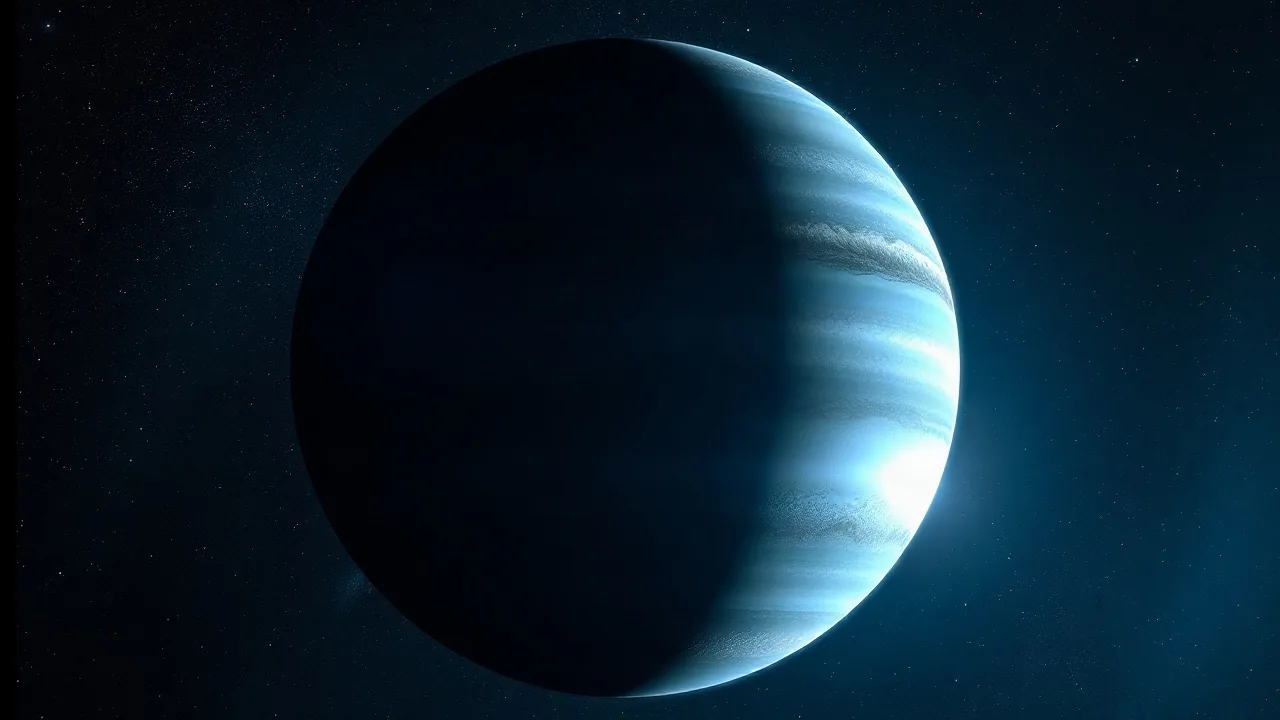
For forty years, astronomers have tried to figure out why Uranus and Neptune possess such unusual magnetic fields. Only one spacecraft has ever visited these two ice giant worlds: NASA's Voyager 2, which flew past Uranus in January 1986 and Neptune in August 1989. The historic mission revealed that both planets feature severely disordered and offset magnetic fields, contrasting sharply with Earth's stable planetary alignment.
Earth features a stable magnetic field tilted by just 11 degrees relative to its rotation. By contrast, Voyager 2 found that the magnetic field of Uranus was offset from its rotational axis by 59 degrees and shifted off-center. Neptune displayed a similarly disordered configuration, offset by 47 degrees.
Scientists in the U.S. and the UK have now developed computer simulations that replicate these bizarre magnetic fields. Published on 3 November in the journal Communications Physics, the study suggests that extreme internal conditions and conductivity changes deep inside the planets are responsible.
Inside the Ice Giants
The ice giants are substantially larger than Earth, possessing 14.5 and 17 times the mass of our planet, respectively. Surrounding a probable rocky core, they contain abundant volatiles such as ammonia, hydrogen, helium, methane, and water.
“Deep inside Uranus and Neptune, pressures and temperatures become extremely high,” said research team leader Chi Yan of the University of Texas at Austin in a statement. “Under those conditions, which can cause water molecules to break apart into ions, the material may become increasingly electrically conductive with depth.”
Furthermore, the models indicate that the magnetic fields of these planets can change significantly over short spans. “Earth's magnetic tilt drifts by only a degree or so over 50 years,” Yan said. “Our models show the ice giants can behave very differently. In some stretches, the tilt swings by tens of degrees within decades. In others, it shifts only slightly over the same span.”
Researchers are also utilizing the James Webb Space Telescope (JWST) to observe infrared auroral lights on both ice giants. Co-author Tom Stallard of Northumbria University noted that aurorae provide an essential indicator of planetary magnetic activity.