
Astronaut's Health Mystery Could Redefine Spaceflight Safety
A veteran astronaut's sudden speech loss aboard the ISS led to an early return and may prompt significant changes in spaceflight health protocols.

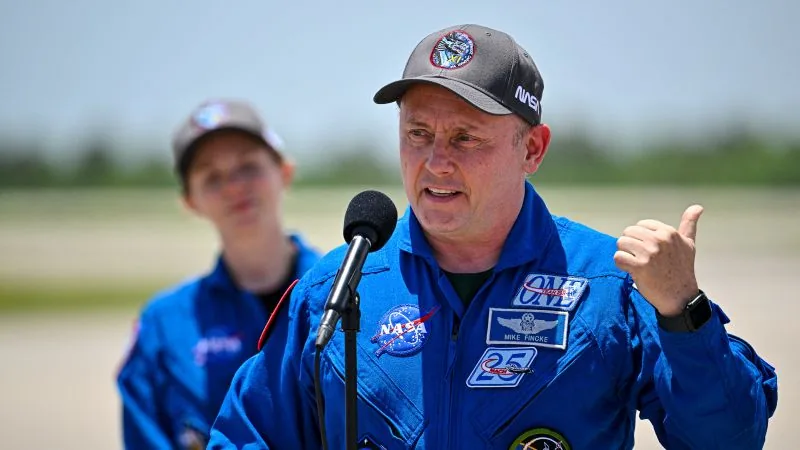
Veteran NASA astronaut Mike Fincke experienced a sudden, unexplained speech impairment during dinner five months into his fourth International Space Station (ISS) mission, an event that ultimately led to his and three crewmates' early return to Earth in January 2026. The episode, lasting about 20 minutes, left Fincke agitated but without pain, prompting an all-hands response from his fellow crew members and triggering an unprecedented decision by NASA: to cut short the SpaceX Crew-11 mission. The early return, a month ahead of schedule, reduced the ISS staff to three. NASA Administrator Jared Isaacman stated the decision was due to a "serious medical condition," emphasizing that while astronauts are extensively trained, the option to return home is a critical component of flight planning, a protocol successfully executed in this instance. "We will capture any relevant lessons learned to inform preparations for subsequent missions," Isaacman added.
The SpaceX Crew-11 successfully returned to Earth on January 15, 2026, eight days after the incident, distinguishing it from an emergency evacuation. Fincke's situation marked the first time an ISS visitor returned early due to a health concern. NASA has maintained its policy of protecting astronaut privacy by not disclosing specific details of the incident, though Fincke himself later indicated the symptoms were likely space-related, without providing a formal diagnosis. While the response was unique, medical issues among astronauts are not new. The extreme conditions of space travel, including intense gravitational forces and weightlessness, profoundly affect the human body. NASA has identified five key hazard areas: radiation, isolation, distance, microgravity, and hostile environments. These factors can lead to bone and muscle loss, cardiovascular issues, immune system dysfunction, and vision impairment.
Spaceflight's Toll on the Human Body
One significant impact of weightlessness is the shift of bodily fluids towards the head, causing upper body swelling. A 2019 study on 11 astronauts revealed that six experienced stagnant or reversed blood flow, with one case of a blood clot and another of a partial clot. Dr. Farhan Asrar, an associate professor at the University of Toronto's Faculty of Medicine, noted that "the environment of space can be disabling, and the strains of space can impact virtually every aspect of your body." He specifically mentioned muscle mass, bone health, and fluid shifts as major concerns. Asrar also suggested that certain blood flow issues could potentially cause temporary neurological events, such as a Transient Ischemic Attack (TIA), which involves a brief interruption of blood flow to the brain and typically resolves without permanent damage. Symptoms of TIA can include dizziness and confusion, though it remains unclear if Fincke experienced these. Onboard the ISS, the crew utilized the station's ultrasound machine, likely guided by mission control, to assess Fincke's condition. Former astronaut and physician Scott Parazynski suggested that evaluating heart function and checking for blockages in the carotid arteries would have been standard procedure. Another condition linked to fluid shifts is Spaceflight Associated Neuro-ocular Syndrome (SANS), which causes swelling at the back of the eye and reduced visual acuity, affecting an estimated 70% of ISS astronauts. The Polaris Dawn mission, commanded by Jared Isaacman, also studied SANS.
Beyond fluid shifts, extended periods in space, such as those planned for deep space missions, pose risks of muscle atrophy, bone density loss, immune system weakening, and cardiovascular deconditioning. The reduced physical effort in microgravity means the heart works less strenuously. "Deep space, it has its own set of challenges," Asrar stated. "We're relatively new to exploring further distances in deep space... But we know that the exposure to radiation is an issue -- not just duration of exposure, but also the type of radiation which tends to be more penetrating in deep space." Exposure to high-energy particles in deep space significantly increases the lifetime risk of cancer, central nervous system damage, and degenerative diseases.
NASA's management of Fincke's medical emergency was praised by Parazynski, who highlighted the advantage of the ISS's proximity to Earth for stabilization before a return journey. However, future missions to Mars, for example, would present greater challenges due to communication delays. Astronauts on such missions would face delays of at least 40 minutes for a round-trip communication. One potential solution is to include medical doctors as crew members, a practice not uncommon among astronauts from various countries. Despite the lack of a physician on the ISS during Fincke's episode, the successful handling of the situation provides valuable data for enhancing future deep space mission planning and astronaut safety protocols.