
SpaceX Falcon 9 Completes 35th Mission Hauling Starlink Satellites
SpaceX's Falcon 9 rocket successfully launched 29 Starlink satellites on its 35th mission for a particular booster. The launch adds to the growing Starlink constellation in low Earth orbit.

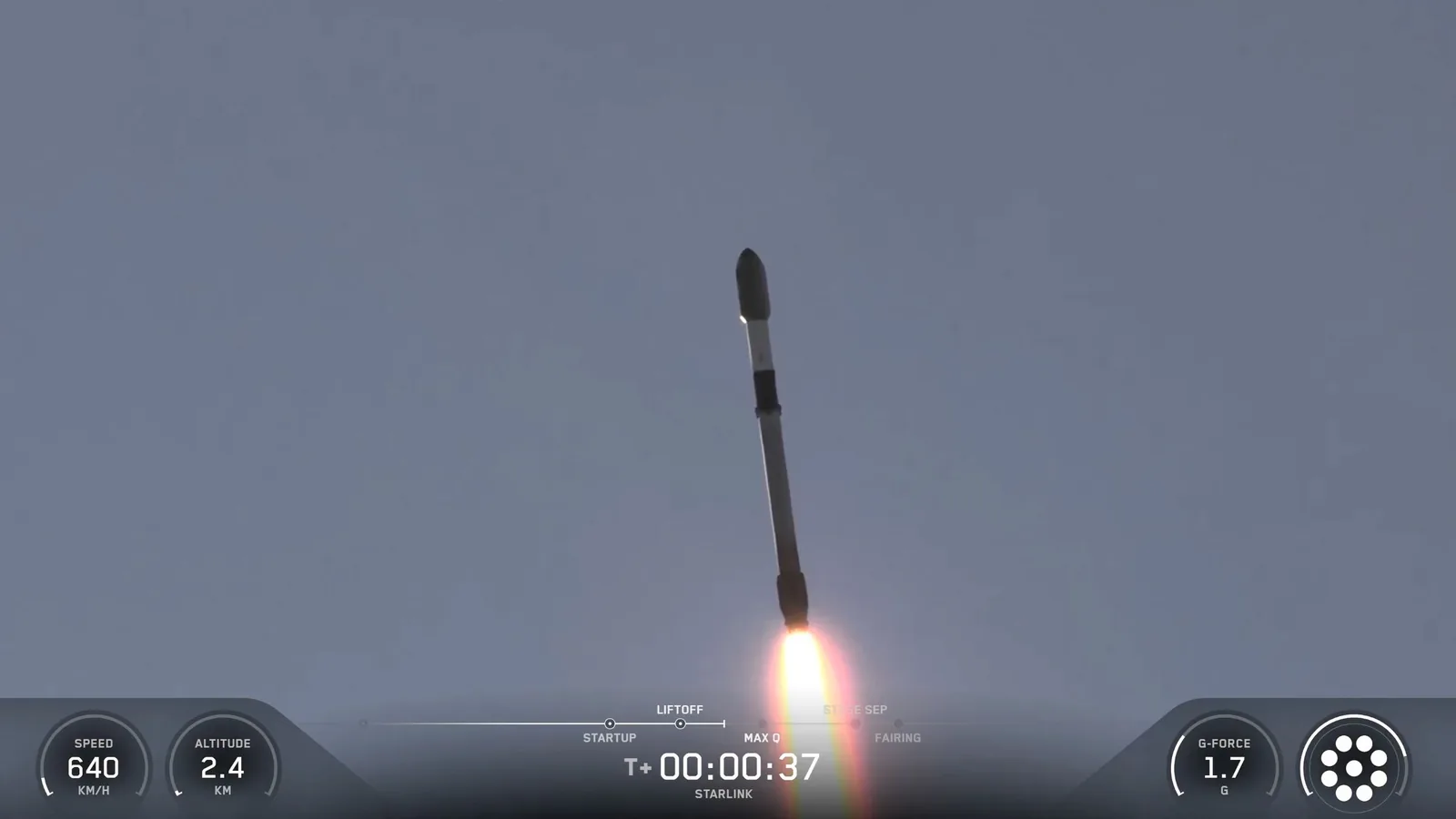
A SpaceX Falcon 9 rocket launched 29 Starlink satellites into low Earth orbit on Friday, July 10, 2026, marking a significant milestone for one of the rocket's booster stages. The launch occurred at 11:01 p.m. EDT from Vandenberg Space Force Base in California. This mission was the 35th flight for the specific first stage booster, B1071, bringing it just one flight short of the current SpaceX record of 36 flights set by another booster earlier this month.
Following its payload deployment, the Falcon 9 booster executed a successful return to Earth, landing on the droneship "Of Course I Still Love You" in the Pacific Ocean approximately 8.5 minutes after liftoff. The rocket's upper stage continued its journey, tasked with deploying the 29 Starlink satellites into orbit about an hour after launch. These satellites will join SpaceX's expansive Starlink constellation, which aims to provide global broadband internet access.
As of July 2026, the Starlink constellation comprises over 10,700 active satellites, according to noted satellite tracker Jonathan McDowell. SpaceX has ambitious plans for the network's future, recently submitting an application to operate as many as 100,000 spacecraft in low Earth orbit. This particular launch was the 81st Falcon 9 mission of 2026, with approximately 80% of these missions dedicated to deploying Starlink satellites, underscoring the program's central role in SpaceX's operations.
Expanding Satellite Constellations
The continuous expansion of satellite constellations like Starlink raises both opportunities and questions regarding space traffic management and orbital debris. SpaceX's strategy of rapid satellite deployment, facilitated by reusable rocket technology, has dramatically accelerated the growth of its internet service. The company's ability to launch and retrieve booster stages, as demonstrated in this mission, significantly reduces the cost of space access and allows for more frequent flights.
This 35th flight for booster B1071 highlights the durability and reusability that SpaceX has engineered into its Falcon 9 program. While the booster's 35th flight is a notable achievement, it is poised to potentially surpass the existing record. The successful landing in the Pacific Ocean confirms the reliability of SpaceX's recovery procedures, a critical component of their cost-effective launch strategy. The deployment of the 29 Starlink satellites contributes to enhancing internet connectivity in underserved and remote regions globally.
The ongoing cadence of launches is indicative of the increasing demand for satellite-based services, from internet provision to Earth observation and scientific research. The SpaceX Falcon 9, a workhorse of the modern space industry, continues to be the primary vehicle for deploying these constellations. The company's president, Gwynne Shotwell, has previously emphasized the importance of reusability in achieving their long-term goals for space exploration and commercialization.
The sheer volume of satellites being placed in orbit necessitates robust systems for monitoring and de-conflicting orbital paths to prevent collisions. Regulatory bodies worldwide are grappling with establishing frameworks to manage this burgeoning space environment. SpaceX, as a leading operator, plays a crucial role in these discussions, advocating for efficient and sustainable space utilization. The success of missions like this one, involving the Falcon 9 rocket, is a testament to the technological advancements driving the new space age.