
Astronomers Find 'Exosatellite' Defying Classification in Distant Star System
Astronomers have identified a celestial object in the CD-35 2722 system that challenges existing definitions, potentially being the first moon discovered outside our solar system. Its unique orbit around a brown dwarf orbiting a star complicates classification.

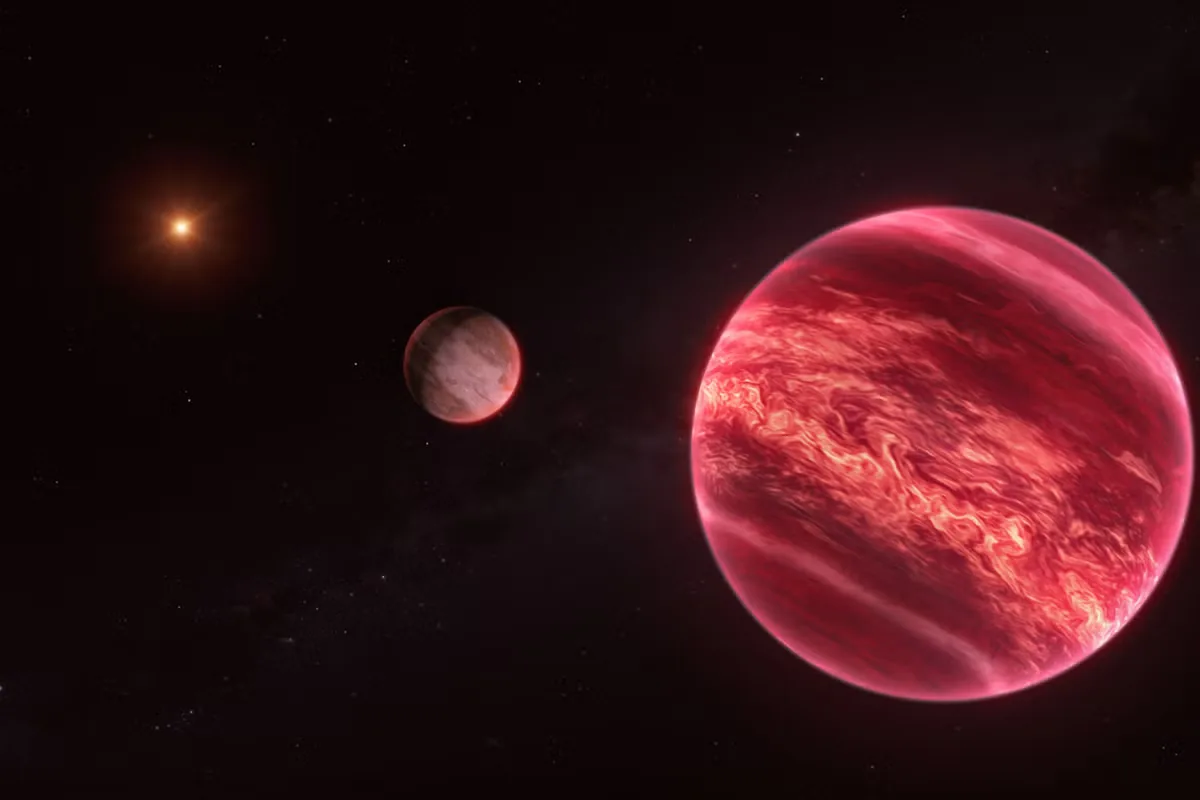
Astronomers have identified a perplexing celestial object in the distant star system CD-35 2722, so unusual that scientists are struggling to categorize it. The discovery, potentially the first confirmed moon outside our solar system, orbits a brown dwarf that itself orbits a star, a configuration that blurs the lines between moons, planets, and even stars.
Alice Zurlo, a key researcher on the new study, explained the difficulty in classification. "We have a clear delineation between the planets and the Sun in the Solar System, so defining things like moons is simple," Zurlo stated. "In the CD-35 2722 system, where we are blurring the lines between stars, planets, and moons, the whole thing becomes more complicated to describe." Unlike moons in our own solar system, which orbit planets, this newly found object circles a brown dwarf, a celestial body often described as a 'failed star.' This brown dwarf then orbits the primary star in the CD-35 2722 system.
The object was detected using the powerful instruments of the European Southern Observatory's Very Large Telescope. For now, the research team has tentatively dubbed the object an "exosatellite," a term reflecting its status as a satellite discovered beyond our solar system.
A Unique Orbital Dance
Kevin Hoy, another author of the study, highlighted the object's peculiar characteristics. "The exosatellite is clearly massive enough to be a planet, but it does not orbit a star, though it orbits an object that orbits a star," Hoy explained. "Being the third wheel in this system makes us want to call it a moon, even if it is nothing like the small, rocky moons we have in our system." This unique arrangement has led to extensive debate among astronomers regarding its precise classification.
The search for moons beyond our solar system has been a long-standing goal in astronomy, with thousands of exoplanets discovered to date, but no definitive confirmation of an extrasolar moon until now. The breakthrough came from observing subtle wobbles in the brown dwarf's motion, indicative of the gravitational pull from the orbiting object. "As exotic as it is, this system is truly unique and represents a breakthrough: the first plausible detection of an exosatellite," Zurlo emphasized.
Understanding the formation and prevalence of moons in other solar systems is crucial for a comprehensive picture of planetary system evolution. Discoveries like this provide invaluable data points, helping scientists refine their models of how planetary systems form and how diverse they can be. Future observations with even more advanced telescopes are expected to shed further light on these celestial companions and potentially uncover more such objects. The findings were published in the prestigious journal Nature.