
Astronomy Photographer of the Year Finalists Showcase Solar Eruptions, Moon Paths
The 18th annual Astronomy Photographer of the Year competition has revealed its finalists, featuring stunning cosmic imagery from around the globe. Winners will be announced September 17.

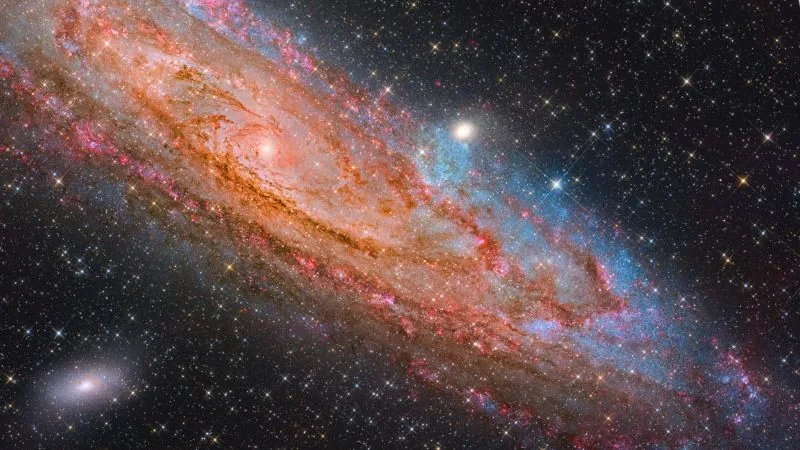
The Royal Observatory Greenwich has unveiled the contenders for the 18th annual Astronomy Photographer of the Year competition, showcasing nearly 4,000 submissions from 769 photographers across 66 countries. The shortlisted images capture the cosmos in breathtaking detail, from celestial events like auroras and falling stars to intricate views of the moon and distant galaxies.
Among the standout entries is Tom Williams' composite image, "Mars in 2025," which meticulously documents multiple views of the red planet over a year. Another finalist, Rafael Schmall, captured "The Savannah Tree" from Hungary, an awe-inspiring photograph of a solar prominence — a dense cloud of plasma — extending from the sun's surface and strikingly resembling an acacia tree. "It’s a very stunning, very striking image," said Greg Brown, an astronomer at the Royal Observatory and a competition judge. "It gives the viewer a feeling of motion and movement of the active nature of the sun."
Artistry in the Cosmos
The competition, which draws submissions from both professional and amateur astronomers and artists, is lauded for its blend of scientific precision and artistic vision. "It's an art competition just as much as it is anything else," Brown explained. "The beauty of the images, the wonderful array of colors and compositions, can be appreciated regardless of your understanding of what it is exactly that you’re looking at." This year's entries highlight the diverse beauty of space, including a photographer's depiction of the full moon's journey across a pink Parisian skyline and another's capture of a meteor shower against a dark night sky.
Judges evaluate entries across nine distinct categories, with additional awards for special prizes and an overall winner. According to Brown, the selection process often culminates swiftly, with one image invariably standing out from the rest. The Astronomy Photographer of the Year will receive a grand prize of 10,000 pounds (approximately $13,300 USD), while winners in each category will be awarded 1,500 pounds (around $2,000 USD). Runners-up and other commended photographers will also receive monetary awards.
The winning photographs, alongside a curated selection of other finalists, will be exhibited at London's National Maritime Museum. The announcement of the winners is scheduled for September 17, marking the culmination of this celebrated annual event that brings the wonders of the universe closer to Earth through the lens of talented photographers. The dedication and skill required to capture these images, often involving complex equipment and precise timing, underscore the growing intersection of technology and art in exploring our universe.