
BepiColombo Spacecraft Sheds Module for Final Approach to Mercury
After an eight-year journey, the BepiColombo mission has jettisoned its Mercury Transfer Module, commencing its final approach to orbit Mercury. The spacecraft will enter orbit in November 2026, with science operations to begin in April 2027.

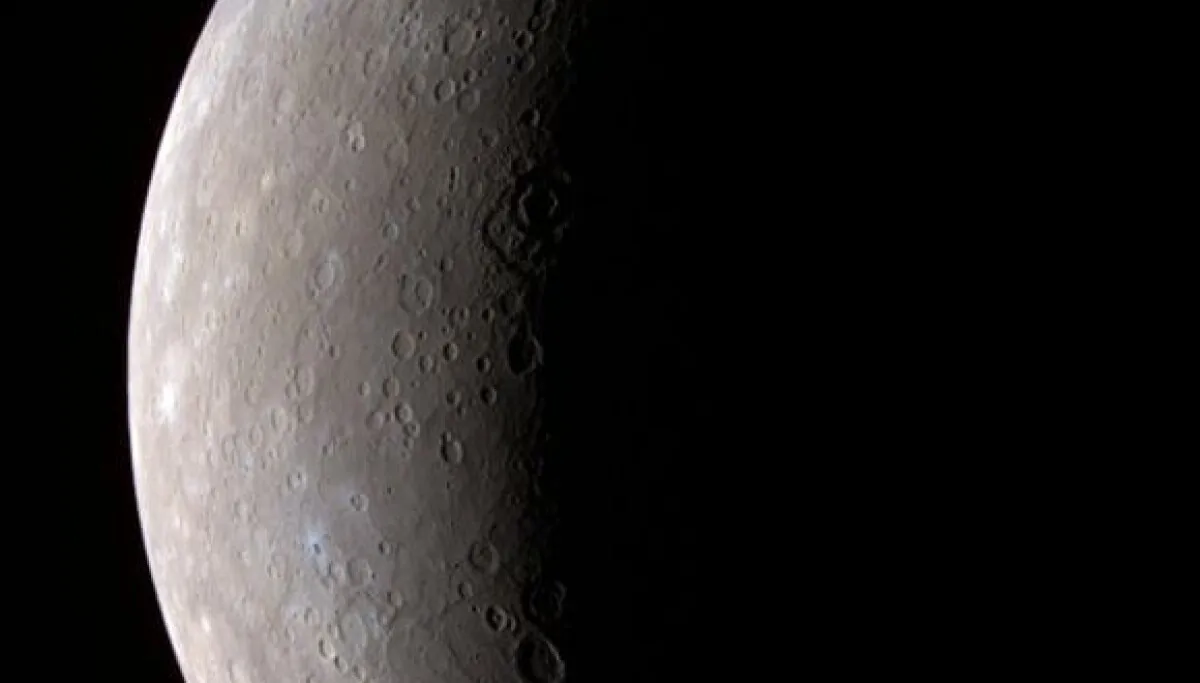
Europe and Japan's joint BepiColombo mission is entering its final critical phase after nearly eight years of interplanetary travel. On September 3, 2026, engineers successfully detached the spacecraft's Mercury Transfer Module (MTM), paving the way for its arrival at the solar system's innermost planet. Controllers confirmed the successful separation through Doppler signal detection shortly after the event. The MTM provided the propulsion needed to carry the BepiColombo stack, comprised of the Mercury Planetary Orbiter (MPO) and the Mercury Magnetospheric Orbiter (MMO), through space since its 2018 launch.
The next major milestone for the BepiColombo mission is its orbital insertion around Mercury, scheduled for November 21, 2026. Following this, the smaller MMO, also known as Mio, will be released from the MPO between December 9 and 10. By December 17, the MPO will begin adjusting its orbit to its final operational path, an elliptical orbit ranging from 480 to 1500 kilometers above Mercury's surface. The mission's extensive scientific observations are slated to commence in April 2027.
A Revised Timeline for Exploration
The arrival at Mercury is occurring approximately one year behind the mission's original schedule. Technical issues encountered with the spacecraft's Solar Electric Power (SEP) system necessitated a recalculation of its trajectory, extending the overall cruise duration. Despite the delay, BepiColombo has not been idle; it has successfully executed six flybys of Mercury since 2021, gathering preliminary data and testing its instruments. The spacecraft has also performed flybys of Venus and Earth during its long voyage, providing valuable data on these planetary neighbors.
This ambitious mission highlights significant international collaboration. The European Space Agency (ESA) contributed the MPO and the MTM, while the Japan Aerospace Exploration Agency (JAXA) developed the MMO. ESA also played a crucial role in providing a sunshield to protect the MMO during the transit through the harsh inner solar system. This protective shield will be ejected after the MMO is deployed.
The MPO is the larger component of the BepiColombo partnership, measuring 2.4 x 2.2 x 1.7 meters and weighing 1,230 kilograms, including an 85-kilogram payload of scientific instruments. JAXA's MMO is a more compact 1.8 meters in diameter and 1.1 meters high, with a mass of 255 kilograms, of which 45 kilograms is dedicated science equipment. While the MPO will be stabilized on three axes and point towards the planet, the MMO will be spin-stabilized at 15 revolutions per minute, with its spin axis oriented perpendicular to the Sun.
The primary scientific objectives of the BepiColombo mission are to conduct a comprehensive study of Mercury. Researchers aim to understand the structure and dynamics of its magnetosphere and its interaction with the solar wind. Additionally, the mission will investigate the properties of Mercury's large iron core and seek to unravel the origins of its intrinsic magnetic field. The initial science phase at Mercury is planned for one Earth year, which equates to approximately four Mercury years, with the potential for an additional year of operations if mission conditions permit.