
Second Full Moon in May 2026: Understanding the Blue Moon
The second full moon of May 2026, known as a monthly "Blue Moon," will occur on May 31. Despite its name, the phenomenon doesn't involve a change in the moon's color.

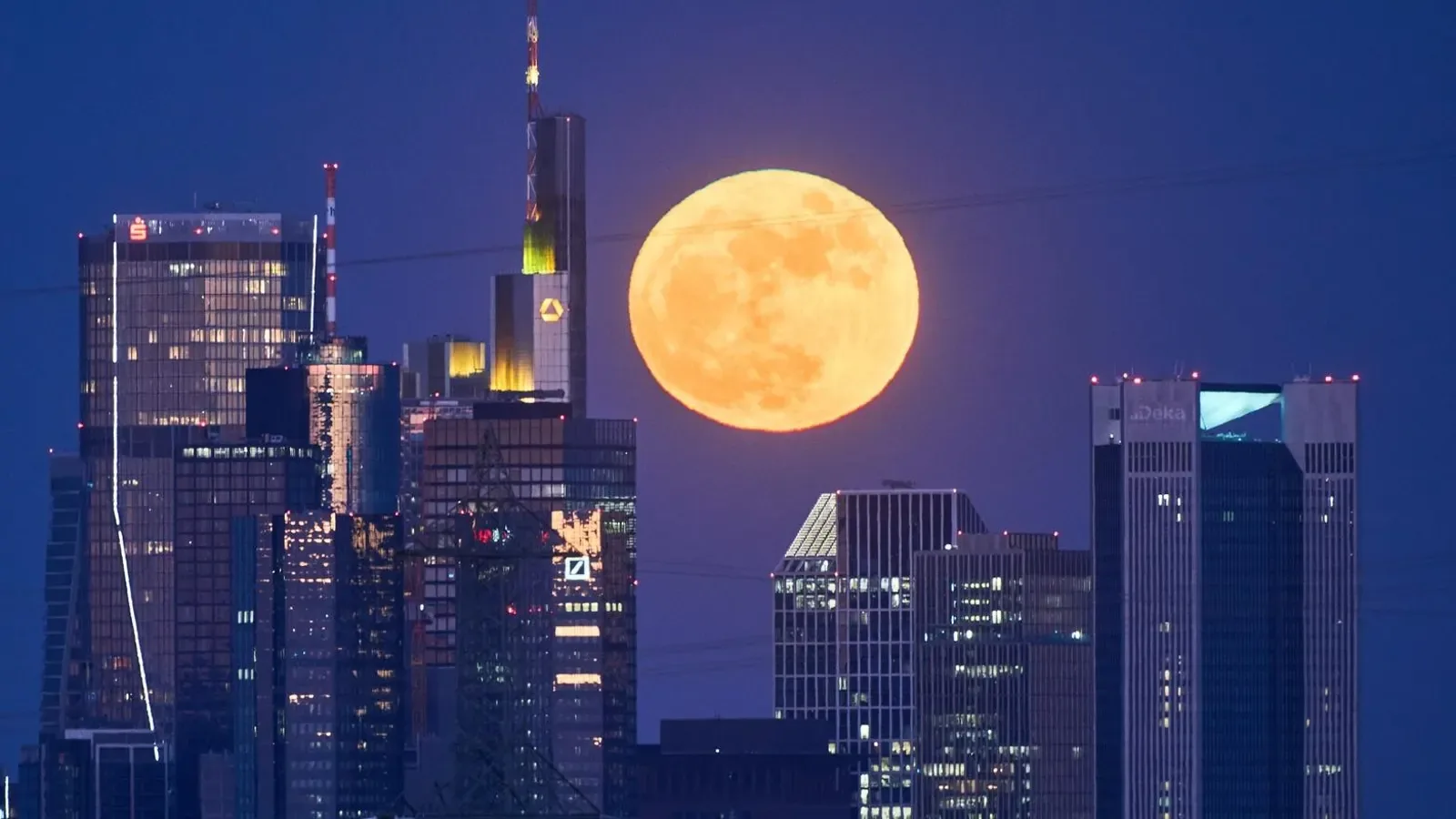
A rare celestial event, often referred to as a "Blue Moon," is set to grace the night sky early on Sunday, May 31, 2026. This particular Blue Moon is the second full moon to occur within a single calendar month, a phenomenon driven by a simple timing quirk. The moon's lunar cycle, which lasts approximately 29.5 days, is slightly shorter than most months in the Gregorian calendar, allowing for the possibility of two full moons in one month.
This occurrence means that May 2026 will host two full moons. The first, known as the Flower Moon, rose on May 1. Twenty-nine and a half days later, the second full moon will appear, earning the "Blue Moon" designation. This type of Blue Moon is often called a monthly Blue Moon. Astronomers also recognize a seasonal Blue Moon, defined as the third full moon in a row within a single astronomical season. The next seasonal Blue Moon is anticipated on May 20, 2027.
The Myth of a Blue Hue
Contrary to its name, a Blue Moon typically does not appear blue. The phrase "Blue Moon" does not signify a change in the moon's color. Like the sun during sunset, the moon often appears orange or red when rising due to atmospheric conditions. Earth's atmosphere scatters shorter, blue wavelengths of light more readily than longer red and orange wavelengths. This effect, known as Rayleigh scattering, is responsible for the warm hues observed during sunrises and sunsets, and it similarly affects the appearance of the moon near the horizon.
The phenomenon of the moon's color change is a well-documented aspect of astronomy. While atmospheric particles like dust or smoke can occasionally lend the moon a bluish tint, this is an independent event and not inherent to the "Blue Moon" definition. For the most part, skywatchers can expect to see a familiar-looking full moon, regardless of its "blue" designation.
The timing of this lunar event is specific to calendar months. Since most months are longer than the moon's 29.5-day cycle, a full moon occurring at the beginning of a month has a chance to be followed by a second full moon before the month concludes. This cosmic alignment is what creates the monthly Blue Moon.
For those eager to witness the full moon, the evening of Saturday, May 30, offers prime viewing opportunities. As dusk settles, observing the southeastern horizon should reveal the moon's ascent. An unobstructed view is recommended for the best experience. While the naked eye is sufficient for observing the lunar spectacle, binoculars can provide a more detailed and exquisite view of the moon's surface.
The precise timing and visibility of the Blue Moon can vary slightly depending on geographical location. The dates and times mentioned are generally applicable to mid-northern latitudes. For accurate, location-specific information, consulting online planetariums or astronomical resources is advised. These tools can help determine the exact moment of moonrise in your area, ensuring you don't miss this noteworthy celestial event. The Blue Moon serves as a reminder of the predictable yet occasionally surprising rhythms of our solar system and the night sky.