
China's Tianwen-2 Mission Targets Earth's 'Mini-Moon' for Sample Return
China's Tianwen-2 spacecraft is set to reach a unique near-Earth asteroid, Kamoʻoalewa, in July 2026. The mission aims to collect and return a sample of the celestial body, which may be a fragment of the Moon.

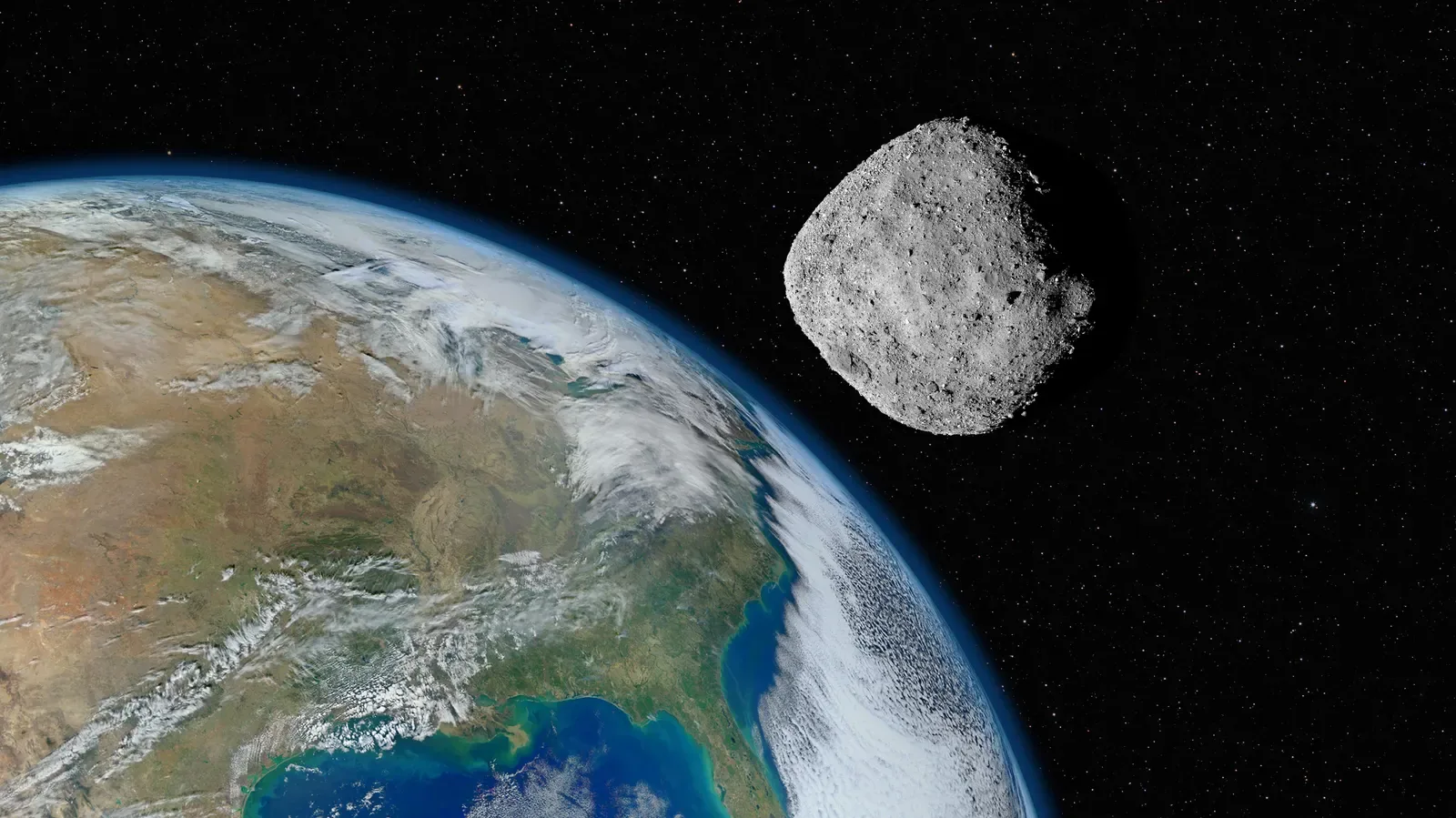
In an unprecedented feat of space exploration, China's Tianwen-2 spacecraft is on a trajectory to reach a peculiar near-Earth asteroid, known as Kamoʻoalewa, in early July 2026. This celestial body, often dubbed Earth's "mini-moon" due to its orbit, is approximately the size of the Statue of Liberty. If the mission proceeds as planned, Tianwen-2 will collect a sample from Kamoʻoalewa and transport it back to Earth in a specialized capsule, marking a significant milestone in China's deep-space ambitions.
Planetary scientists are particularly intrigued by Kamoʻoalewa, not just for its proximity to Earth but for its potential origins. Initial analyses of the light reflected from the asteroid suggest a striking similarity to lunar rock samples retrieved during NASA's Apollo missions. This observation has fueled a leading theory among researchers: Kamoʻoalewa could be a remnant of the Moon, ejected into space millions of years ago by a massive impact. Should this hypothesis prove true, the Tianwen-2 mission would effectively be visiting a long-lost piece of Earth's natural satellite, offering invaluable insights into lunar geology and the early solar system.
Launched on May 28, 2025, the Tianwen-2 mission represents China's inaugural effort in asteroid sample return and is a critical component of its rapidly expanding deep-space exploration program. Upon its arrival at Kamoʻoalewa in July 2026, the spacecraft will dedicate several months to comprehensive remote sensing observations. It will meticulously map the asteroid's surface and identify optimal locations for sample collection. Mission planners have outlined a sophisticated approach involving both swift, 'touch-and-go' maneuvers and the deployment of an advanced anchoring system equipped with drills. The objective is to gather between 20 and 100 grams of material from the asteroid's surface.
Journey to a Comet and the Future of Mining
Following its operations at Kamoʻoalewa, Tianwen-2 is slated to depart the asteroid in April 2027. The mission's primary sample capsule is expected to return to Earth later that year, with a planned landing in November 2027. This timeline will enable scientists to analyze what could be fragments of the early solar system. After releasing the sample return capsule, Tianwen-2 will embark on a secondary objective. Utilizing Earth's gravitational pull for a slingshot maneuver, the spacecraft will redirect itself toward a second, more distant target: the main-belt comet 311P/PanSTARRS, also cataloged as P/2013 P5 (PanSTARRS). NASA's Hubble Space Telescope captured images of this comet in 2013. Tianwen-2 is projected to reach this cometary destination around 2035, further extending the mission's scientific reach.
Unlike typical asteroids, Earth's quasi-satellites like Kamoʻoalewa maintain stable, long-term orbits in close proximity to our planet. This characteristic makes them relatively accessible targets for space missions. Kamoʻoalewa, for instance, maintains a 1:1 orbital resonance with Earth, meaning it completes one orbit around the sun for every orbit Earth completes. While this creates the visual impression that it circles Earth, its stable orbit also positions it as a prime candidate for future robotic exploration and resource utilization. The burgeoning field of asteroid mining holds significant potential, with research published in 2025 by Spherical Insights & Consulting projecting the global market to reach $16 billion by 2035, driven by the potential extraction of resources like water ice and platinum-group metals.
The success of the Tianwen-2 mission could pave the way for future exploration of similar near-Earth objects and bolster the growing international interest in space resource utilization. The data gathered from Kamoʻoalewa promises to deepen our understanding of the solar system's formation and the complex relationship between Earth and its celestial companions.