
New Satellites Could Blind Skygazers, Scientists Warn
A new satellite project approved by the FCC to reflect sunlight at night could pose a significant risk of permanent eye damage to amateur astronomers and potentially disrupt wildlife, experts caution.

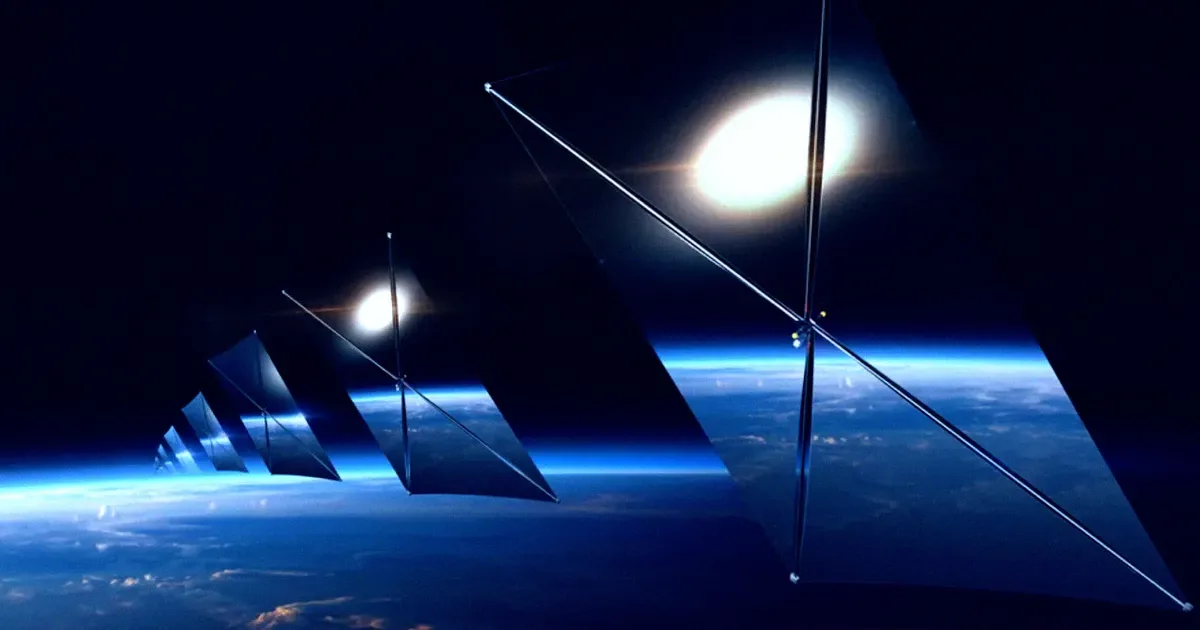
A controversial new satellite project, approved by the Federal Communications Commission (FCC), is drawing sharp criticism from scientists and astronomers who warn it could cause irreversible eye damage and disrupt natural environments. The venture, by startup Reflect Orbital, aims to use an experimental satellite named Eärendil-1 to reflect sunlight back to Earth, illuminating specific areas at night. Proponents suggest applications ranging from enabling solar farms to generate power after dark to providing emergency lighting.
However, the potential downsides have alarmed the scientific community. Amateur astronomers, who often use powerful telescopes, could face permanent blindness from direct exposure to the reflected sunlight. Experts have stated that even casual observation through common enthusiast telescopes could be dangerous. The Royal Astronomical Society's deputy executive director, Robert Massey, described the FCC's approval as "extraordinary," highlighting the significant risk to human health.
Potential for Permanent Eye Damage
The concern over eye damage is not new. A similar proposal from Russia in the late 1990s, involving experimental mirror satellites called Znamya, was analyzed in a 2000 research article by the Royal Astronomical Society of Canada. That research indicated that observing such a satellite could carry risks comparable to looking at the Sun during a total solar eclipse. Despite these well-documented risks, the FCC deemed the potential harm to be too "small" a factor when weighed against the "benefits of permitting American companies to test innovative technology in space." Critics also point out that astronomers will not receive advance warnings about when and where the satellite will be visible, increasing the chance of accidental, hazardous viewing.
Reflect Orbital spokesperson Christopher Buscombe stated that the company is engaged in discussions with various stakeholders, including scientists and environmental researchers. He added that the initial demonstration satellite will be used to test built-in safety features. However, concerns extend beyond astronomy. The Air Line Pilots Association has also voiced reservations regarding the company's air safety protocols. Furthermore, the potential alteration of the natural night-time light environment could negatively impact the sleep patterns and circadian rhythms of both humans and migratory species.
The presidents of several international chronobiology associations issued a joint statement, quoted by The Guardian, warning that the "proposed scale of orbital deployment would represent a significant alteration of the natural night-time light environment at a planetary scale." While Buscombe asserted that Reflect Orbital would limit reflected light to levels humans and animals typically tolerate, experts remain unconvinced. They argue that numerous uncontrollable variables, such as atmospheric light scattering and cloud cover, make it impossible to guarantee safety.
The debate around satellites, particularly in low Earth orbit, has intensified recently due to the dramatic increase in the number of spacecraft. Many new satellites are deployed at lower altitudes, making them appear brighter from the ground. "The stars above us are a valued part of human heritage – deploying more than one million exceptionally bright satellites would utterly destroy this and permanently scar the natural landscape," Massey warned. This technological advancement, while aiming for innovation, risks dimming humanity's view of the cosmos and impacting Earth's delicate ecosystems.