
Euclid Mission Reveals 900 Million Galaxies and Potential Dark Universe Secrets
The European Space Agency's Euclid mission has released its first major dataset, revealing over 900 million galaxies and thousands of gravitational lensing candidates.

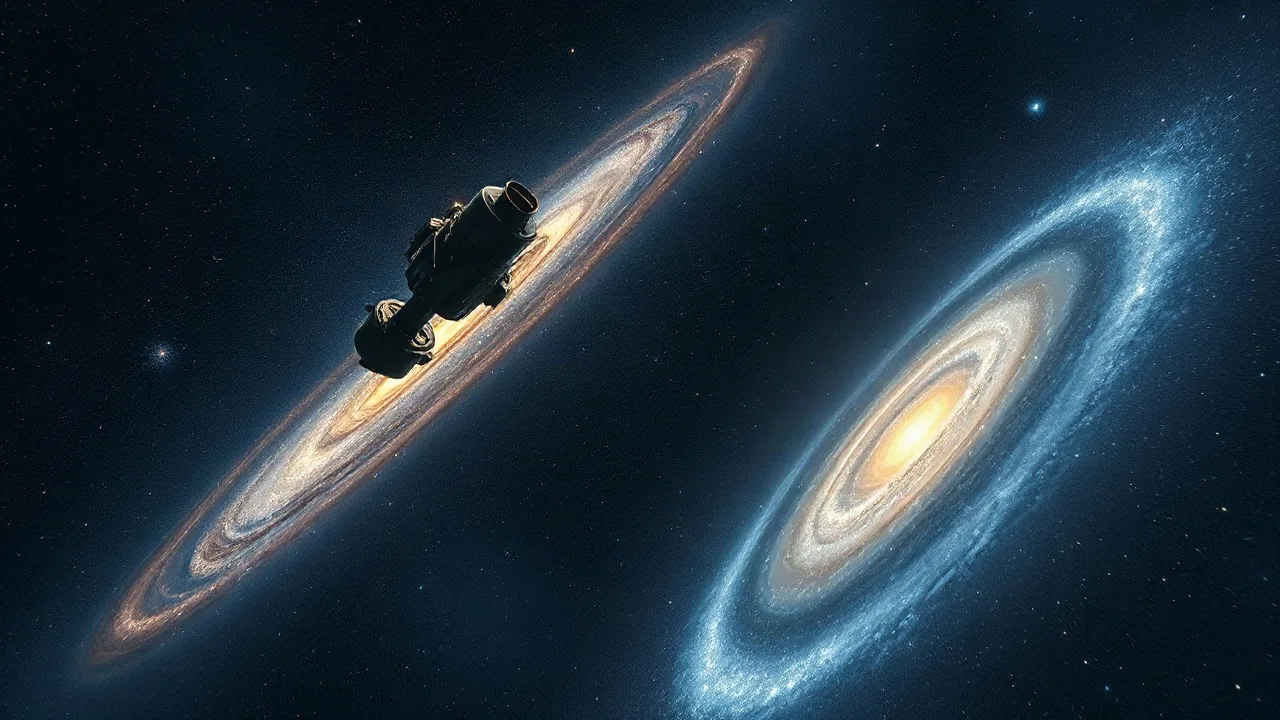
Astronomers and researchers are examining the first major dataset from the European Space Agency's Euclid mission, which has revealed more than 900 million galaxies. Launched in July 2023, the ambitious initiative aims to construct the largest three-dimensional map of the universe, covering roughly a third of the sky and capturing over 10 billion years of cosmic history to help scientists study dark energy and dark matter.
The initial release covers approximately 14 percent of the total area the mission intends to map. Alongside the hundreds of millions of galaxies, the data documents more than 60 million potential quasars and yields about 15,000 candidate instances of strong gravitational lensing, a phenomenon predicted by Einstein where massive foreground objects bend light from distant sources.
Unlocking the Mystery of Dark Matter
Prof Andy Taylor of the University of Edinburgh, who leads the UK science ground segment for the project, highlighted the combination of wide coverage and high resolution. “The technological leap that’s Euclid is that we can keep that high resolution, but now we can basically map huge volumes of the sky, huge volumes of the universe,” Taylor said. He noted that while previous efforts knew of roughly 1,000 cases of strong gravitational lensing, the new data provides about 15,000 probable cases.
Because strong gravitational lensing is amplified by the mass of invisible dark matter, researchers believe analyzing these warped light patterns can help determine how dark matter clumps together. Stephen Serjeant, a professor of astronomy at the Open University, explained that this distribution is diagnostic of the underlying particle nature of matter. “With strong gravitational lensing, you find out how the dark matter is clumping and that’s very diagnostic of the type of matter that it is, because different types of matter can clump in very different ways,” Serjeant said. Further data releases are expected, with researchers anticipating up to 170,000 strong lensing cases by the end of the mission.