
Falcon Heavy Launches Secret US Spy Satellite Mission
SpaceX's powerful Falcon Heavy rocket is set to launch a classified national security mission for the U.S. Space Force on October 2nd from Florida's Kennedy Space Center.

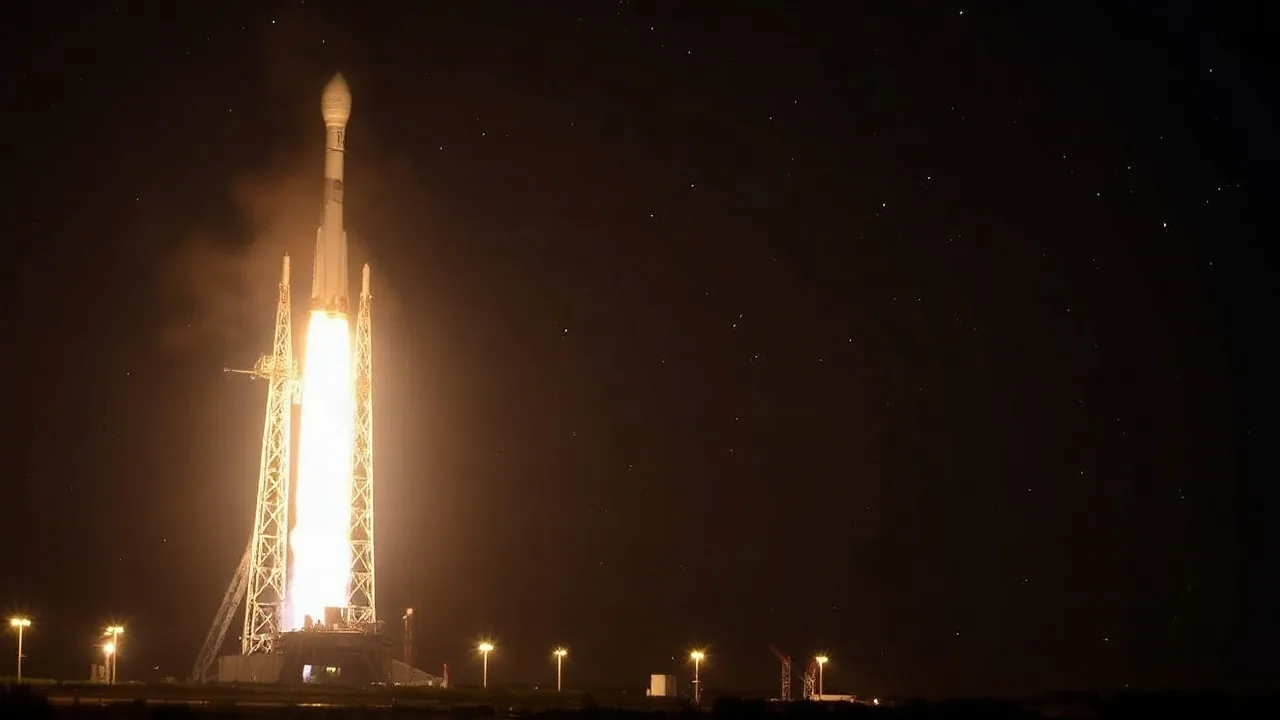
SpaceX is scheduled to launch the Falcon Heavy rocket on its first-ever mission for the U.S. Space Force, carrying a classified payload from Kennedy Space Center in Florida. The launch window opens on October 2nd, 2026, at 11:53 PM EDT. This marks a significant milestone as it's the first time the Falcon Heavy, known for its heavy-lift capabilities, will be deployed for national security satellite deployment.
The specific nature of the payload remains classified, as is typical for missions conducted by the National Reconnaissance Office (NRO) on behalf of the Space Force. However, the use of the Falcon Heavy suggests a substantial and critical asset being placed into orbit. The rocket's immense power is necessary for delivering large or heavy satellites to their intended orbits, including high-energy trajectories.
A New Era for National Security Launches
The Falcon Heavy, a 229-foot-tall rocket composed of three Falcon 9 first-stage boosters strapped together, offers unprecedented payload capacity. Its ability to carry payloads weighing up to 140,000 pounds to low Earth orbit or 59,000 pounds to geostationary transfer orbit makes it ideal for complex national security objectives. Previous Falcon Heavy launches have primarily supported commercial satellite deployments and NASA science missions, including the launch of the Arabsat-6A satellite and the U.S. Air Force's X-37B space plane.
This mission underscores the growing reliance of the U.S. government on private space companies like SpaceX to meet its strategic space requirements. In recent years, the National Reconnaissance Office has increasingly contracted with commercial providers to launch its spy satellites, a trend driven by cost efficiency and rapid deployment capabilities. SpaceX's proven track record with its Falcon 9 rockets has paved the way for its involvement in more sensitive national security operations.
SpaceX founder and CEO Elon Musk has often emphasized the company's dual mission of advancing space exploration and supporting national defense. The successful integration of Falcon Heavy into the national security launch portfolio represents a significant step towards achieving both aims. The U.S. military has been actively working to modernize its space-based assets, which are crucial for intelligence gathering, communication, and navigation.
The launch site at Kennedy Space Center’s Launch Complex 39A has been modified to accommodate the unique requirements of the Falcon Heavy, including its side boosters. This mission is expected to be closely watched by both space enthusiasts and defense analysts, given its implications for the future of space defense and intelligence gathering. The successful deployment of this classified satellite will be a critical indicator of the U.S.'s continued dominance in space-based reconnaissance capabilities.